Circadian Office Lighting: When Tunable White Actually Makes Sense
Circadian office lighting is not a daily colour-temperature animation. It is a design approach that considers when, where and how much light reaches people, alongside daylight, glare, visual comfort and the way the workplace is actually used.
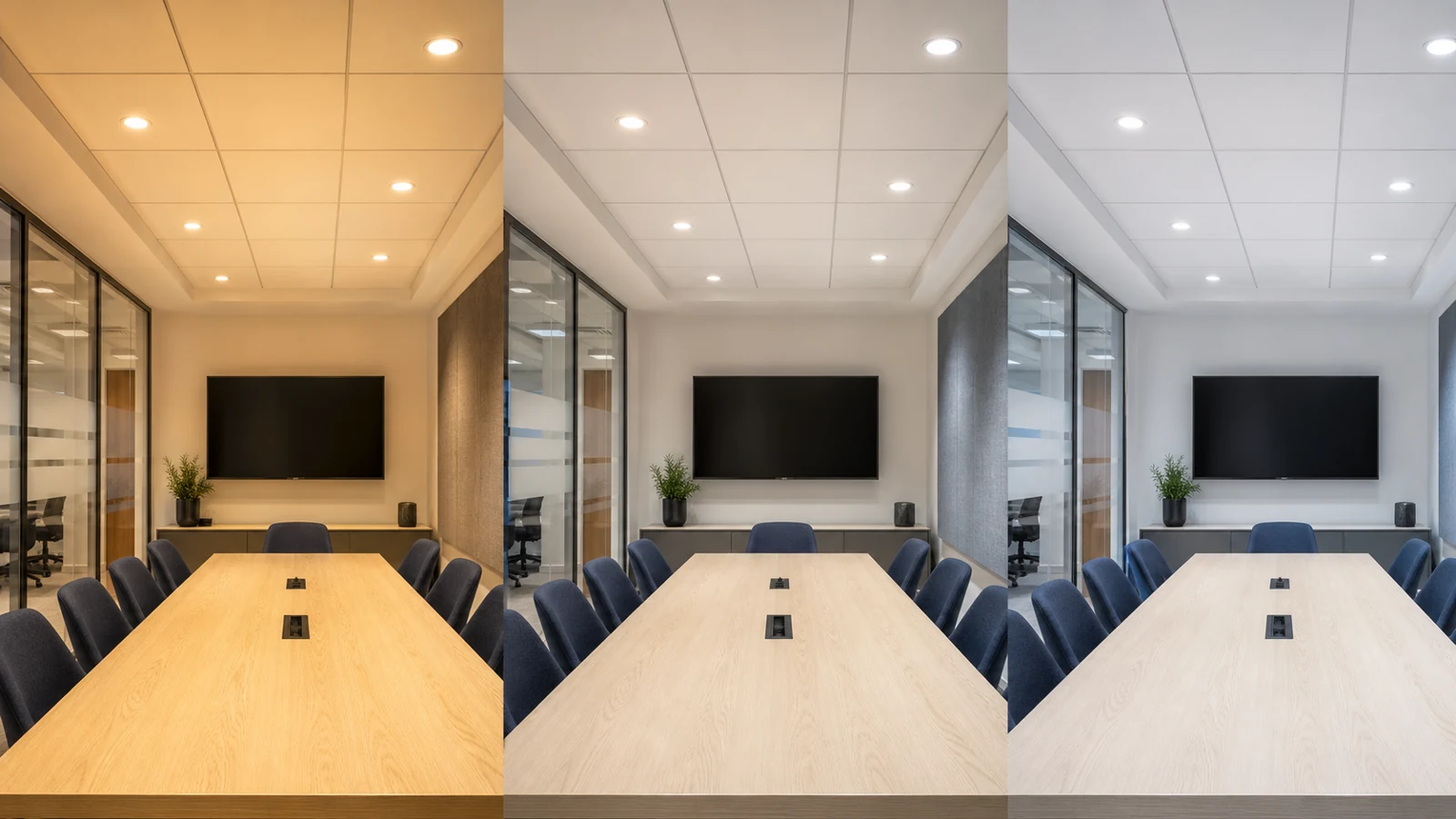
What is circadian office lighting?
Circadian office lighting is the deliberate use of daylight and electric light to support both visual work and the body’s responses to light across the day. The circadian system helps regulate sleep and wake timing, alertness and other daily rhythms. In an office, the relevant question is not simply whether the fittings can move from 2700K to 6500K. It is whether people receive suitable light at suitable times without creating glare, distraction or an overcomplicated control system.
The CIE’s S 026 system provides a metrology for light responses influenced by the intrinsically photosensitive retinal ganglion cells. It uses alpha-opic quantities, including melanopic equivalent daylight illuminance, to describe stimulus in a way that ordinary photopic lux and correlated colour temperature cannot do alone. That is why a 4000K or 6500K label is not, by itself, evidence of a circadian lighting outcome.
Cortisol, melatonin and why timing matters
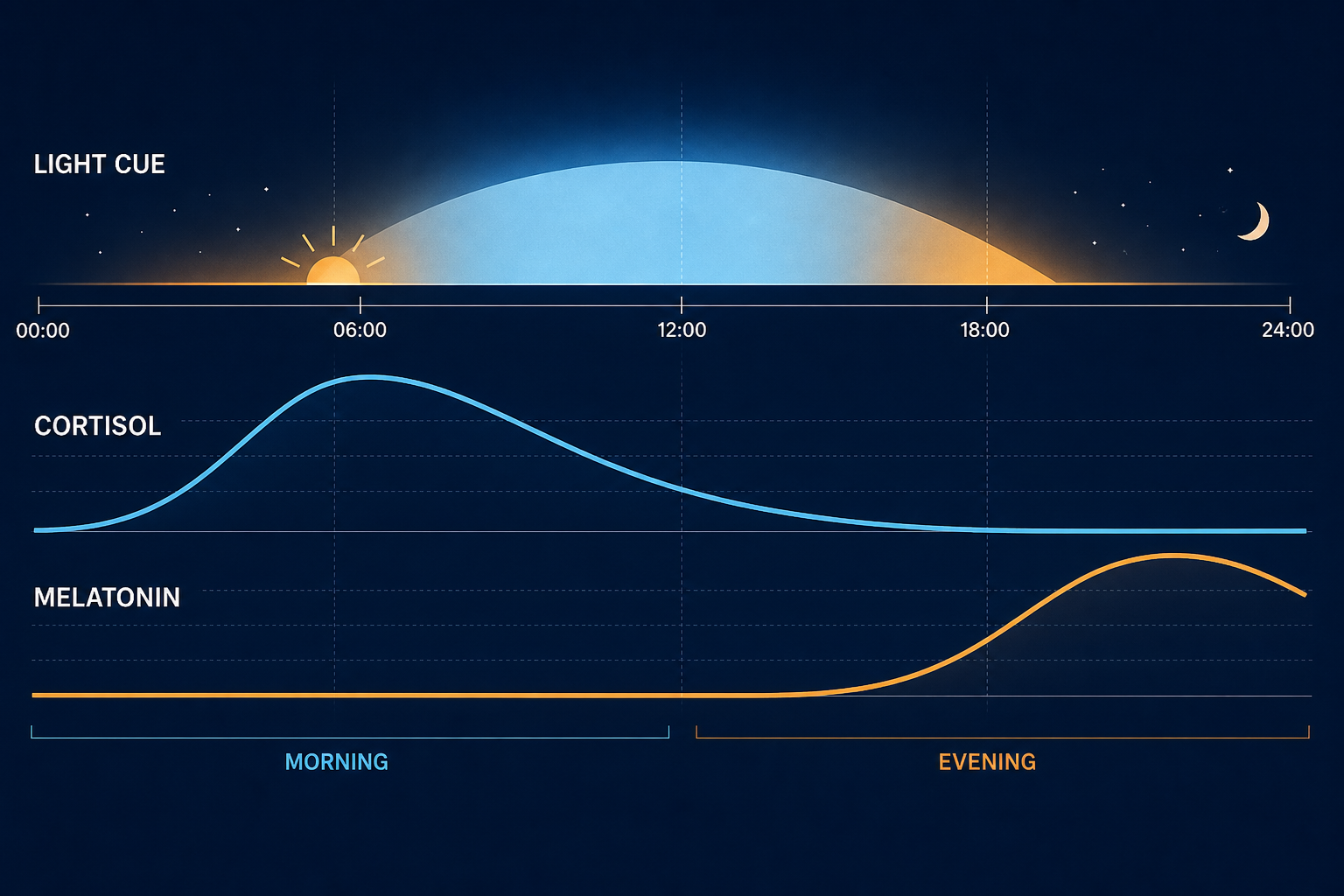
The reason circadian lighting matters is not simply that cool light feels “energising” and warm light feels “relaxing”. The more useful explanation is the relationship between light, cortisol and melatonin.
Cortisol is often described as a stress hormone, but that is too simplistic. In a normal daily rhythm, cortisol rises in the morning and helps the body become alert, active and ready for the day. Melatonin works in the opposite direction. It rises later in the day and helps signal that the body should prepare for sleep.
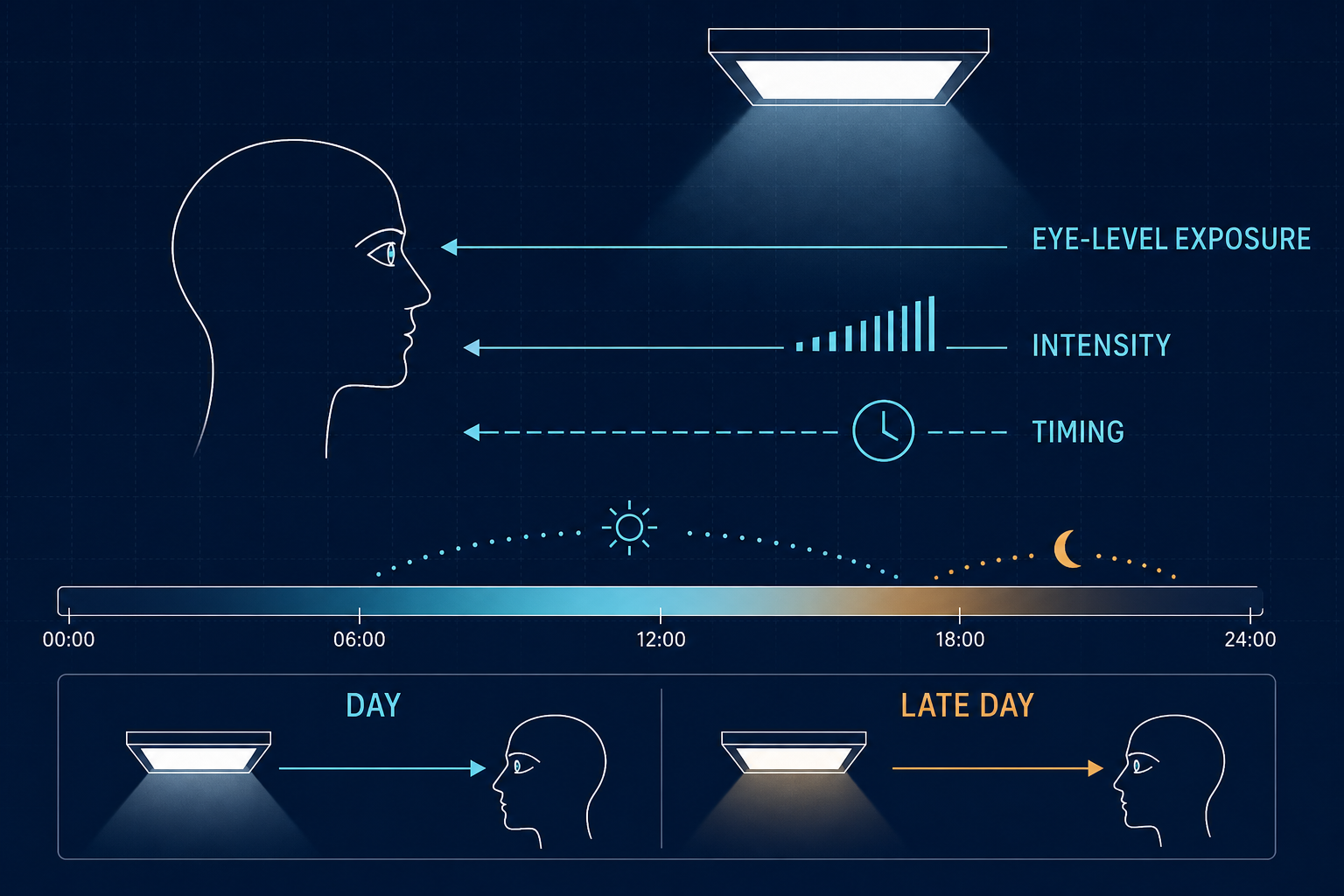
Light is one of the main environmental cues that helps regulate this cycle. That is why the timing of office lighting matters. Brighter, cooler light during the earlier part of the working day may support alertness because it is closer to the body’s natural daytime signal. Warmer or lower-intensity light later in the day may be more appropriate where the aim is to reduce visual harshness and avoid over-stimulating the space.
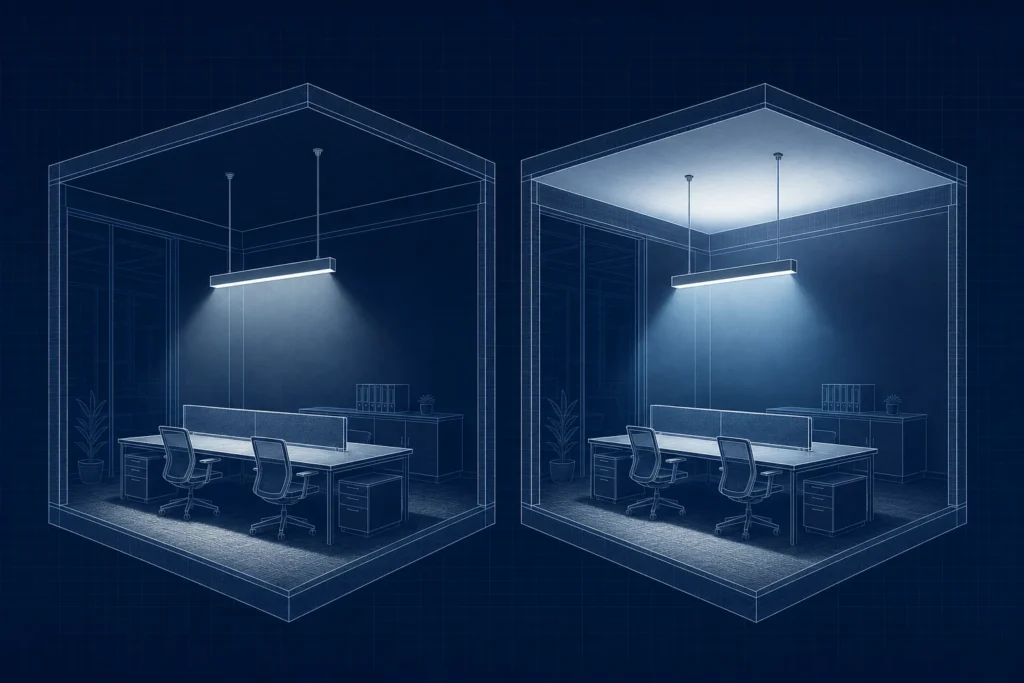
This does not mean every office needs colour-changing lighting, and it does not mean a tunable-white luminaire can guarantee better sleep, productivity or wellbeing. The practical point is that static lighting can be a poor fit for spaces used in different ways across the day. A meeting room used for morning workshops, afternoon video calls and evening presentations may need more than one fixed lighting scene; a deep-plan office with limited daylight may need more support from electric light than a perimeter workspace with good natural daylight.
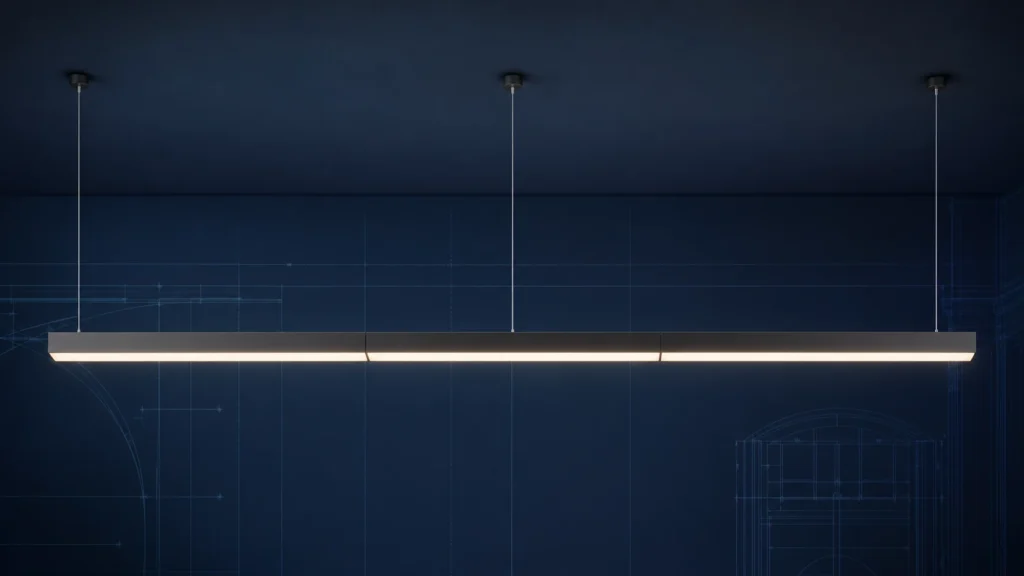
Depending on the layout and control brief, that could mean specifying a tunable white LED downlight, a high-output tunable white downlight or a project-specific tunable white LED panel. The luminaire still needs to be paired with the right control strategy, commissioning plan and visual-lighting brief.
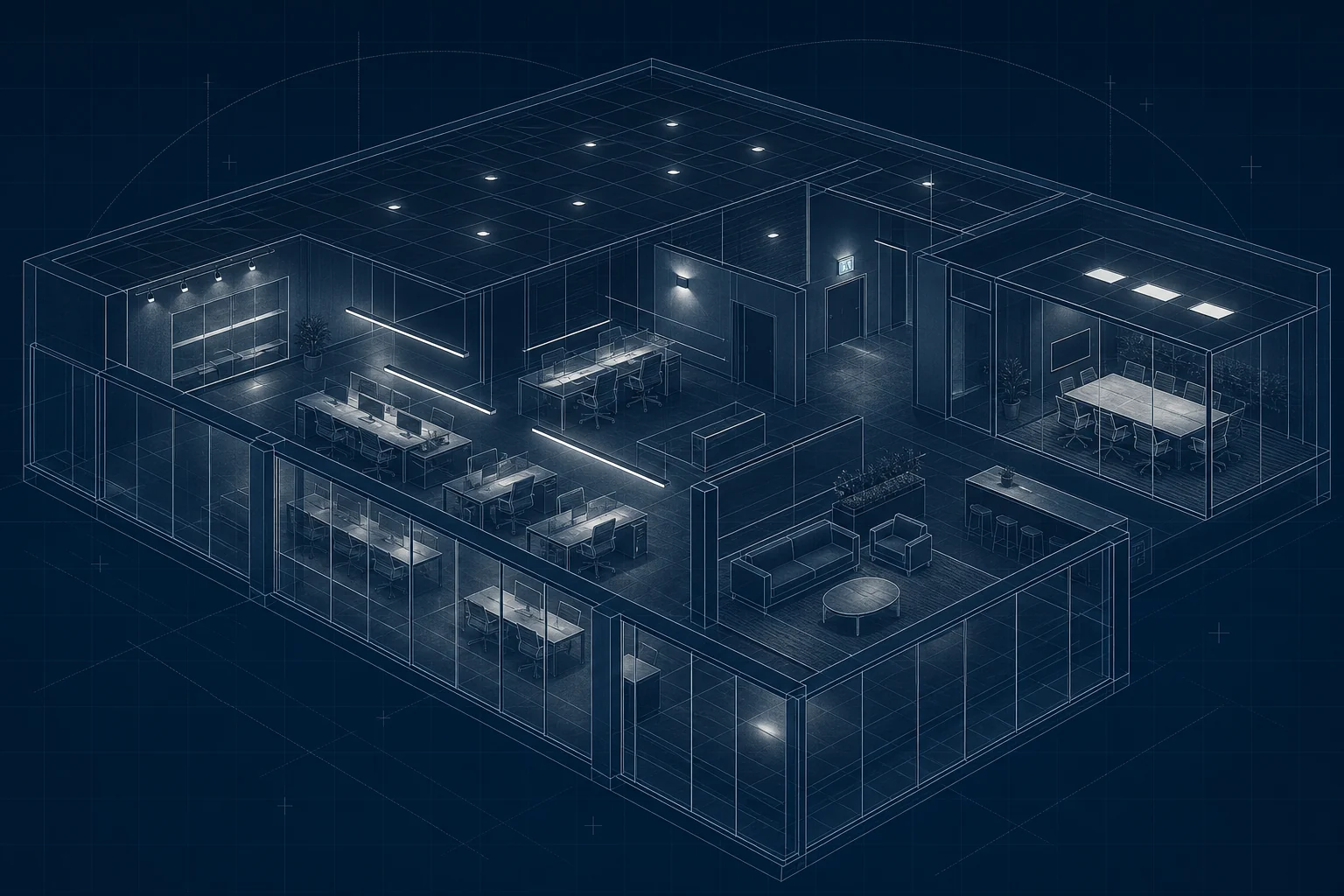
For commercial projects, keep the visual and non-visual briefs connected. The workplace still needs appropriate illuminance, uniformity, colour rendering and glare control. Start with the room, task and occupancy pattern, then coordinate the electric lighting with daylight and controls. Our office lighting route covers the wider workplace specification.
Circadian lighting is more than colour temperature
A common shortcut is to describe cool white light as energising and warm white light as relaxing. That may be a useful description of visual atmosphere, but circadian response depends on more than CCT. Spectrum, intensity at the eye, timing, duration, prior light exposure and individual factors all influence the result. Daylight can also be the strongest part of the daily light exposure.
| Design variable | What it changes | What to check |
|---|---|---|
| Timing and duration | When and for how long occupants receive light. | Working hours, shift patterns, seasonal daylight and whether the proposed schedule suits real occupancy. |
| Eye-level light | The light reaching the eyes, which can differ from horizontal desk illuminance. | View direction, luminaire distribution, partitions, room geometry and daylight openings. |
| Spectrum | The spectral composition used to calculate alpha-opic quantities. | Manufacturer spectral data and the relevant calculation method, not CCT alone. |
| Visual quality | Comfort and visibility for the task. | Illuminance, uniformity, glare, colour rendering, reflections and photometric evidence. |
| Controls | Whether the intended states actually happen. | Daylight dimming, occupancy control, scenes, overrides, commissioning and facilities ownership. |
When tunable white makes sense in an office
Tunable white is justified when a variable white-light state solves a defined operational problem. The benefit is strongest in spaces with long occupancy, limited daylight or distinct modes that can be described before the luminaires and control system are selected.
Stronger case
- deep-plan or windowless workplace zones;
- 24-hour control rooms or workplaces with shift patterns;
- multi-use meeting, training and presentation rooms;
- projects pursuing a defined wellbeing standard or client performance brief;
- spaces with a responsible facilities team and funded commissioning.
Weaker case
- well-daylit offices with short, conventional occupancy;
- circulation, storage and back-of-house spaces;
- schemes with no written schedule or user-override strategy;
- projects where basic glare, layout or daylight problems remain unresolved;
- retrofits where control-system disruption outweighs the likely benefit.
A changing white point can support different scenes, but it should not be added by default. If the operational need is only energy reduction, daylight-linked dimming and occupancy control may deliver a clearer result. If the need is visual comfort, improve distribution, shielding, layout and task illuminance first. Treat the luminaire and controls choice as a separate product decision once that need is clear.
A practical design process for UK offices
Define the occupied pattern
Record normal hours, early or late shifts, home-working patterns, seasonal changes and the rooms where people spend sustained periods. A schedule built around an empty office is not useful.
Survey daylight and sightlines
Map windows, façade orientation, obstructions, desk positions and view directions. Separate perimeter and core zones because their available daylight can be very different.
Set the visual-lighting brief
Establish the relevant workplace criteria for the tasks, including illuminance, glare, uniformity, colour quality and controls. Circadian intent does not displace BS EN 12464-1 or the need for photometric calculation.
Set measurable non-visual objectives
If the project has a circadian or wellbeing requirement, state the metric, calculation plane or eye position, time window and evidence required. Use spectral data where alpha-opic quantities are being assessed.
Choose luminaires and controls together
Confirm that the LED engine, driver, controller and interface support the intended method. For DALI tunable white, verify the required Part 209 DT8(Tc) capability rather than assuming ordinary DALI dimming can change CCT.
Commission, explain and revisit
Name each scene, define transitions and overrides, train the facilities team and record the settings. Revisit the scheme after occupation rather than treating practical completion as the end of the design.
Retrofit or new build: what changes?
Existing office retrofit
Start with the existing wiring, ceiling access and control architecture. A wireless control route can reduce disruption, but radio coverage, device compatibility, emergency arrangements and long-term support still need checking. If the office already receives useful daylight, a strong retrofit may be better served by efficient fixed-CCT luminaires, occupancy sensing and daylight-linked dimming than by adding a full colour-temperature schedule.
New build or major fit-out
A new project gives the team more control over façade, desk planning, luminaire positions, vertical illumination, DALI addressing and scene interfaces. This makes a measured time-based strategy easier to coordinate, but the brief still needs an owner. Design intent, spectral evidence, control sequences and commissioning responsibilities should appear in the specification rather than being left to the final week on site.
Controls: DALI, wireless and simple dimming
DALI-2 provides a standardised digital control route, while DALI Part 209 device type 8 covers colour control including colour temperature. Wireless systems such as Casambi can also support tunable-white strategies where compatible luminaires and control gear are selected. Either approach can work; the right choice depends on project scale, existing infrastructure, integration requirements and who will maintain the system.
Simple push dimming can be appropriate when the requirement is only manual intensity control. It is not a substitute for a coordinated tunable-white system. Whatever the platform, write the sequence in plain language: what happens at the start of the day, what daylight control changes, how occupants override it, what occurs after hours and how the system returns to its normal state.
A suitable tunable-white luminaire
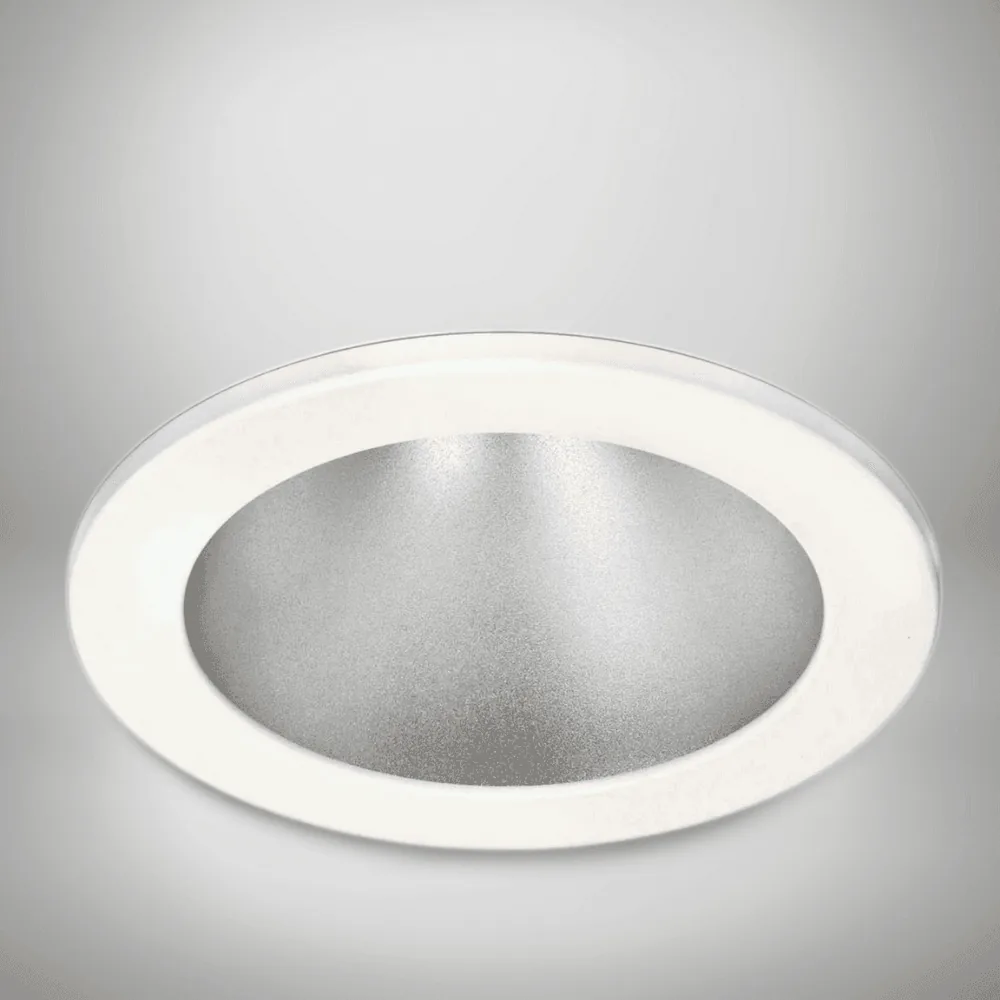
Dynamic tunable white downlight
Dynamic is a recessed commercial downlight with a stated 2700K-6500K tunable-white range. It is a relevant option for meeting rooms, reception spaces and selected office zones where a genuine scene or time-based requirement has been defined.
The downlight and reflector still have to be selected against the layout and photometric brief. Confirm the control gear, output, emergency arrangement, reflector, finish and commissioning requirements for the project.
View Dynamic product information or browse commercial downlights.
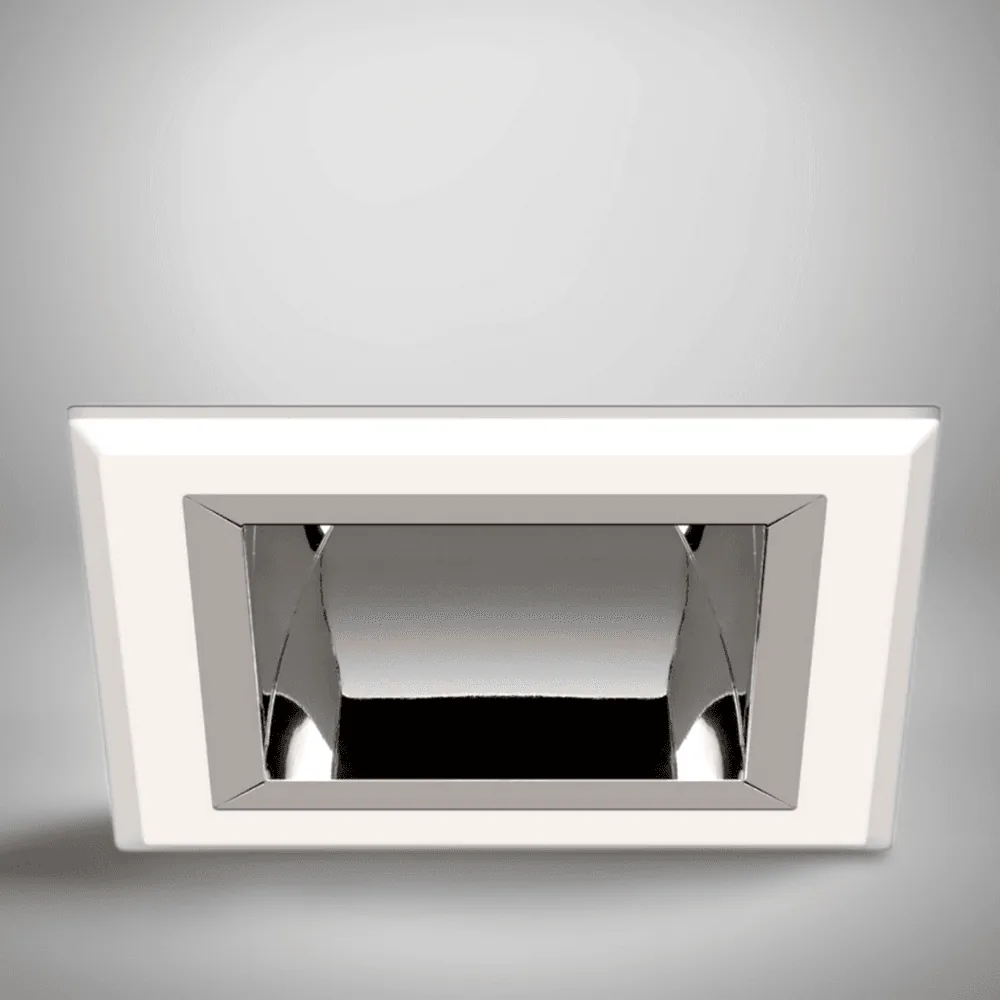 OptiHigh-output tunable white downlight for larger or higher-ceiling zones.
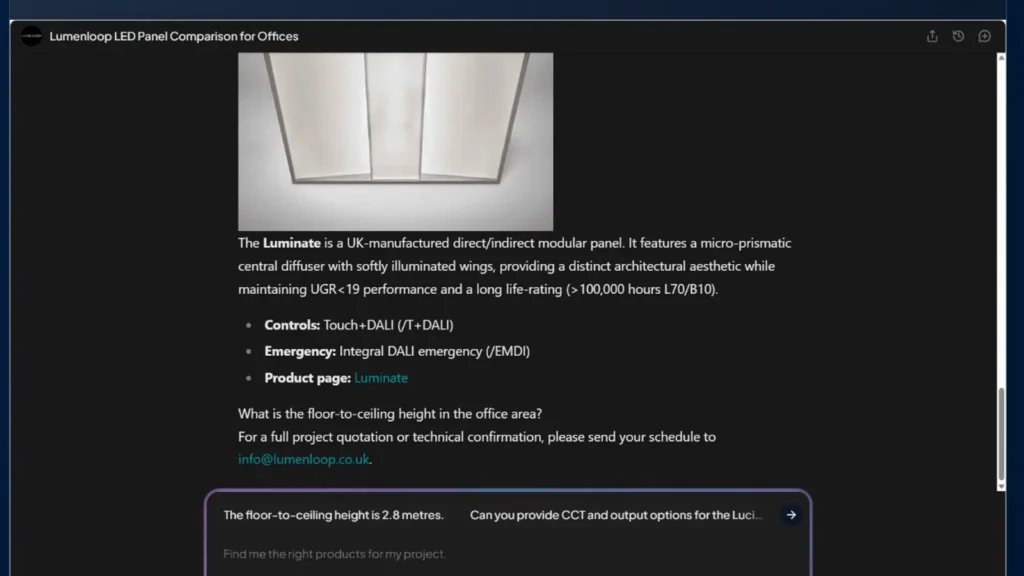
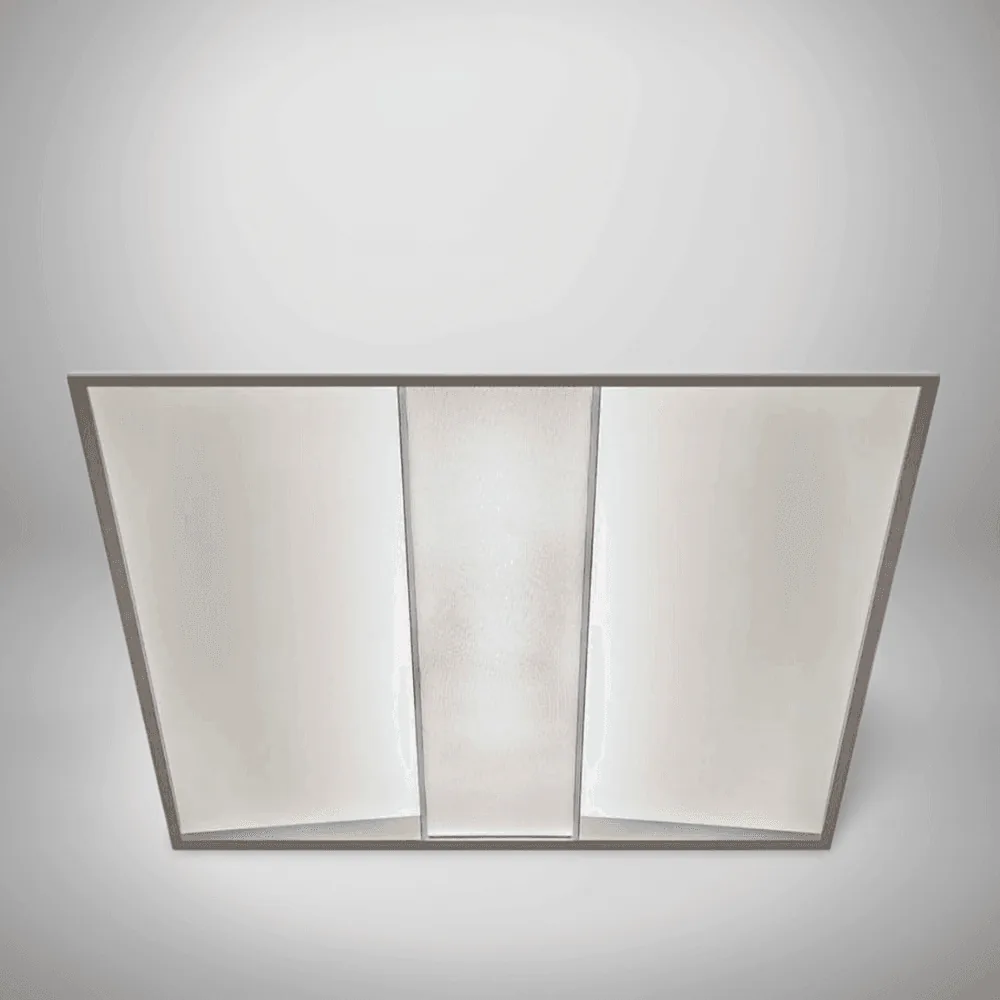 LuminateTunable white LED panel option for wider, even office coverage.
Common circadian lighting mistakes
- Using CCT as the only metric. A kelvin value says nothing about timing, duration or the light reaching the eye.
- Ignoring daylight. Daylight and views should be considered before electric lighting is programmed to imitate a generic day.
- Over-lighting to chase a target. More light is not automatically better; visual comfort and appropriate timing remain essential.
- Buying tunable fittings without a controls brief. Unnamed scenes and unassigned commissioning usually leave the system at one setting.
- Promising health outcomes. A lighting specification should describe measurable light and operational intent, not guarantee sleep, productivity or medical effects.
- Forgetting maintenance. Facilities teams need scene records, override instructions and a route for recommissioning after layout changes.
Frequently asked questions
Is circadian lighting the same as human-centric lighting?
The terms overlap in marketing, but they are not precise synonyms. Circadian lighting focuses on light exposure across the day and its relationship with biological timing. Human-centric lighting is a broader label that may include visual comfort, wellbeing, user control and atmosphere. Ask for measurable objectives rather than relying on either phrase.
Does an office need 6500K light in the morning?
Not as a universal rule. CCT alone does not define circadian stimulus, and a very cool setting may be visually inappropriate. Base the decision on daylight, spectral data, light at the eye, timing, comfort and the project’s stated objective.
Can fixed-CCT lighting support a good circadian environment?
Yes. Useful daylight, sensible working hours, appropriate light levels, good distribution and dimming can all contribute without variable CCT. Tunable white is a tool, not a requirement for every office.
How should WELL requirements be handled?
Check the exact WELL version, feature, project type and verification route registered for the project. Requirements and documentation routes can change, so do not copy a headline threshold from an older article into a current specification.
What should be included in a supplier enquiry?
Send the floor plan, reflected ceiling plan, room uses, occupied hours, ceiling details, visual criteria, intended control platform, required scenes, emergency strategy and any alpha-opic or wellbeing target. This lets the supplier distinguish a real circadian brief from a request for colour-changing fittings.
Primary technical references
- CIE S 026: system for metrology of ipRGC-influenced responses to light
- CIE position statement: recommending proper light at the proper time, third edition (2024)
- BSI: BS EN 12464-1:2021, lighting of indoor workplaces
- DALI Alliance: colour control and tunable white
- International WELL Building Institute: circadian lighting design background