
Include fitting references, quantities, mounting, finish, controls, emergency and any named products already in the package.
Contractor Supply London
Commercial lighting supplier for London contractors.
Lumenloop manufactures UK-made commercial luminaires for London contractor quotations and product schedules, including downlights, linear lighting, controls, emergency options and replacement ranges.
London office: Fitzrovia W1T 6EBUK-made luminairesControls and emergencyQuotation information
room listProduct references, quantities and ceiling notes considered together
BOQQuantities, fitting references and product alternatives checked
DALIControls, drivers, sensors and switching notes documented
EMEmergency conversion, exit signs and test strategy reviewed early
Product Ranges
Commercial luminaires for London contractor schedules.
Product ranges, mounting, output, controls, emergency options and quotation information can be reviewed against the contractor schedule.
Lumenloop can shape the enquiry around downlights, linear, suspended fittings, track, emergency, controls or retrofit options.
Output, optics, UGR, DALI, Casambi, emergency conversion, finish and lead time can be considered together.
Fast Product Ranges
Useful starting points for London contractor packages.
These links support schedules that need a product range, an alternative, or a stronger manufacturer-led direction before quotation.
 Downlights Commercial downlights
 Low-glare recessed, architectural and fire-rated options for commercial interiors.
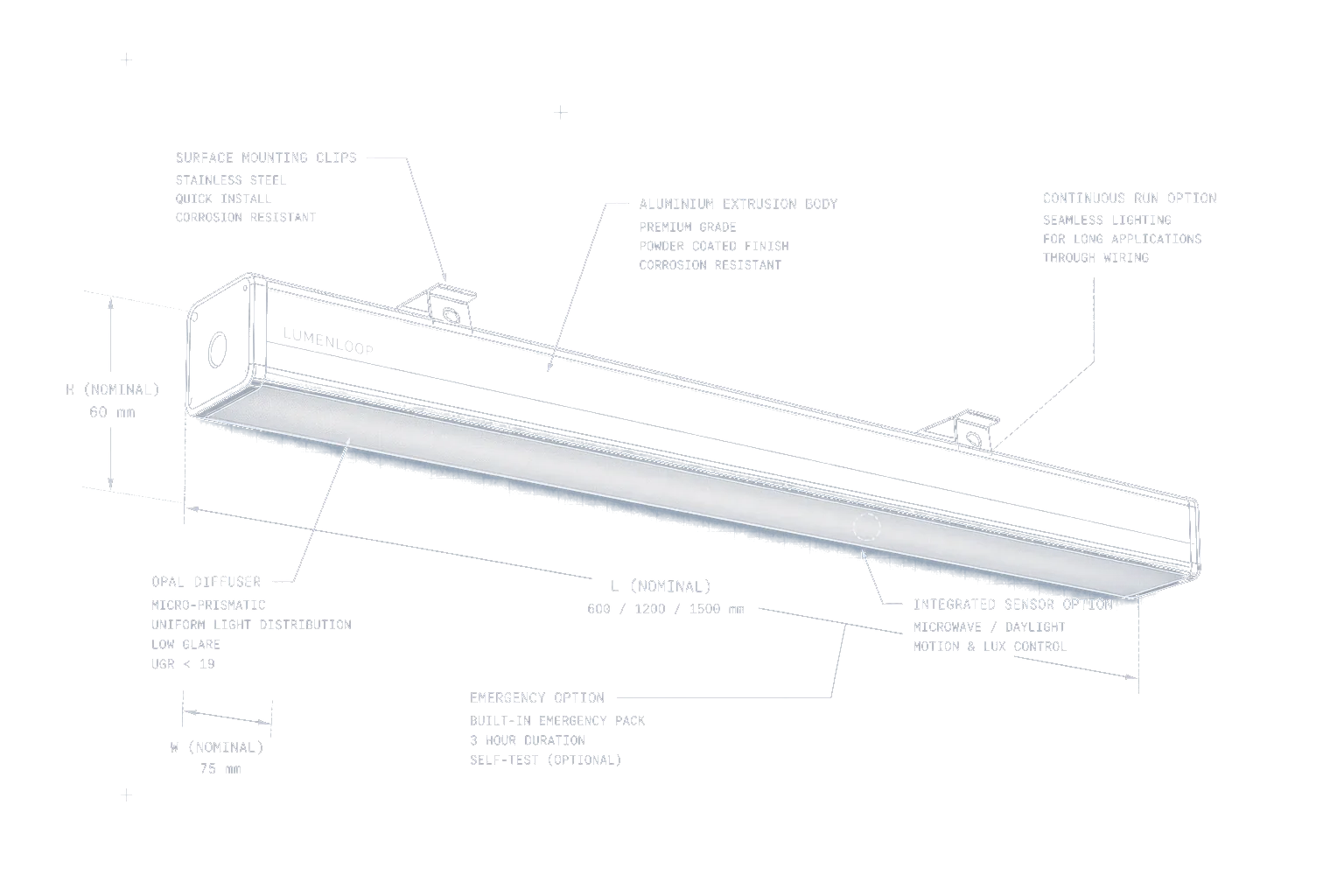 Linear Linear luminaires
 Suspended, surface, recessed and continuous choices for offices, corridors and feature lines.
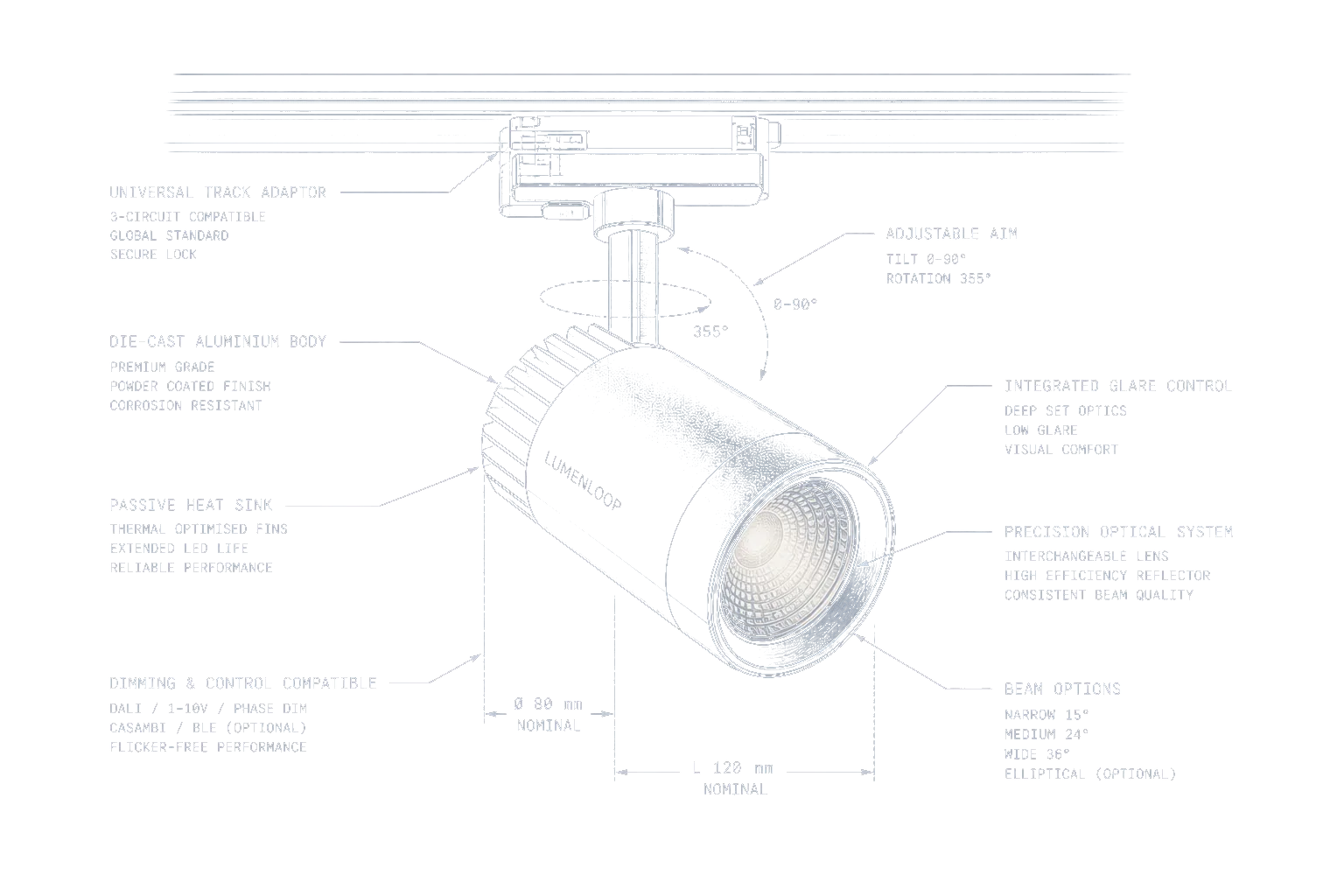 Track Track lighting
 Track and spotlight decisions for retail, gallery, hospitality and display-led commercial work.
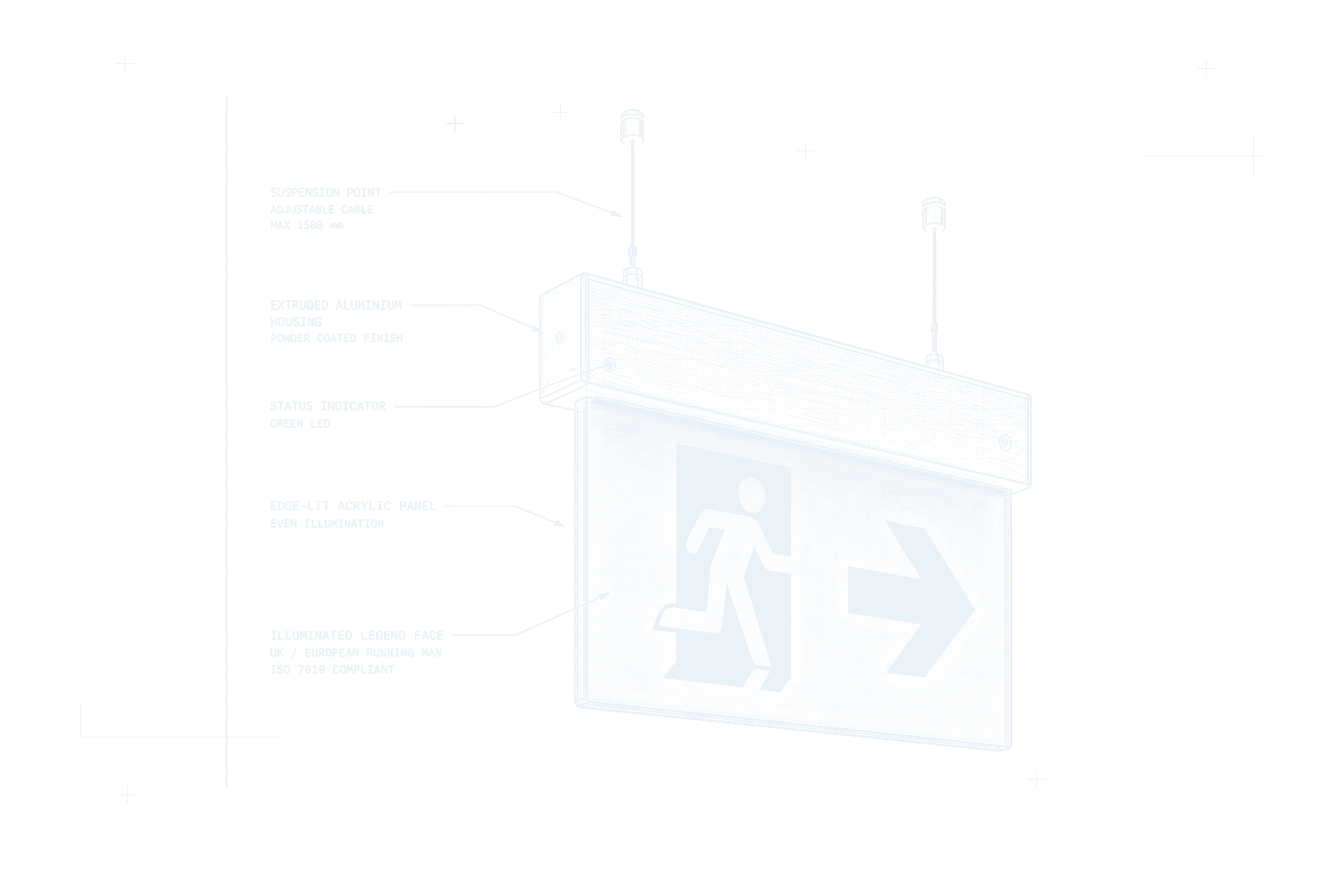 Emergency Emergency lighting London
 Exit signs, emergency luminaires, conversion notes and testing context for London projects.
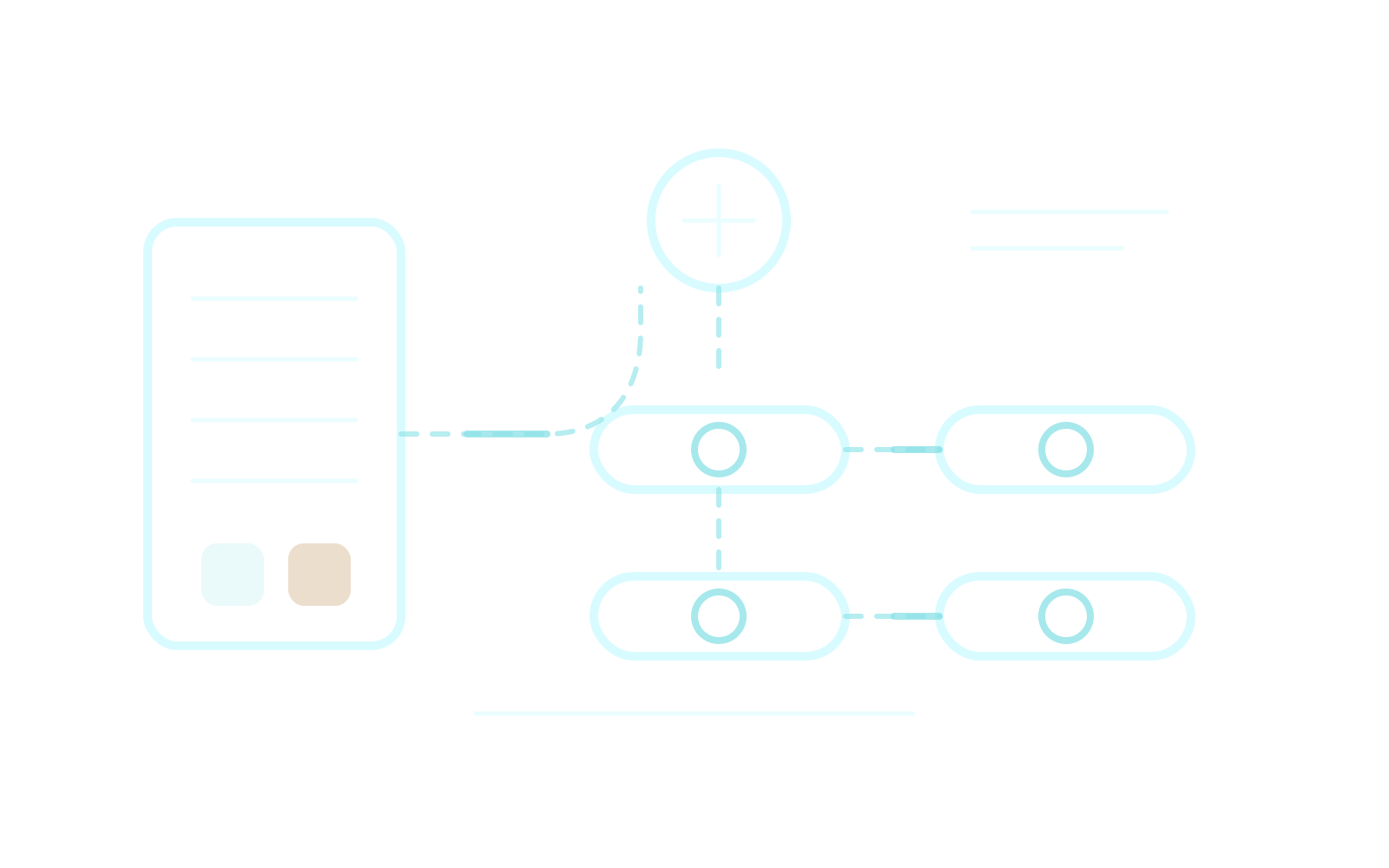 Controls DALI and Casambi
 Driver, sensor and control choices checked before order details harden.
 Retrofit Upgrade and replacement
 Replacement planning where site access, existing fittings and return-to-service matter.
 Catalogue Product ranges
 The wider range supports package-level manufacturer information.
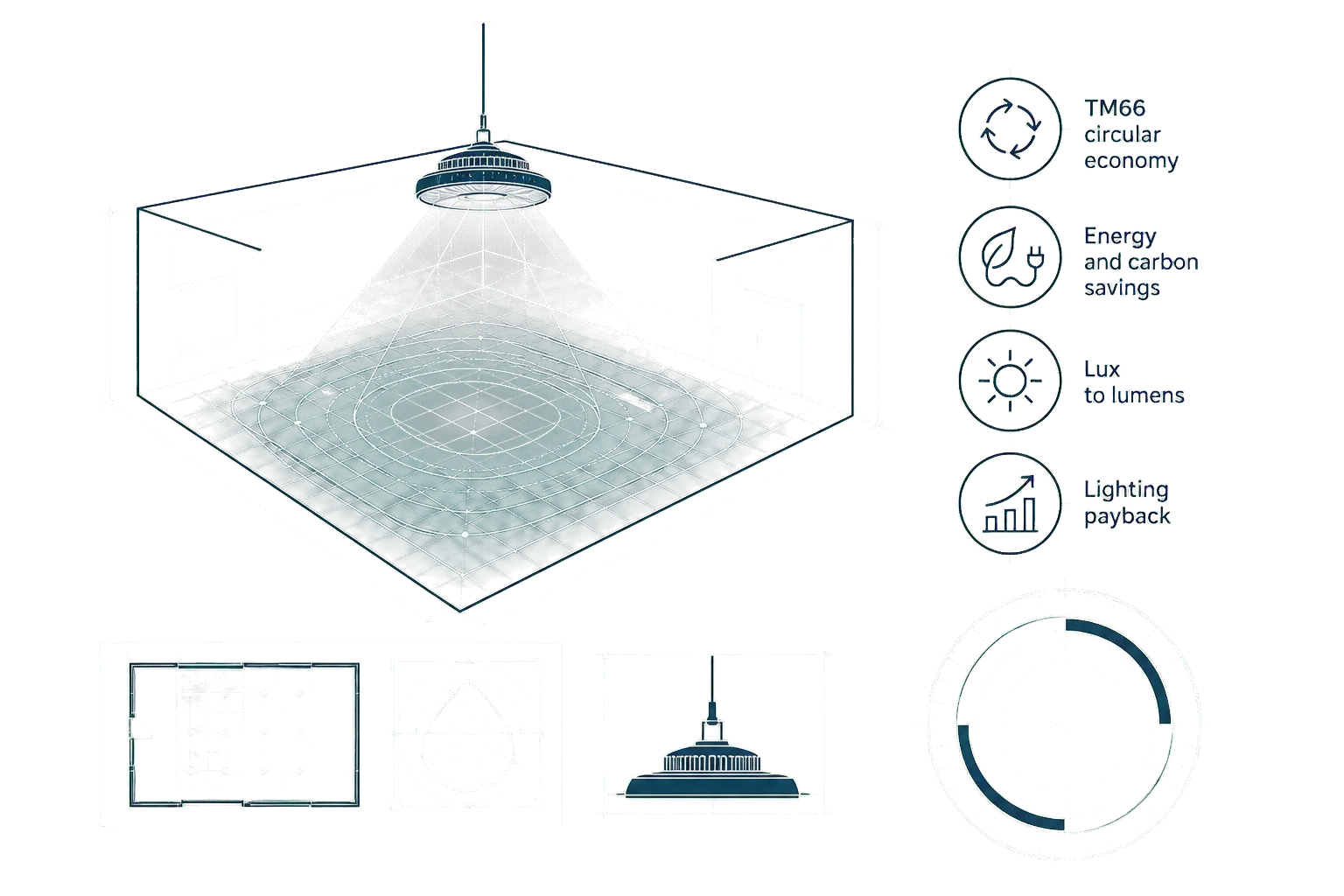 Tools Lighting calculators
 Early quantity, energy, emergency and track checks that can feed into product information.
What to share
Useful contractor information is usually practical, not polished.
A marked-up PDF, incomplete schedule or short notes can be enough to start, provided the open decisions are visible.
Product notes and areas
Room lists, marked-up notes, mounting heights, ceiling type and any existing product positions.
Schedule and quantities
Fitting references, counts, finishes, output, optics, UGR notes, IP ratings and any required alternatives.
Controls and emergency
DALI, Casambi, sensors, switching groups, emergency conversion, exit signs and test requirements.
Commercial context
Site location, quantities, programme, delivery requirements and published product documents belong with the quotation information.
Contractor Scenarios
Where schedule support helps most.
Compare the requested product with a Lumenloop range and keep technical information ready for quotation.
Check dimensions, mounting, finish, emergency and control gear before an order becomes urgent.
Photographs, dimensions and ceiling notes help narrow products without treating every job as like-for-like.
Review DALI, Casambi, mains dimming, fixed output and sensor requirements before final coding.
Exit signs, conversions and test strategy should sit beside the normal lighting schedule.
Product pages, datasheets and circularity evidence can support client or consultant sign-off.
Contractor Questions
Common contractor support questions.
These are the decisions that usually affect quoting, substitution and sign-off. Early project information helps resolve open product, control and emergency points.
Yes. Share quantities, product references, control notes, emergency requirements and drawings where available so the closest product range can be checked.
Yes. Partial drawings, product references, dimensions and ceiling notes are often enough to identify the open decisions and move the package forward.
Yes. Drivers, sensors, switching, scene setting and dimming requirements can be considered before the selection is fixed.
Yes. Existing fitting photos, dimensions, ceiling notes and access limits help narrow retrofit choices without forcing a like-for-like compromise.
Yes. Emergency luminaires, exit signs, conversion options and test requirements can be considered alongside the normal lighting schedule.
The most useful starting point is the schedule, quantities, deadline, product references and any unresolved option choices.
Product Selection
Choose product ranges before the package is fixed.
Known product references, quantities, the project location, programme and unresolved option choices provide useful quotation context.