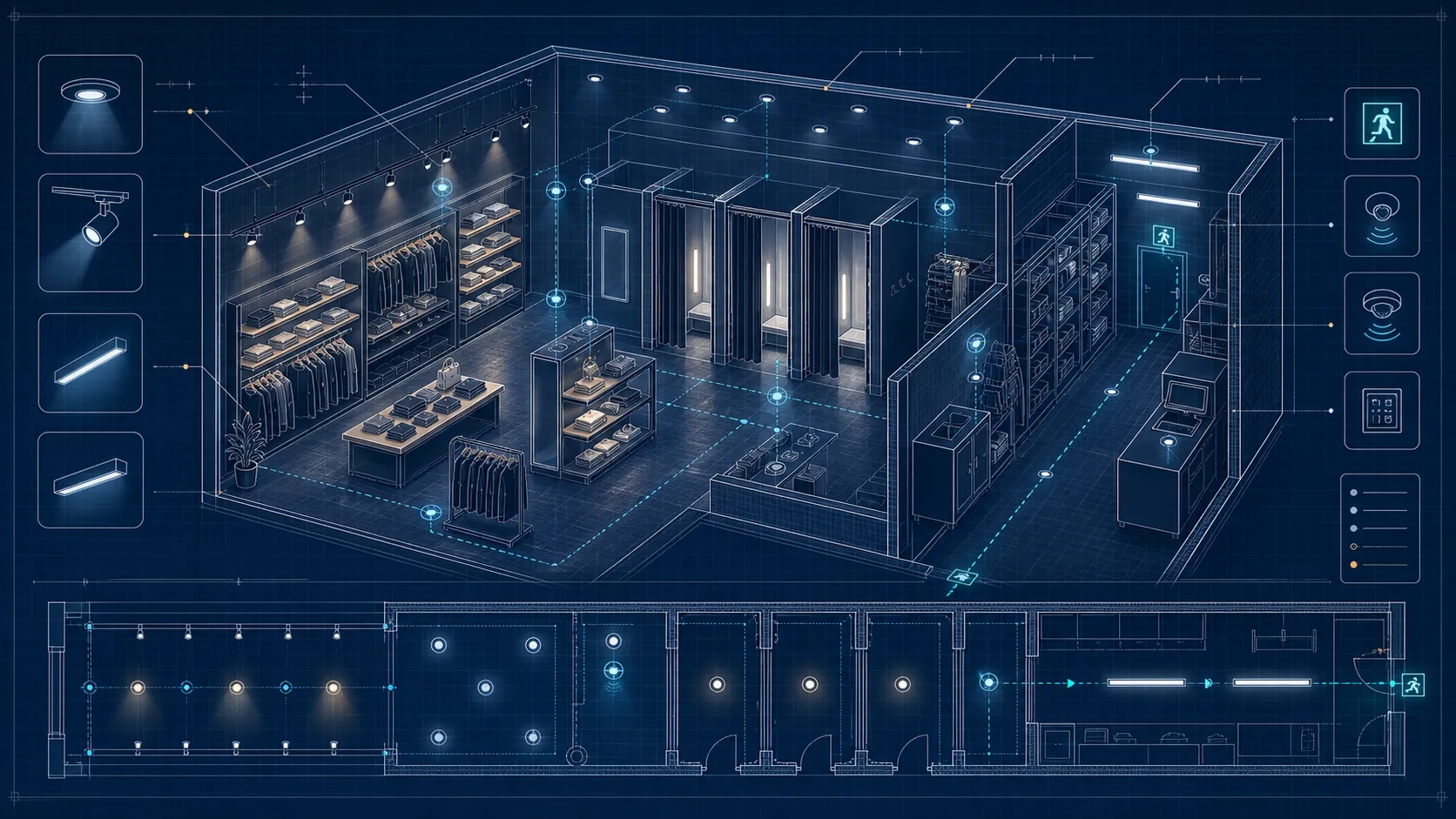
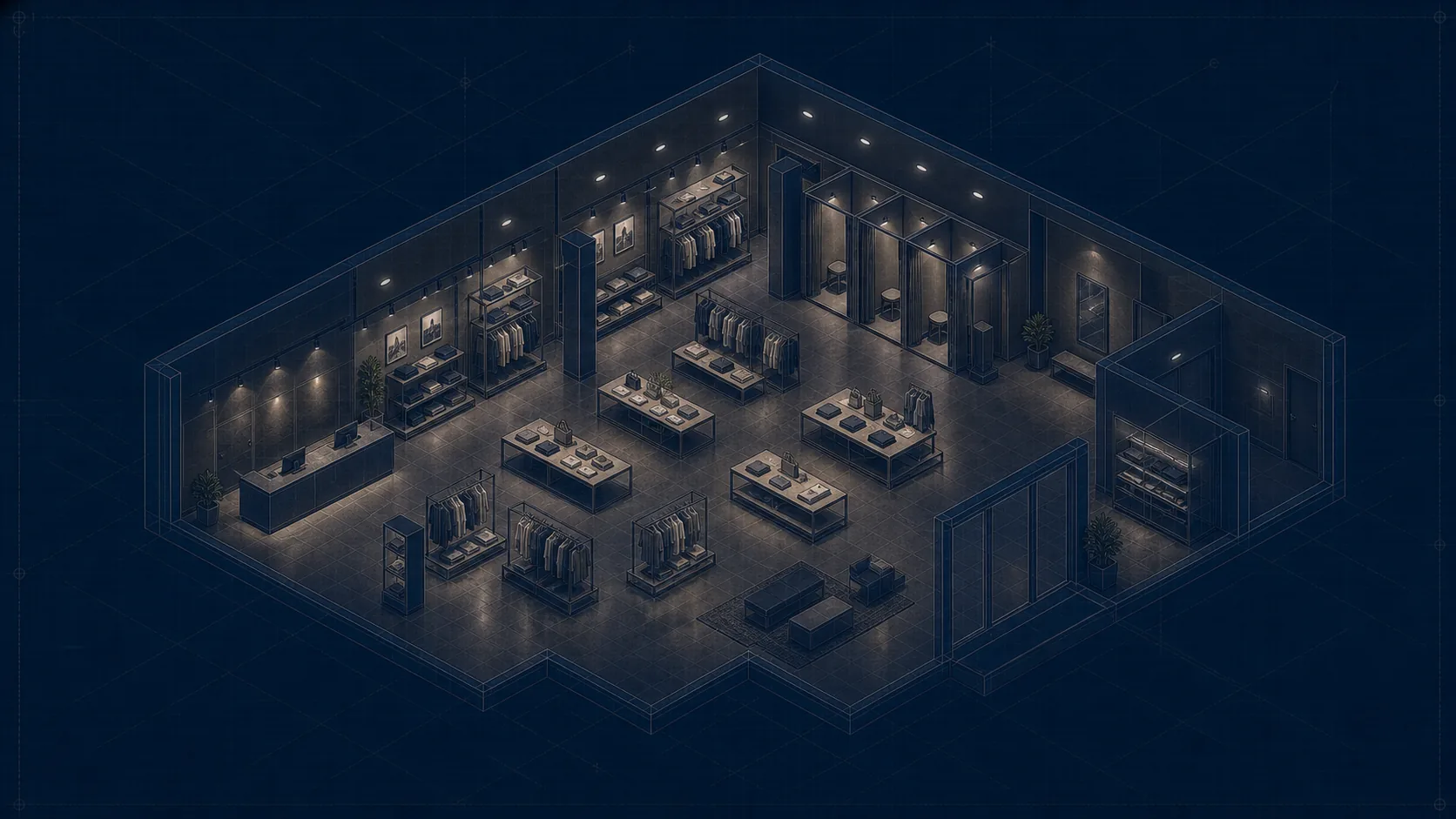
Retail lighting matched to the shop layout, ceiling type and display areas.
Track spots, downlights, linear fittings, controls and emergency options can be compared against the trading floor, fitting rooms, stock areas and escape routes.
UK-made commercial LED luminaires for retail refurbishments where display focus, track positions, ceiling access, fitting rooms, back-of-house lighting, emergency provision and controls need to be priced as one project package.
Retail refurbishment needs display, fitting-room, till, back-of-house, emergency and control decisions separated before the fitting schedule is issued.

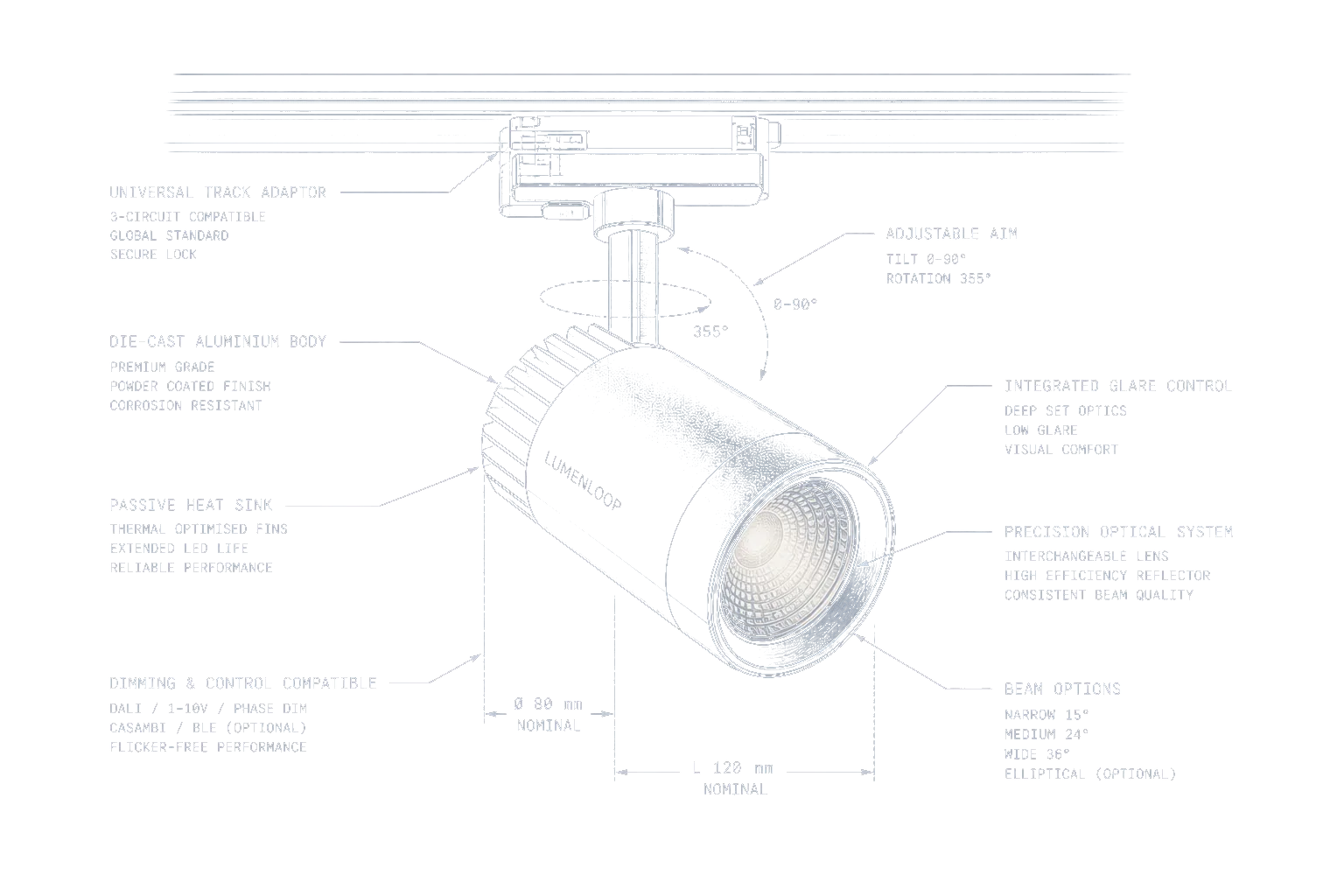
Track option for shelving, feature tables, windows and areas where the merchandising plan changes over time.

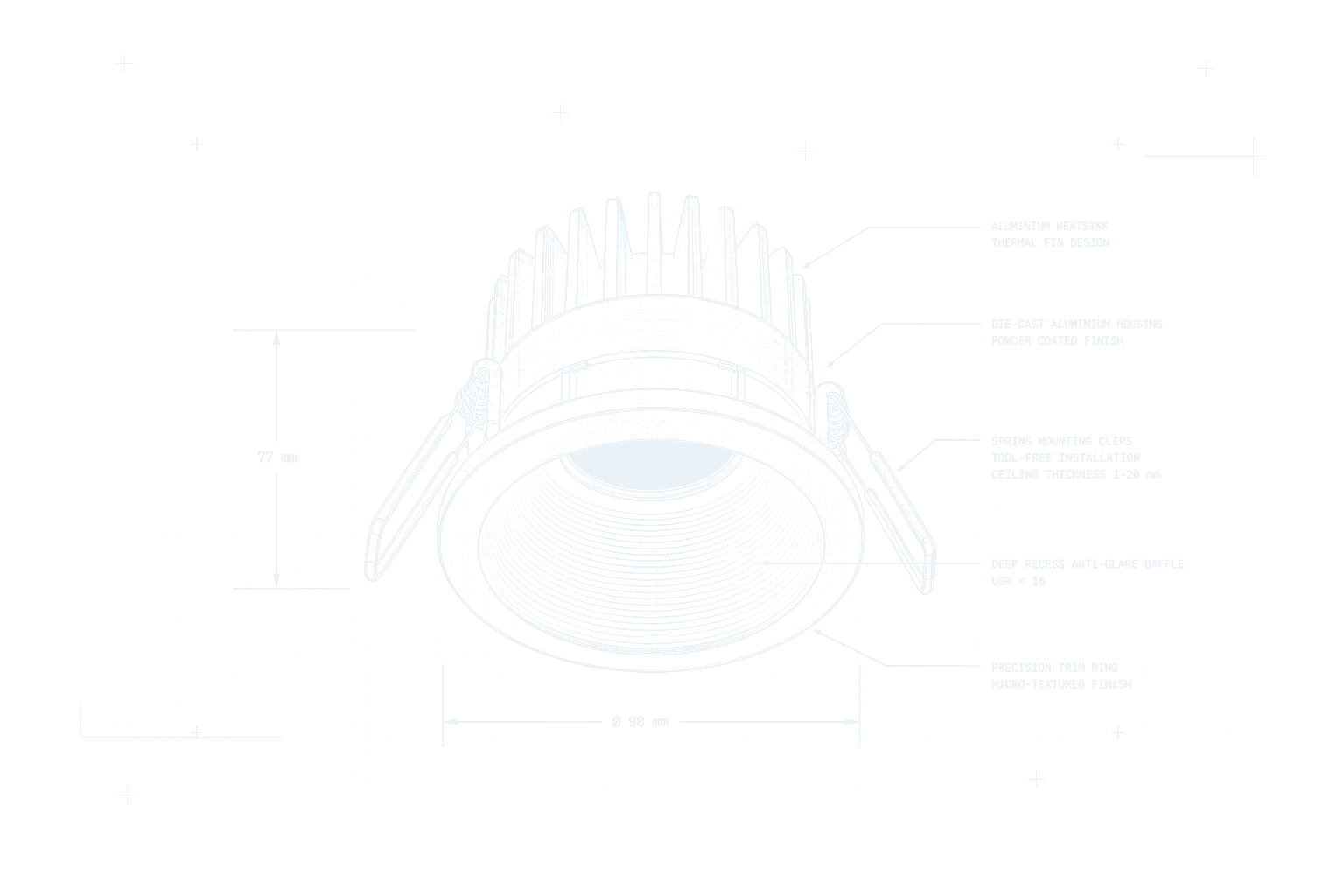
Downlights for fitting rooms, tills, circulation and compact ceiling details that need controlled glare.

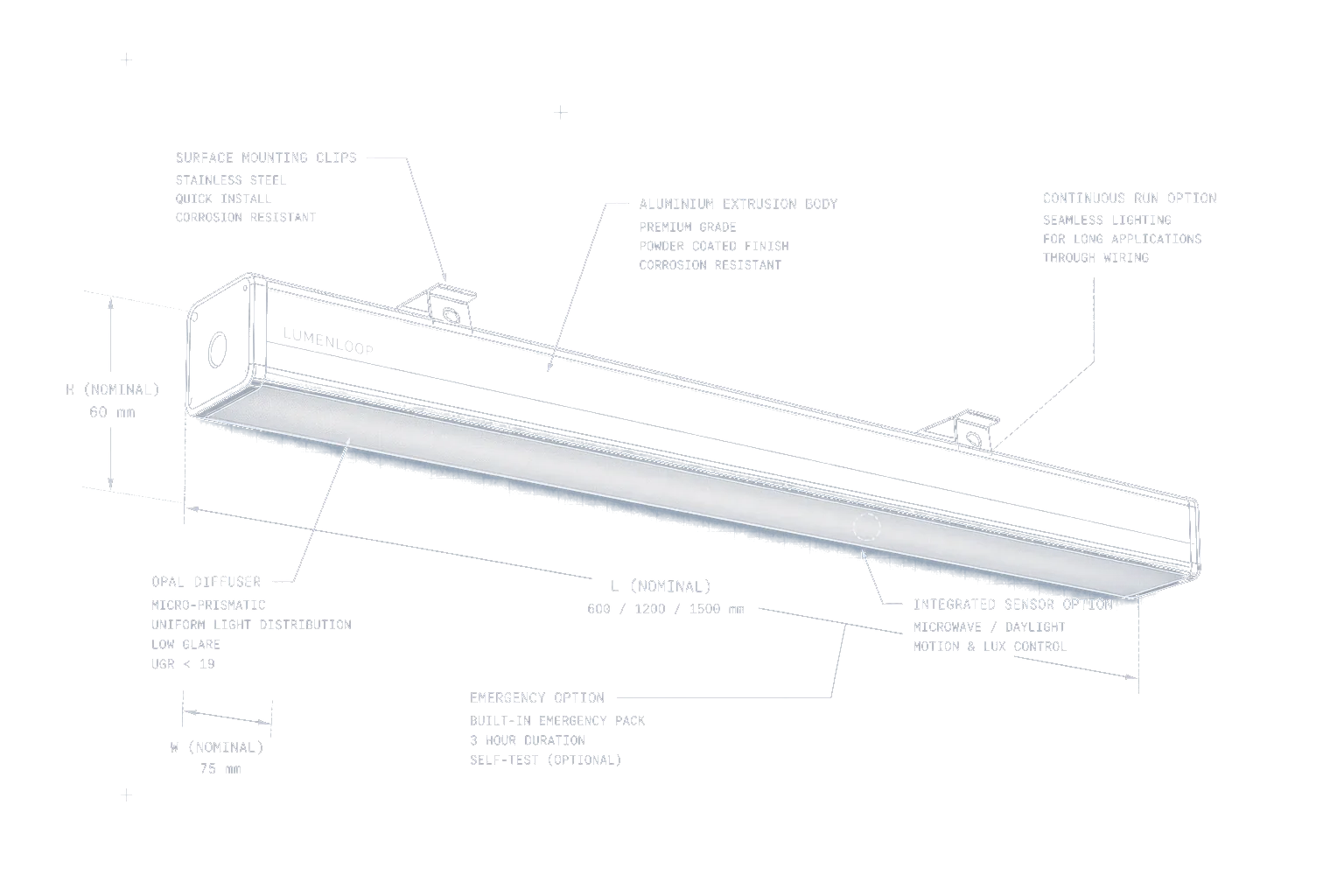
Linear lighting for back-of-house, service areas, shelving runs and calmer general illumination.

Exit signs, emergency points and conversion options coordinated with the refurbishment layout.
Display focus, customer comfort, ceiling access and emergency provision shape the luminaire mix for a retail refit.
Track and spotlight choices should follow the visual merchandising plan.
A retail scheme can feel harsh if every product is treated as a display fitting.
The best product choice is also the one that fits the refurbishment programme.
Emergency provision should not be a late drawing revision.
Track spots, downlights, linear fittings, controls and emergency options can be compared against the trading floor, fitting rooms, stock areas and escape routes.
Retail schemes work better when display lighting, fitting rooms, tills, stock areas and emergency provision are treated as separate lighting layers.
Retail lighting refurbishment usually needs adjustable focus for shelving, campaign tables, windows and feature walls. Track and spotlights should follow the merchandising plan.
Fitting rooms need comfortable vertical light and careful colour appearance. Till areas need enough task light without turning the whole shop into a harsh display layer.
Linear luminaires, battens or panels can cover stock rooms, staff areas and service corridors where efficiency, access and durability matter more than accent beams.
Retail lighting refurbishment may involve retained ceilings, existing track positions, fluorescent lamps, older LED panels or dated spotlights. The existing lighting system affects fitting size, maintenance access, wiring routes and installation disruption.
LED lighting can reduce energy consumption and maintenance costs compared with older fluorescent light sources when luminaires, drivers and controls are selected around trading hours, service access and expected service life.
Emergency lighting, controls, trading hours and phased installation should be reviewed before the refurbishment schedule is fixed.
Practical answers for product selection, controls, emergency lighting and project information.
Retail refurbishments commonly use track lighting, spotlights, downlights, linear luminaires, emergency lighting and controls. The luminaire mix is selected around display requirements, ceiling access and customer circulation.
Track lighting is useful where product displays change or need adjustable focus. It should be balanced with ambient light, tills, fitting rooms and back-of-house requirements.
Fitting-room lighting should consider glare, vertical light, colour appearance and maintenance access. It should not simply copy the shop-floor accent strategy.
Retrofit usually describes replacing or converting existing light fittings. Retail lighting refurbishment is broader because it can include new LED luminaires, retained ceilings, display focus, controls, emergency lighting and phased installation.
Lumenloop focuses on commercial LED luminaires, controls and emergency options for refurbishment projects. Vintage lighting repair, bulb replacement and decorative light restoration are separate specialist services.
Yes. Share the shop area, display notes, existing fitting positions and fitting-room requirements so product ranges, controls and emergency options can be discussed before quotation.

Shop area notes, ceiling detail, display priorities, fitting-room requirements, emergency notes and refurbishment timing help narrow the product ranges.
Compare product families, controls, emergency options and refurbishment requirements.