
Office lighting energy saving calculator
Office lighting energy saving calculator
Estimate office lighting energy use, cost saving, carbon reduction and simple payback for an LED upgrade. The result can be compared with office LED lighting upgrade and the broader office lighting range.
Energy Dashboard
Calculator ready for an office result.
Live estimate PDF estimate
Choose an office context, then adjust the assumptions only where you know the detail.
Estimated annual cost saving --
--% lower energy use against the selected existing lighting baseline.
-- energy
cut
cut
Current --
LED --
Saving -- /yr
-- 0 years 5 years 10 years
Installed cost Annual saving
Based on the selected hours per day, days per week and electricity tariff.
Target--
Light required--
Scenario LED load--
Scenario fittings--
Spacing guide--
Maintenance--
The calculated comparison will show the existing load, proposed LED load and likely saving pattern.
Calculation basis
Office energy comparison from practical inputs. 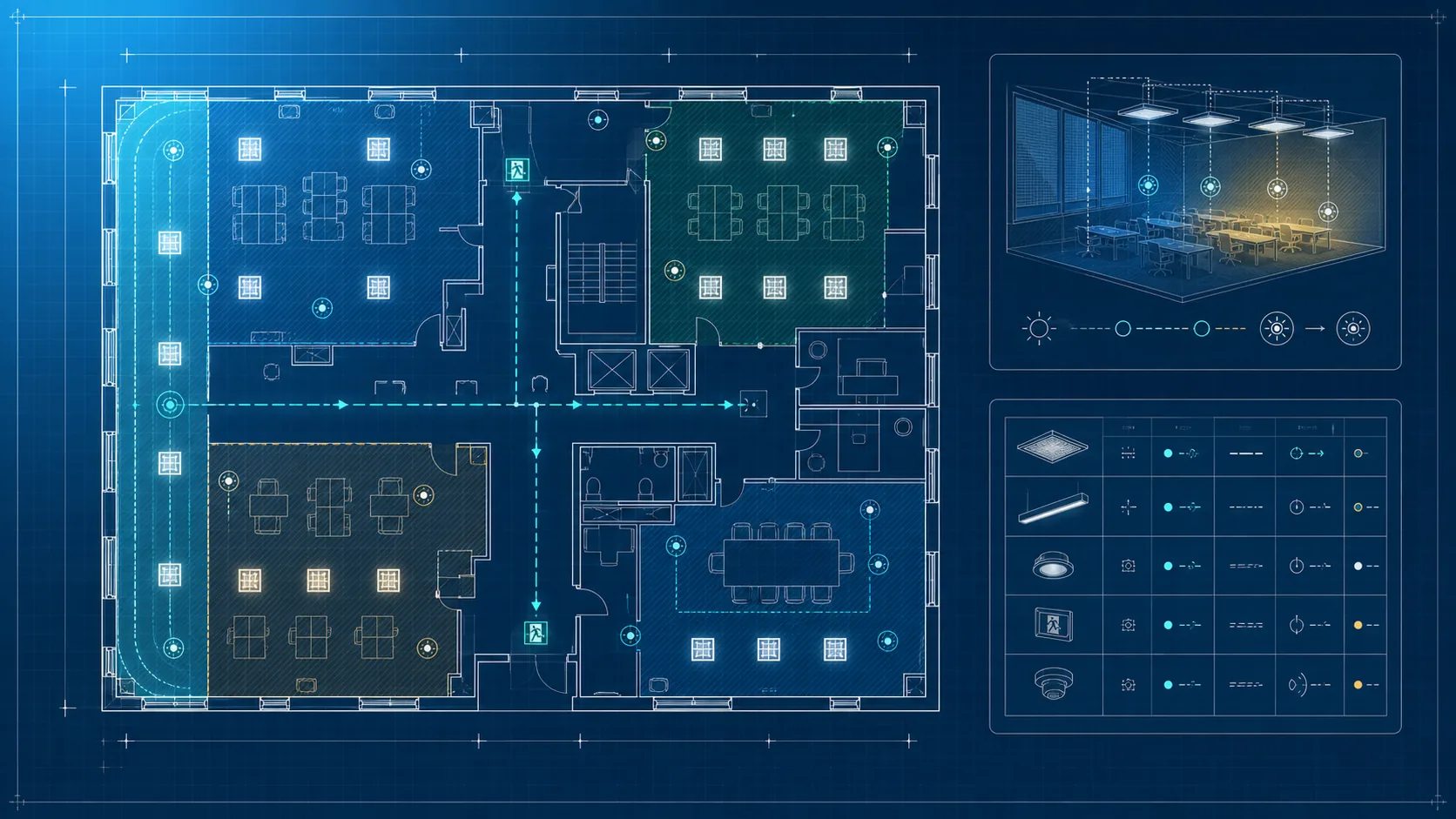
Office context
The selected workspace sets a practical light-level benchmark for the indicative lumen calculation.
Area and height
Floor area and ceiling height establish the planning lumens and indicative fitting count.
Existing load
Existing watts per square metre establish the annual electricity baseline for the office.
LED load and controls
Fitting wattage and the selected control option adjust the projected LED load.
Specification support
Read the estimate as a budget guide.
The result compares existing and proposed lighting load, annual electricity use and indicative running costs. It is not a photometric design, product schedule or quotation.
An office LED upgrade needs lower installed watts without compromising the working light level, glare control or agreed controls. For a broader building mix, use the commercial lighting energy savings calculator.
How the payback figure is worked out.
The main payback figure is an energy-only yardstick. It uses the entered installed cost per fitting, estimated fitting count, annual operating hours, electricity tariff, current lighting load and proposed LED load.
The maintenance allowance is shown separately. It adds a modest planning allowance to the annual benefit for avoided lamp changes and reduced maintenance visits, but it is still not a Lumenloop quotation or a finished project cost.
Method and scope
How office LED lighting energy savings are estimated.
The calculator converts the selected office area and maintained light level into an indicative fitting count. It then compares the estimated existing load with the proposed LED load across the selected operating hours, days per week and electricity tariff.
For an office lighting wattage calculation, existing watts per square metre provide the baseline where circuit data is incomplete. For office lumen estimates, the selected light level, ceiling height and maintenance factor set the maintained-lumen target used for the fitting count.
CO2e reduction uses the GOV.UK UK electricity conversion factor shown in the result. The calculation provides an energy comparison for commercial office upgrades; room geometry, mounting positions and glare still need to be resolved for a completed lighting scheme.
How do you calculate energy savings for LED lighting?
Estimated existing power is office area multiplied by the selected existing watts per square metre. Estimated LED power is the indicative fitting count multiplied by the proposed fitting wattage, adjusted for the selected controls. Both loads are multiplied by the entered operating pattern to calculate annual kWh; saved kWh multiplied by the tariff gives the annual running-cost saving.
What does the simple payback figure include?
The main payback figure divides the entered installed cost per fitting by the estimated annual electricity saving. The separate maintenance allowance is a planning allowance only; neither figure is a Lumenloop quotation.
Does the calculator replace an office lighting design?
No. It provides a budget estimate for energy, cost and carbon comparison. For commercial offices, use the installed LED luminaire load rather than a single LED lamp or bulb. A completed office lighting layout needs the agreed room arrangement, mounting positions, glare target, emergency provision and control method.
Related information
Office lighting ranges and upgrade information.
Commercial lighting upgrades, office LED luminaires, controls, emergency options and replacement work.
Commercial upgrades LED replacement planning for commercial buildings. Office lighting Low-glare panels, linear systems and controls for office interiors. Lighting controls Occupancy, daylight and wireless control arrangements. LED panel lighting Office panel luminaires for replacement work. Emergency lighting Emergency provision for office refurbishments and upgrades. Specification support Product and option information for commercial schedules.
Keep the office lighting quantity and savings connected
For an illustrative existing office load of 5 kW and proposed LED load of 3 kW operating for 2,500 hours a year, the energy reduction is 5,000 kWh. At an assumed £0.25/kWh, that is £1,250 a year in electricity savings before maintenance allowances.
Use total installed loads, not lamp wattage alone. Match the proposed light output and room requirement before comparing costs; actual controls, daylight, hours and tariff can change the result.
Use the office lighting quantity calculator to establish the early output requirement and the LED payback calculator when a full installed cost is available.