
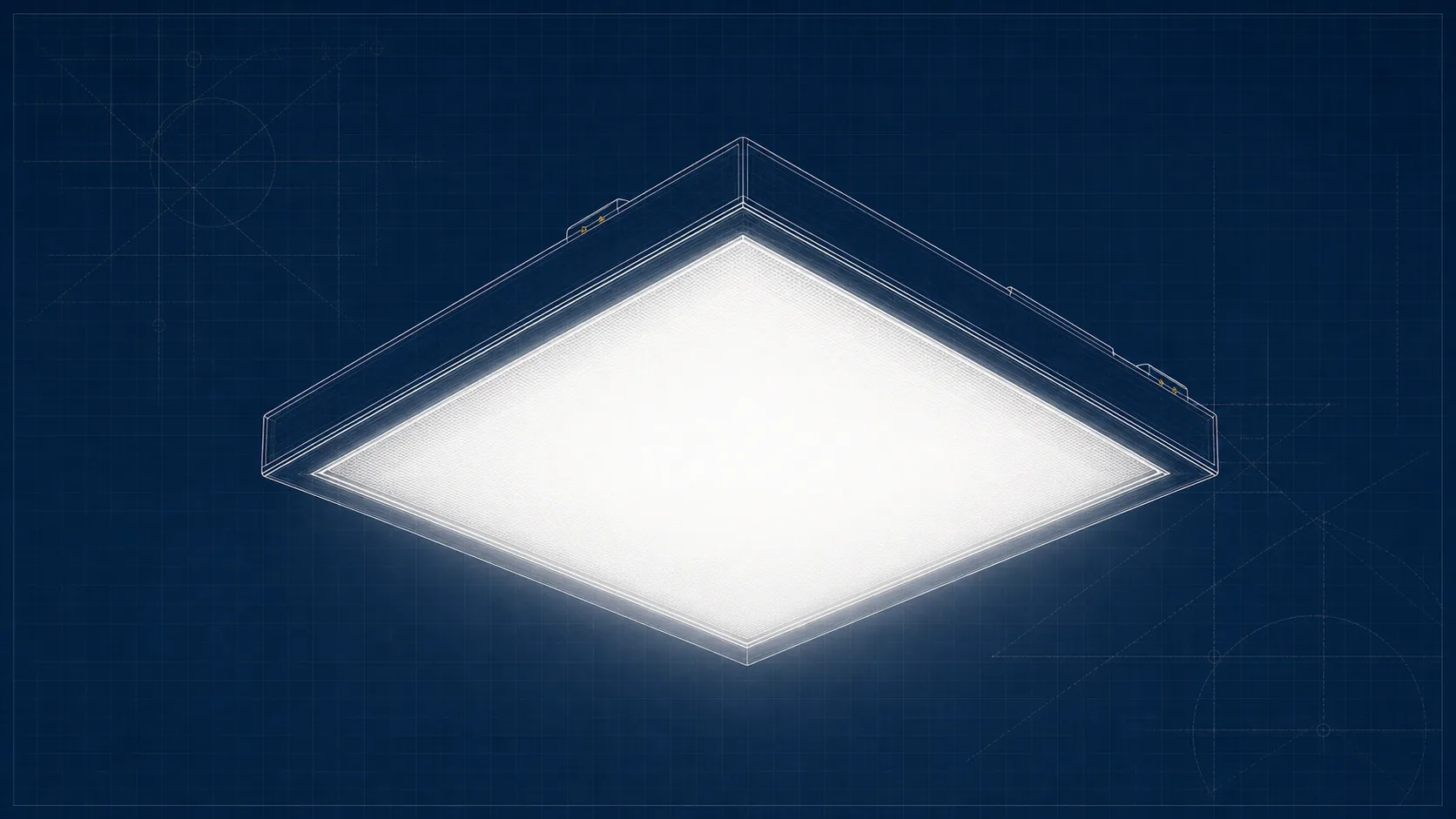
SAS 150 concealed T-frame projects can use these listed panel options before controls, emergency and access details are checked.
LED panels for SAS and Armstrong ceilings
LED panel lights for SAS, Armstrong
and other specialist metal ceilings.
Choose the ceiling type below to see which Lumenloop LED panel suits SAS 150, SAS 130, Armstrong exposed grids and other specialist metal ceiling systems. We regularly review SAS System 120, 130, 150, 170, 200 / 205, 320 and 330 layouts, along with acoustic and perforated metal ceilings, so contractors can move quickly from ceiling detail to practical panel-light options for wider office lighting schedules.
SAS 150 panel options SAS 130 and Armstrong exposed grids Custom review for concealed metal ceilings Controls and emergency checked with the panel
SAS 130 and straightforward Armstrong exposed-grid ceilings can usually use standard 600 x 600 panel ranges, subject to module size and site detail.
SAS 120, 170, 200 / 205, 320, 330 and concealed Armstrong metal ceilings need the exact ceiling detail before a panel is assigned.
Ceiling selector
Choose the ceiling type and see the suitable LED panel.
SAS or Armstrong ceiling detail determines the first Lumenloop panel to consider or whether custom configuration is required.
Recommended panel
Select a ceiling type to see suitable panel options.
Choose the ceiling manufacturer and ceiling system on the left to reveal the relevant panel family, or a project information prompt for specialist ceiling details.
Ceiling system details Standard lay-in and exposed-grid ceilings return a clear selection. Concealed, acoustic and specialist metal ceilings require project information.
Ceiling guide
Suitable LED panels by SAS and Armstrong ceiling type.
The table gives a quick site check for ceiling details outside the standard website range.
| Ceiling system | Ceiling / access detail | Suitable Lumenloop panels | Contractor action |
|---|---|---|---|
| General SAS/Armstrong compatibility | Most standard panels are sized to match 595 x 595 mm or 600 x 600 mm module openings without cutting. | Aurora Lucid 178 Edge-Lite 20 Luminate 184 | Baseline for straight swaps, with exact manufacturer model, module type and access detail confirmed before quotation. |
| SAS 150 | Clip-in concealed grid (T-frame), tight joints, access by extractor tool. The concealed T-frame mount is suitable only where support and load limits are confirmed. | Aurora Lucid 178 Edge-Lite 20 | SAS-150 concealed T-frame mount option, with module size, access, controls and emergency confirmed before quotation. |
| SAS 130 | Lay-in exposed grid (Alugrid/T-grid), lift-in from above, usually 600 x 600 module openings. | Aurora Lucid 178 Edge-Lite 20 Luminate 184 | Standard 600 x 600 panels suit schedules with a matching lay-in module. |
| Armstrong 600 x 600 exposed grid | Standard exposed T-grid ceiling with a 600 x 600 panel opening. | Aurora Lucid 178 Edge-Lite 20 Luminate 184 | Standard panel selection, with the exact Armstrong grid and module size confirmed before quotation. |
| SAS 120 | Clip-in concealed spring tee. Flush/bevelled panel clips from below using spring-tee extractor methods. | Custom review | Include the ceiling detail and drawings. Do not assign a standard panel from the website alone. |
| SAS 170 | Torsion-spring clip-in concealed system with torsion hinge-down or spring-pivot access. | Custom review | Include the ceiling detail, access method and module size for a custom panel review. |
| SAS 200 / 205 | Hook-on concealed grid with hook-on/off tile access from below. | Custom review | Include the hook-on ceiling detail before the luminaire is chosen. |
| SAS 320 | Lay-in corridor/surround system (no full grid), surround-support or plasterboard edge detailing. | Custom review | Include the opening detail and support condition; some projects need a custom panel or support detail. |
| SAS 330 | Profile suspension module architecture, custom modules up to larger architectural spans (to approx 3m in advanced applications). | Custom review | Include the module layout. This is normally a project-configured panel review. |
| Armstrong concealed or specialist metal ceiling | Concealed, clip-in, metal, acoustic or non-standard ceiling detail. | Custom review | Include the exact Armstrong ceiling model and drawings. Lumenloop can often review a custom solution. |
Panel Ranges
Which LED panel suits each SAS, Armstrong or specialist ceiling type?
These panel ranges help contractors compare ceiling model, module size, controls and emergency notes before quotation. For straight 595 x 595 mm or 600 x 600 mm replacements the selection is often simple; for clip-in, hook-on, profile and acoustic metal ceilings the fixing and access detail still need checking first.
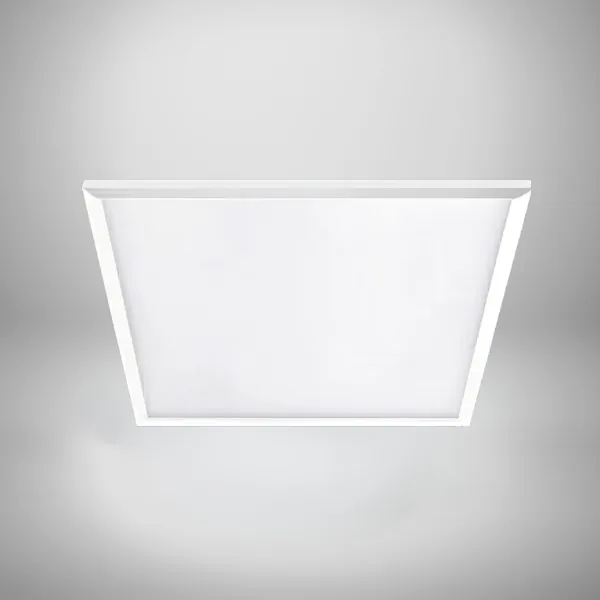
SAS 150 concealed T-frame SAS 130 lay-in 600 x 600 Armstrong exposed T-grid
Aurora
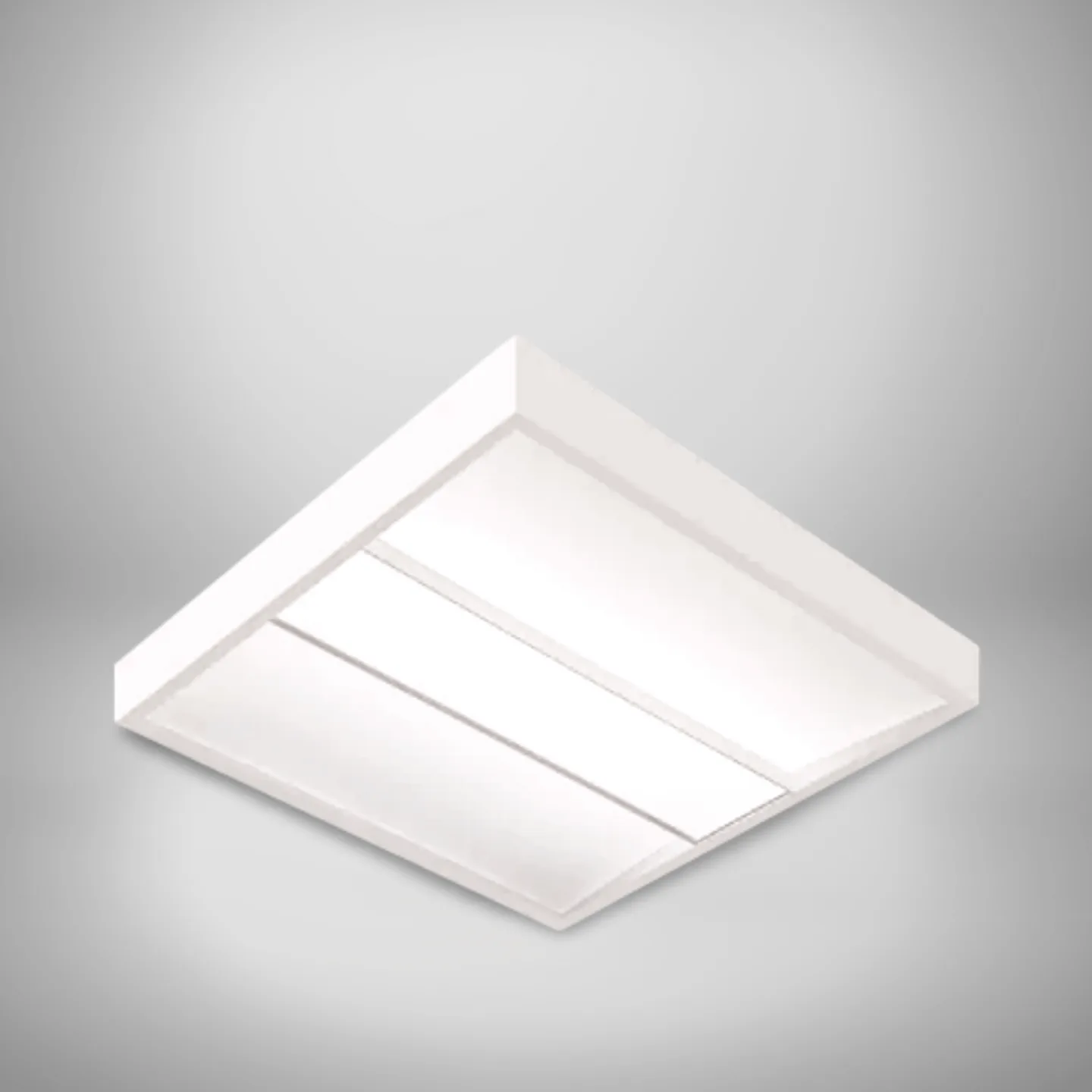
Back-lit 600 x 600 LED panel for SAS 150 concealed T-frame work, SAS 130 lay-in grids and straightforward Armstrong exposed-grid ceilings.
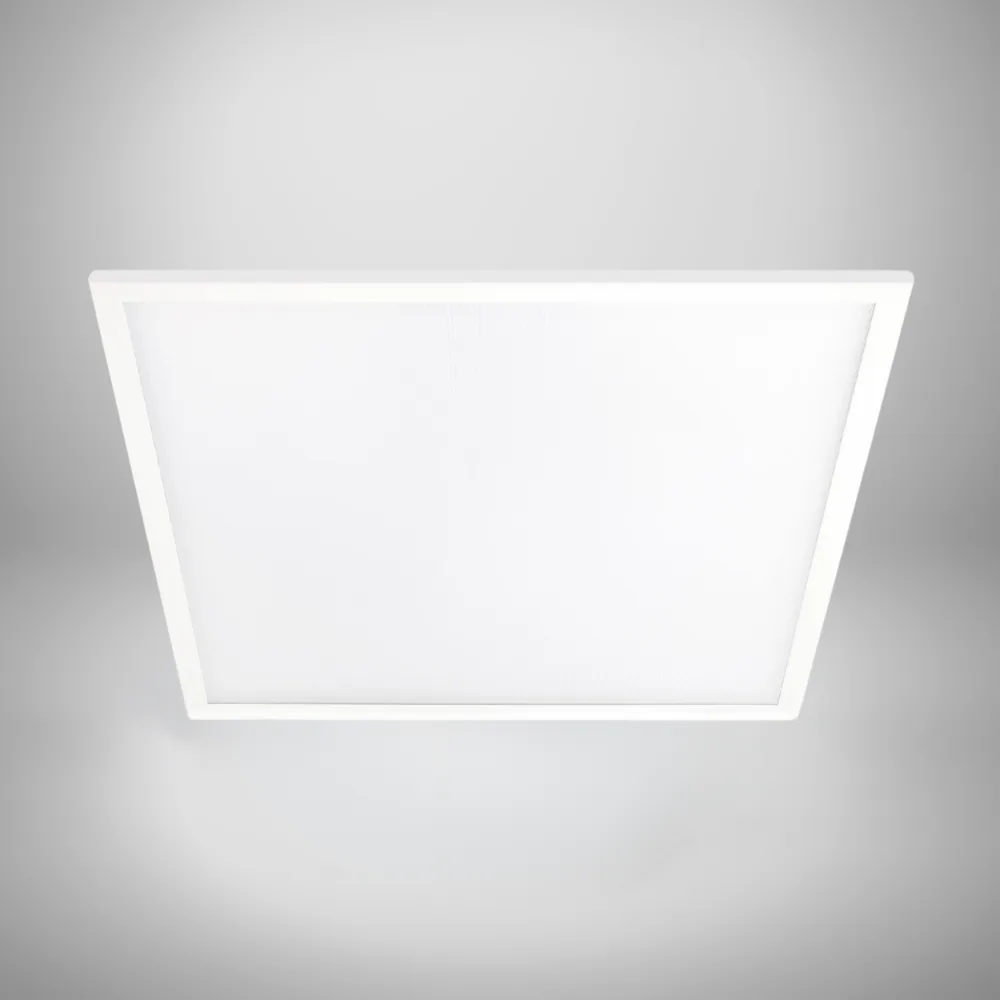
SAS 150 concealed T-frame SAS 130 lay-in 600 x 600 Armstrong exposed T-grid
Lucid 178
Low-glare 600 x 600 LED panel for office, education and healthcare schemes where UGR control matters as much as ceiling fit.
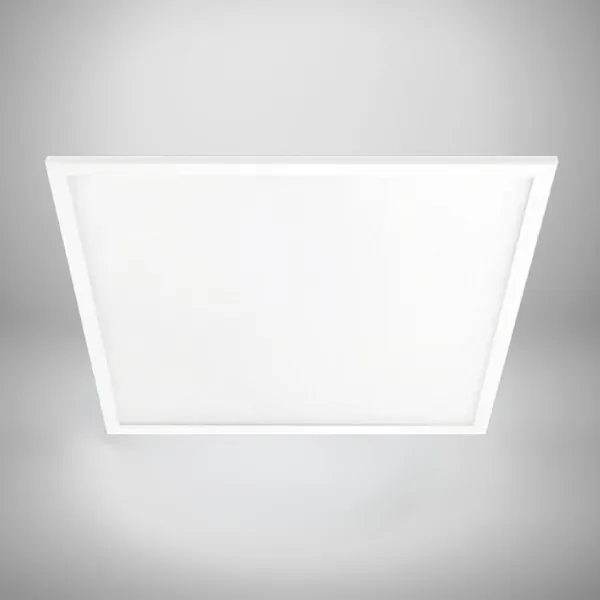
SAS 150 concealed T-frame SAS 130 lay-in 600 x 600 Armstrong exposed T-grid
Edge-Lite 20
Slim edge-lit 600 x 600 panel for SAS 150 concealed T-frame work and standard exposed-grid ceiling projects.
SAS 130 lay-in 600 x 600 Armstrong exposed T-grid Project information for concealed ceilings
Luminate 184
Direct / indirect 600 x 600 panel for exposed-grid ceiling work. Use project information for SAS 150 or concealed metal ceiling details.
Technical specification
Premium components and SAS integration details.
Lumenloop's SAS-compatible LED panel lines are built-to-order with premium optical diffusers, high-efficacy LEDs and drive systems designed for UGR-conscious environments and controlled uniformity.
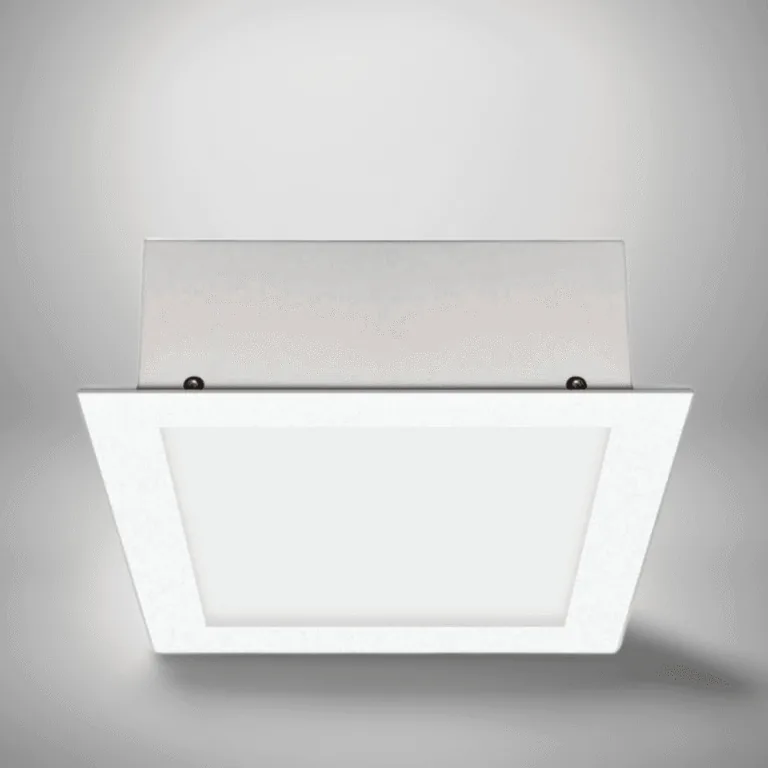
Lucid 178 and Edge-Lite 20
Lucid 178 is a strong fit for projects requiring robust glare control and broad specification flexibility; Edge-Lite 20 is edge-lit for slimmer sections and easier integration where ceiling depth is constrained.
Premium optics and LED engines support uniform light distribution and low glare. The approach is designed for office, education, healthcare and retail environments where visual comfort matters.
Project notes typically adjust output, CCT, dimming method (including DALI and wireless controls), diffuser style and emergency mode for maintained or non-maintained operation.
Load-bearing constraints are checked at design stage. Panels are specified to avoid exceeding SAS limits and are reviewed for independent suspension where heavier bespoke modules are required.
Perforated tiles and acoustic pad-backed layouts are considered so lighting integration does not degrade acoustic performance or ceiling maintenance access.
Most standard approaches use matched 595 x 595 or 600 x 600 module geometry, with project information for clip-in, hook-on and custom systems where fixing and access differ.
SAS Access Types
Why the ceiling model changes the panel answer.
Lay-in grid work can often use a standard 600 x 600 panel, while clip-in, hook-on and profile systems need the ceiling detail checked before a panel is assigned. That matters for panel alignment, retention, load-bearing limits, acoustic performance and future service access.
SAS 120
Clip-in concealed spring tee
Below-ceiling extraction and tight edge detail mean the panel needs a project information.
SAS 130
Lay-in exposed grid
A standard 600 x 600 panel selection can be used when the module size and grid detail match.
SAS 150
Clip-in concealed grid
Aurora, Lucid 178 and Edge-Lite 20 can use the SAS-150 concealed T-frame mounting option.
SAS 170
Torsion-spring clip-in access
Include the hinge-down or spring-pivot access detail before selecting the luminaire.
SAS 200 / 205
Hook-on concealed grid
Hook-on tile access changes the fixing detail, so this should go through custom review.
SAS 320 / 330
Corridor, surround or profile suspension modules
Use project information for corridor modules, plasterboard surrounds, large modules and architectural layouts.
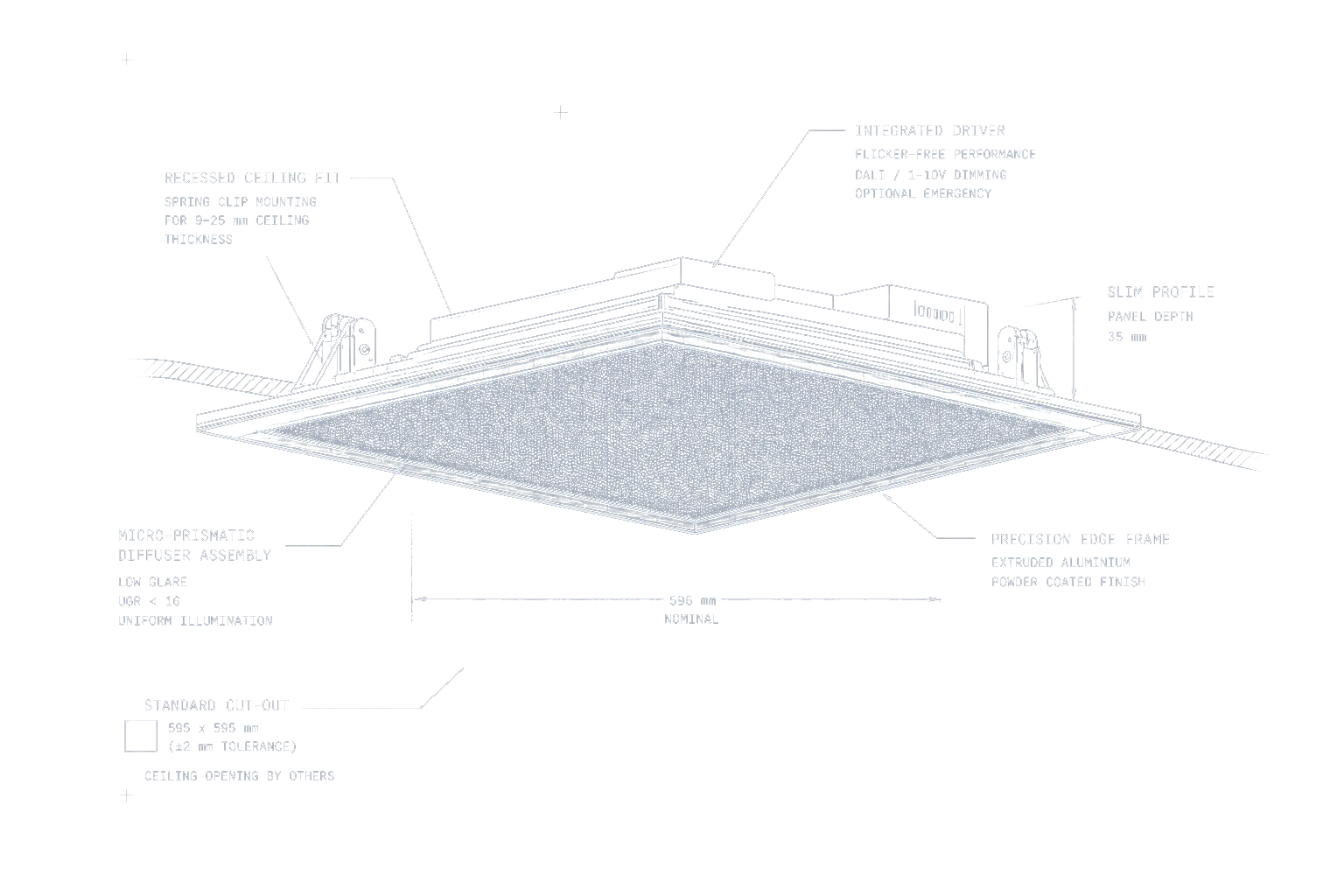
Mounting Detail
Ceiling section detail, module size and site checks.
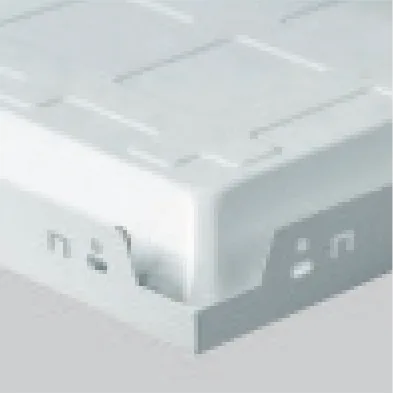
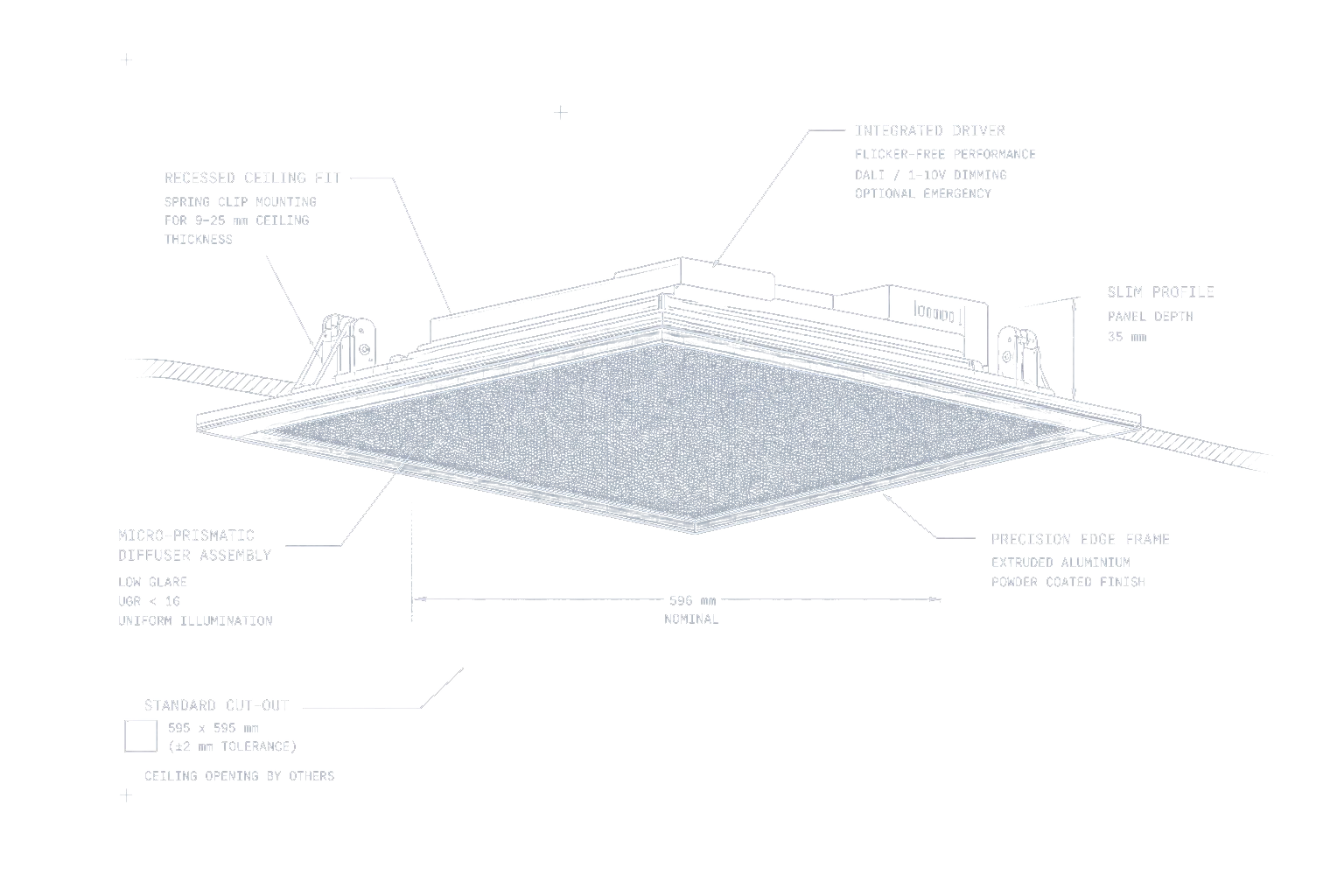
Ceiling section, panel size and access method should be checked together before ordering. Alugrid, Trugrid, exposed T-grid and concealed-frame ceiling types all need the opening, support detail, controls and emergency arrangement checked before the panel selection is fixed.
Grid section and module review
Ceiling section, opening size and future maintenance access should be clear before the panel is named.
Clip-in and torsion-spring ceilings need the access method checked so the luminaire does not block future ceiling maintenance.
Where acoustic pads or perforated metal tiles are used, the ceiling detail helps confirm the panel and support method.
Metal ceiling projects need the panel load, support condition and any independent suspension requirement checked before installation. The live specification path is to keep the panel within SAS load expectations unless separate suspension is designed in.
Control gear and emergency provision should be confirmed with the panel selection, not after the ceiling detail has been fixed. Typical project options include DALI, wireless controls, maintained emergency and non-maintained emergency.
Bespoke consultation
Matching the panel to the existing ceiling system.
On SAS and Armstrong projects, the specification usually comes from matching the panel to the existing grid, access method, acoustic build-up and finish requirement rather than guessing from the ceiling brand alone.
Replacement work can often use a standard module size, but retrofit success still depends on the exact ceiling model, tile edge, panel weight and support arrangement.
Diffuser style, light output and glare control can be specified alongside the ceiling detail so the panel meets both the visual requirement and the mounting requirement.
Where the ceiling uses perforated panels with acoustic pad backing, the panel integration is reviewed so the lighting works with the ceiling rather than disrupting its acoustic intent.
The goal is a clean fit, serviceable access and a luminaire that sits naturally within the ceiling module, whether the project is a direct panel swap or a more bespoke metal ceiling integration.
Project detail checks
Common panel formats and ceiling information we review before manufacture.
Specialist ceiling projects are usually decided by a few practical details: the exact module size, whether the ceiling is exposed or concealed, how the panel will be released for maintenance, and whether acoustic backing or perforated faces affect the build-up. These references help explain why some projects suit a standard panel selection and others need more ceiling information before the product can be confirmed.

Special ceiling FAQs
Questions contractors ask before ordering a panel.
These checks usually decide whether the website selection is enough or whether the ceiling should go through a project information first.
Aurora, Lucid 178 and Edge-Lite 20 are the listed options for SAS 150 concealed T-frame projects. Confirm the module, access, controls and emergency requirements before final selection.
If the SAS 130 ceiling is a matching 600 x 600 lay-in exposed grid, select Aurora, Lucid 178, Edge-Lite 20 or Luminate 184. Include the grid detail if the module is not standard.
For straightforward Armstrong 600 x 600 exposed T-grid ceilings, use Aurora, Lucid 178, Edge-Lite 20 or Luminate 184. Concealed or specialist Armstrong metal ceilings need project information.
These ceiling types should go through project information first. With the exact ceiling detail, Lumenloop can advise whether a custom panel solution is suitable.
Often yes. The ceiling model, module size, support condition, access method and any drawings need checking first so the panel is matched to the ceiling properly.
Include the ceiling manufacturer, system name, module size, access method, support detail, controls and emergency requirement.
Yes, if acoustic pads, perforated tiles or unusual support details are involved. Those details affect the panel fixing and the overall ceiling build-up.
Yes, but the controls and emergency requirement should be confirmed at the same time as the ceiling detail and panel range, not afterwards.
The schedule should confirm the exact module, usually 595 x 595 or 600 x 600, along with the grid detail. Do not assume the ceiling module from the ceiling brand alone.
Sometimes, but the ceiling condition, access method, support detail and panel size should all be checked before a replacement panel is ordered.
Yes, it is commonly used where a slimmer edge-lit format is needed for exposed or concealed SAS systems, provided load-bearing and access criteria are confirmed first.
Ceiling model and panel requirement.
Metal ceiling enquiries can cover SAS, Armstrong or other ceiling systems where the panel option needs confirming. Include ceiling details where the ceiling is clip-in, hook-on, acoustic, concealed or non-standard.
Ceiling manufacturer and system Module size and access method Controls and emergency Drawings or marked-up schedule
Prefer to talk first- Call 02045 721 554 or email the team.