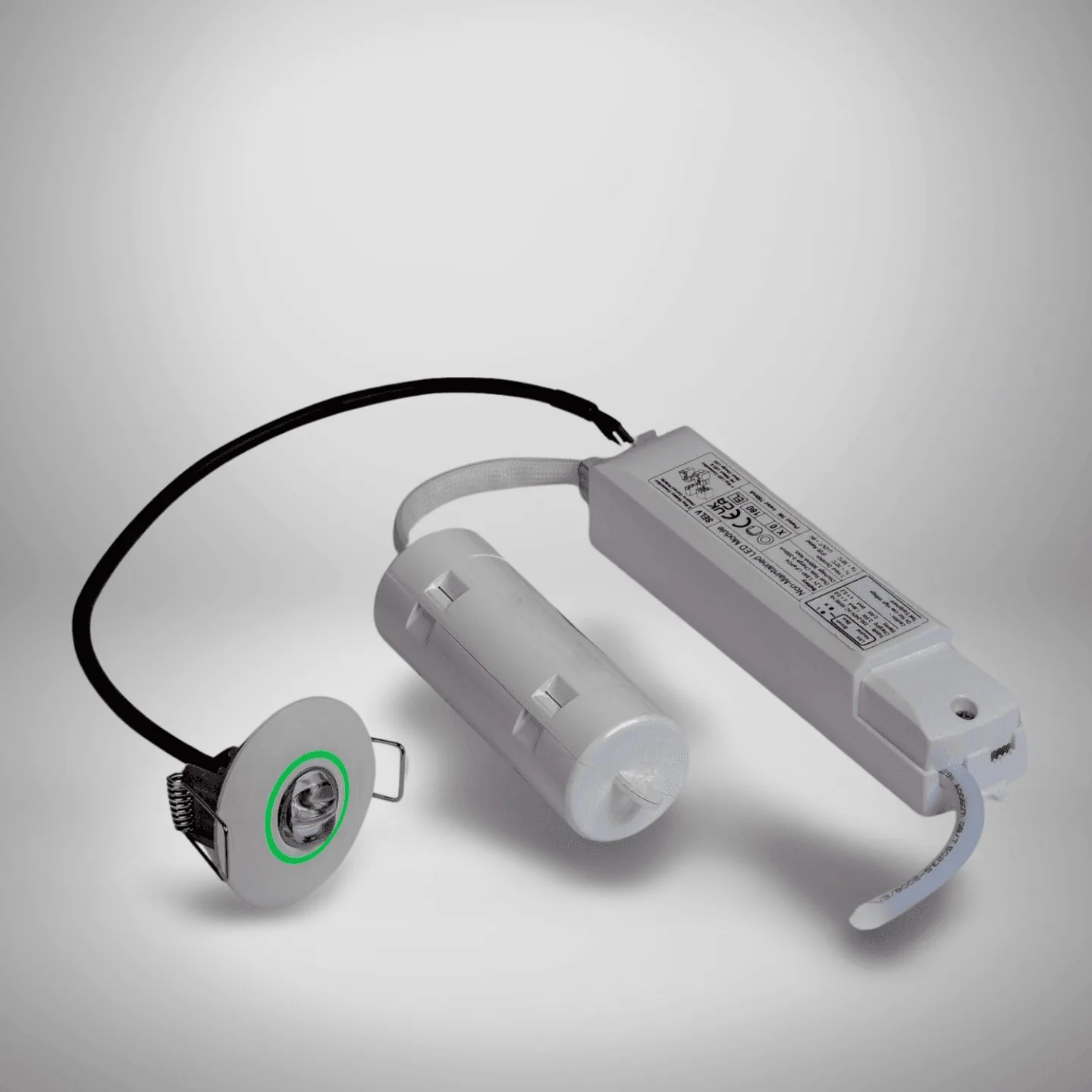
Automatic testing function
A self-test option is associated with the emergency equipment fitted to the chosen luminaire.
Commercial emergency lighting
Emergency luminaires with compatible self-test options for commercial projects. Select the fitting first, then keep the emergency operating mode and testing method clear in the product information.
Testing method
Self-test emergency lighting uses compatible emergency equipment to perform automatic tests. It is not a blanket option for every emergency-capable luminaire.
DALI emergency lighting is a separate control and monitoring arrangement. It uses compatible DALI emergency gear and the relevant control infrastructure; a DALI driver for normal lighting does not by itself establish DALI emergency testing.
For broader product types and emergency operating modes, see the emergency lighting range. Where a DALI emergency arrangement is required, use the dedicated DALI emergency lighting information.
A self-test option is associated with the emergency equipment fitted to the chosen luminaire.
DALI emergency requires compatible emergency control gear and a DALI emergency arrangement; it is not interchangeable with a standalone self-test function.
Emergency duration, maintained or non-maintained operation and the testing method should remain tied to the specific product reference.
Verified self-test options
This focused range only includes products whose current source content explicitly identifies a self-test or self-test/DALI emergency option.
Questions
It is emergency lighting with compatible equipment that can carry out automatic functional and duration tests. The availability of the option depends on the selected luminaire and emergency configuration.
No. Self-test is a testing function. DALI emergency lighting relies on compatible DALI emergency equipment and the relevant control arrangement. The two requirements should be specified separately.
No. Self-test must be listed for the selected product and emergency option. The products shown above have source-verified self-test capability; check product information before selection.
Product enquiry
Include the product reference, emergency operating mode and required testing method so the enquiry stays tied to the appropriate luminaire option.
Self-test emergency luminaires automatically run programmed checks of the lamp, battery and emergency operation, then indicate a pass or fault locally. This reduces the manual effort needed to initiate each test, especially where fittings are numerous or difficult to reach.
It does not remove the need for building management. Indicators must be inspected, faults recorded and repairs completed, while the wider emergency-lighting installation still needs to be considered as part of the fire-risk assessment and maintenance plan.
Each luminaire manages its own test cycle and communicates status through an indicator. It can be a practical option for smaller buildings, provided someone routinely checks the indicators and maintains a reliable log.
A monitored system can collect test status and faults from multiple luminaires. That may improve oversight across larger estates, but it requires compatible emergency gear, addressing, commissioning and a clear process for acting on alerts.
Confirm fitting quantities, maintained or non-maintained operation, duration, access constraints, existing controls and how records will be managed. The product schedule should distinguish normal-lighting control from emergency test and monitoring requirements.