
Dedicated and general-lighting emergency bulkheads

Emergency bulkhead lights

Compare LED emergency bulkheads for escape routes, circulation areas and service spaces, including dedicated emergency units and general-lighting bulkheads with maintained, self-test and DALI emergency options.

Current range3 emergency bulkhead families
Product rolesDedicated or general lighting
Emergency optionsMaintained · self-test · DALI
Sentinel LED bulkhead installed on a painted blockwork wall beside a doorway
SentinelWall-mounted LED bulkhead with emergency, control and presence-detection options.
Current emergency bulkhead range

Compare emergency bulkhead lights

Select the lighting role and emergency control requirement to compare the most relevant family and available options.

Lighting role

Emergency control

Bright Emergency Bulkhead is recommended for a dedicated emergency-lighting role. Relevant control options: self-test.
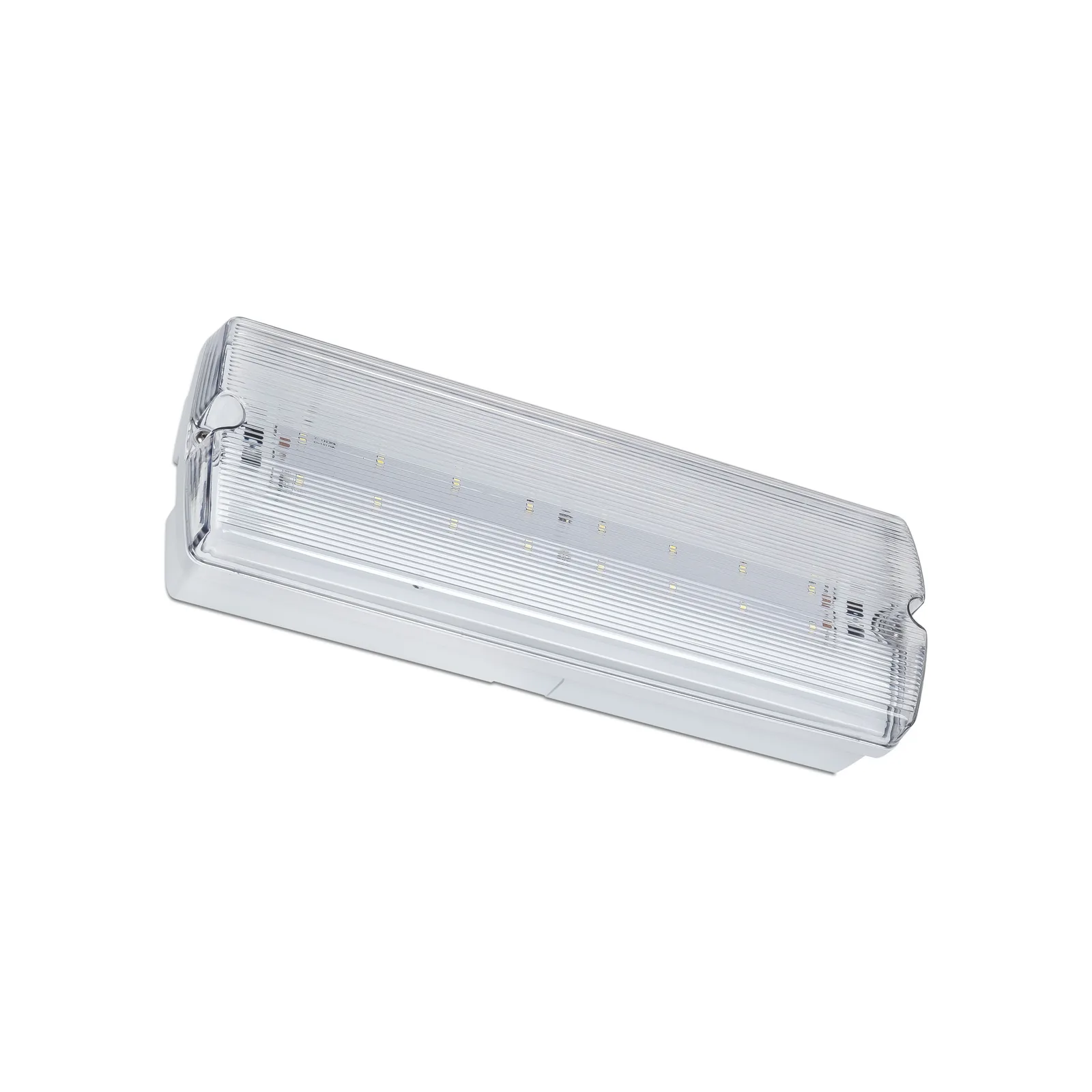
Bright IP65 emergency bulkhead light
Dedicated emergency bulkhead

Bright Emergency Bulkhead

Recommended

A compact IP65 emergency bulkhead for indoor or outdoor escape-route applications, with a dedicated 150 lm emergency output.

ModelsEmergency outputPowerCCT
BRIGHTEMERGENCYBULKHEAD.001–.004150 lm3 W5000K
Control options
DALI controlSelf-testDALI emergency

Best matched to a dedicated emergency-lighting role where compact IP65 protection is required.

View Bright Emergency Bulkhead →
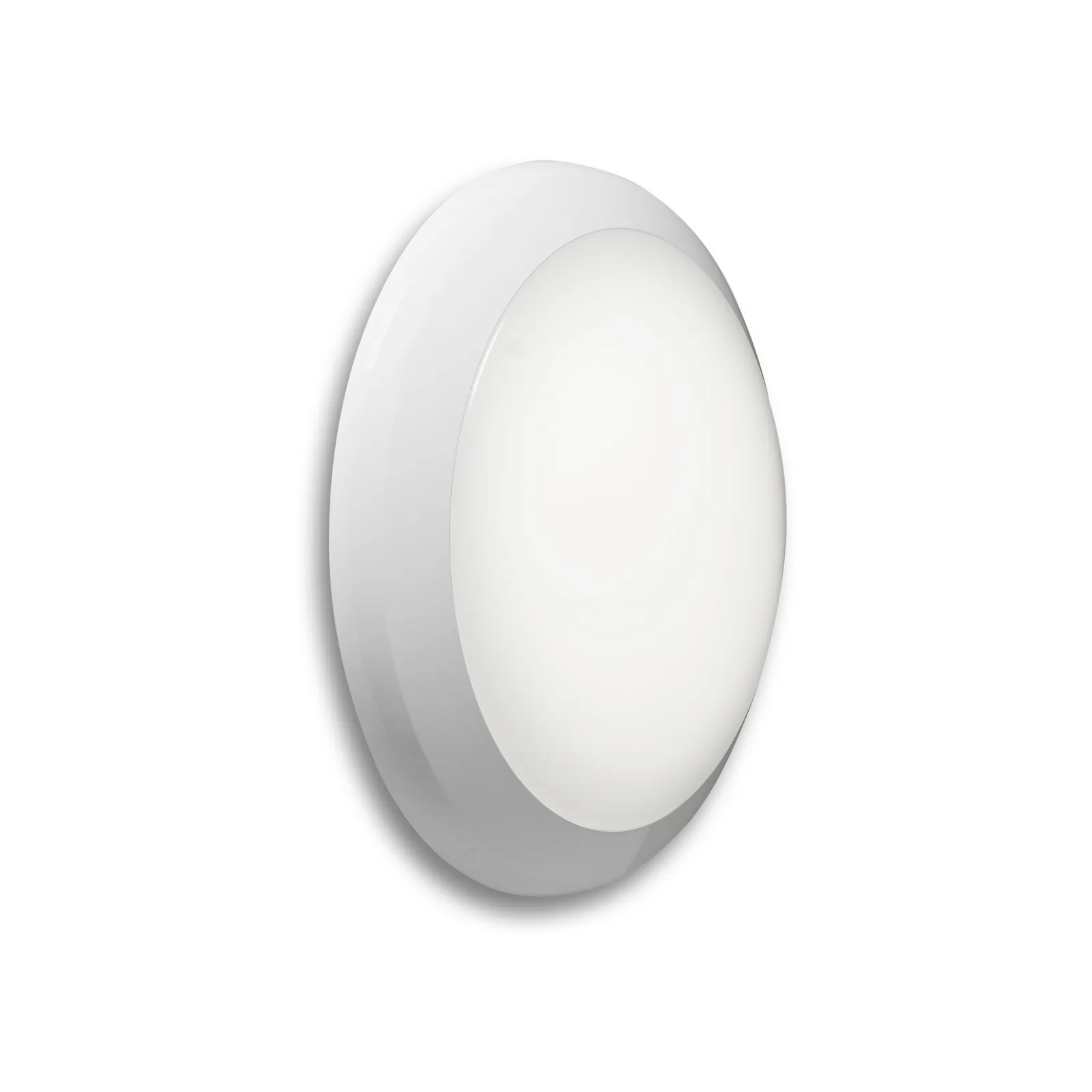
Harbor IP65 IK10 circular LED bulkhead light
IP65 general-lighting bulkhead

Harbor

Also suitable

An IP65, IK10 LED bulkhead for general lighting with maintained and DALI emergency configurations, plus sensor and wireless control options.

ModelsNormal outputPowerCCT
HARBOR.001–.0021,200–1,250 lm10 W3000K / 4000K
HARBOR.003–.0041,600–1,700 lm14 W3000K / 4000K
HARBOR.005–.0062,225–2,350 lm21 W3000K / 4000K
Emergency options
Maintained emergencyDALI emergency
Control options
DALI · SwitchDIM · DSICasambiMotion sensor

A strong choice where one IP65, IK10 bulkhead must provide normal lighting and an emergency configuration.

View Harbor →
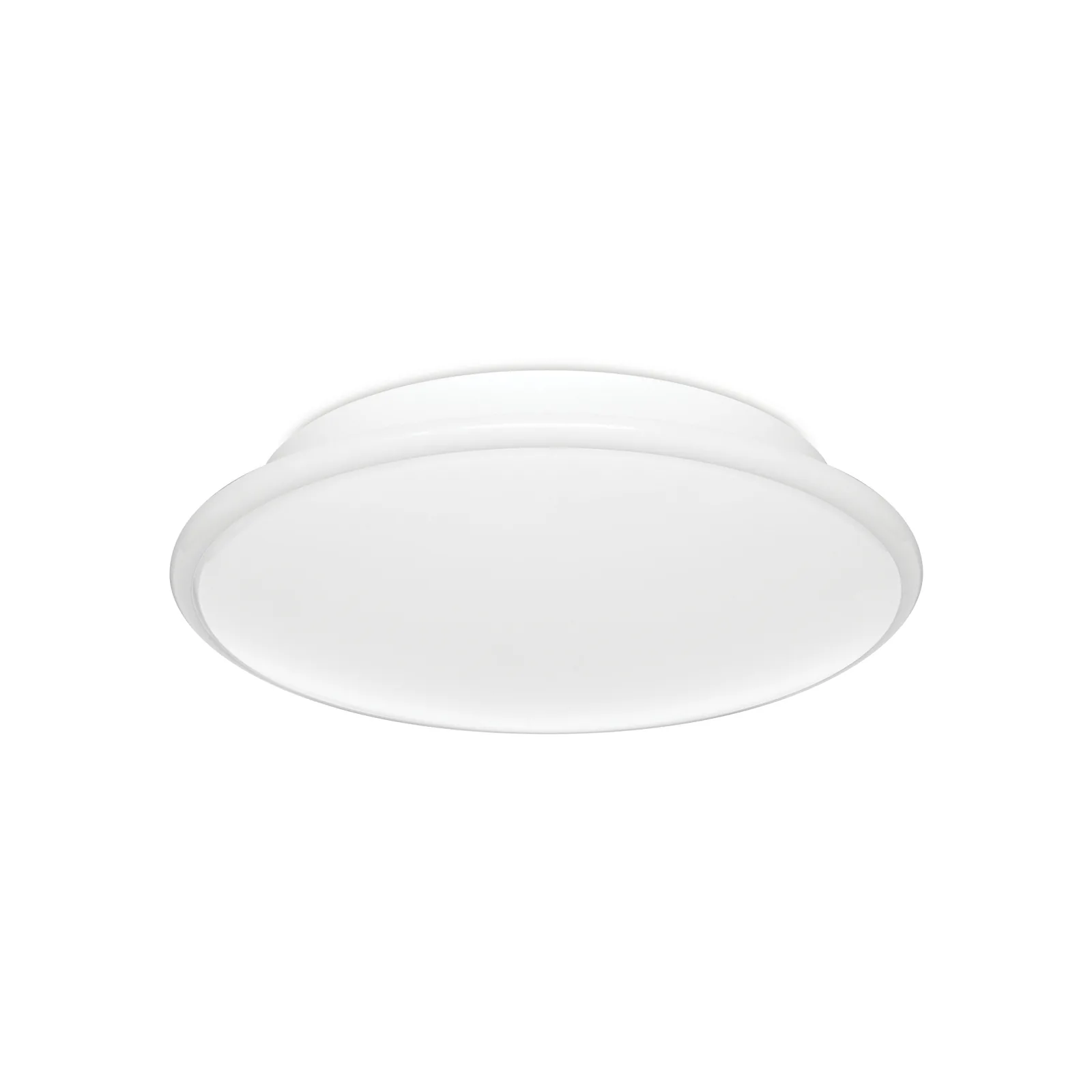
Sentinel circular LED emergency bulkhead light
Higher-output general-lighting bulkhead

Sentinel

Also suitable

A wall- or ceiling-mounted LED bulkhead with eight normal-light outputs and 3-hour, self-test and DALI emergency configurations.

ModelsNormal outputPowerCCT
SENTINEL.001–.0041,450–2,100 lm11–15 W3000K / 4000K
SENTINEL.005–.0082,775–3,925 lm21–28 W3000K / 4000K
Emergency options
3-hour emergencySelf-testDALI emergency
Control options
DALI · SwitchDIM · DSICasambiPresence detection

Suitable where a broader normal-light output range is needed alongside emergency and connected-control options.

View Sentinel →

Final product selection, quantities and positions must follow the project fire risk assessment, emergency-lighting design and applicable standards.

Emergency operating modes

Maintained and non-maintained emergency bulkheads

The operating mode describes when the lamp is illuminated. Testing and monitoring are separate choices that determine how emergency operation is checked.

Comparison of maintained and non-maintained emergency lighting during normal power and a power failure

Maintained emergency lighting

The lamp operates during normal conditions and remains available when the normal supply fails. It can suit circulation spaces where the same luminaire provides everyday and emergency lighting.

Non-maintained emergency lighting

The emergency lamp remains off during normal conditions and operates when the normal lighting supply fails. Dedicated emergency bulkheads commonly use this approach.

Combined emergency luminaires

Normal and emergency light sources can sit within the same luminaire while performing distinct functions. The correct arrangement is set by the emergency-lighting design.

Emergency escape lighting coverage

Where emergency bulkhead lighting is used

Emergency escape lighting supports safe evacuation when the normal lighting supply fails. Required locations and coverage are established by the fire risk assessment and emergency-lighting design.

Escape routes and intersections

Corridors, route junctions and direction changes need sufficient emergency illumination to keep the escape path legible.

Stairways and level changes

Flights, landings and changes in floor level require particular attention because they introduce a greater movement risk.

Exits and external routes

Exit doors, final exits and the external route immediately beyond them form part of a continuous route to safety.

Safety equipment

Manual call points, firefighting equipment and other safety facilities must remain identifiable where emergency lighting is required.

Testing and monitoring

Emergency lighting control options

Select the emergency testing method separately from normal-light dimming, occupancy sensing or wireless control.

Standard

Manual emergency-lighting tests

Routine functional and duration tests are initiated and recorded through the building's maintenance process.

Available emergency configuration on Harbor and Sentinel
Self-test

Automatic local testing

The luminaire carries out scheduled function and duration tests and indicates its status locally, reducing manual test initiation.

Available on Bright Emergency Bulkhead and Sentinel
DALI emergency

Addressable emergency monitoring

Emergency devices can report test and status information through a compatible DALI emergency system. System design and commissioning remain project-specific.

Available across all three compared families
Emergency bulkhead specification

Emergency bulkhead light specification checklist

A complete brief separates the emergency requirement from normal-light performance and records the environment, controls and maintenance approach.

Emergency mode

Confirm maintained, non-maintained or combined operation from the emergency-lighting strategy.

Emergency duration

State the required duration and verify it against the selected emergency configuration.

Environment

Record ingress protection, impact resistance and any outdoor, washdown or tamper-resistance requirements.

Normal lighting

Where the bulkhead also provides general lighting, define normal output, CCT, distribution and switching.

Testing method

Choose manual testing, local self-test or addressable DALI emergency monitoring.

Installation and access

Coordinate wall or ceiling mounting, cable entry, visibility, maintenance access and final exit coverage.

Design and compliance

Emergency lighting guidance

Emergency lighting provision should be based on the premises fire risk assessment, maintained in effective working order and tested at suitable intervals. BS 5266-1:2025 is the current UK code of practice for emergency lighting of premises.

Emergency bulkhead FAQs

Emergency bulkhead lighting questions

What is an emergency bulkhead light?

An emergency bulkhead is a robust surface-mounted luminaire that provides emergency illumination when the normal lighting supply fails. Some products are dedicated emergency units; others combine normal and emergency lighting.

What is the difference between maintained and non-maintained emergency lighting?

A maintained emergency luminaire operates in normal conditions and during a supply failure. A non-maintained luminaire normally remains off and operates when the normal supply fails.

Do emergency bulkheads need self-test or DALI emergency?

Not in every project. Manual testing, local self-test and addressable DALI emergency monitoring are different maintenance approaches. The choice depends on the building, system design and management requirements.

Can an emergency bulkhead also provide normal lighting?

Yes. Harbor and Sentinel are general-lighting bulkheads with emergency configurations. Bright Emergency Bulkhead is the dedicated emergency-lighting option in this comparison.

Emergency lighting support

Specify emergency bulkhead lights for your project

Send the floor plans, fire strategy, mounting conditions and testing requirements. Lumenloop can help select the appropriate bulkhead family and prepare the luminaire schedule.