Lecture-theatre application lighting

Lecture-theatre lighting

Plan presentation, note-taking and circulation scenes from the room layout first. Confirm optics, glare, control scenes and emergency requirements before selecting a luminaire. Coordinate AV integration and commissioning separately.

Brief
Presentation + note-taking scenes
Product families
Flow + Aero
Key checks
Optics · glare · scene controls
Flow recessed linear LED luminaire, shown as a candidate for lecture theatre review
Flow · candidate linear luminaire

Start with the room scenes

What to resolve in a lecture theatre

A lecture theatre needs more than a classroom lighting repeat. Presentation, screen, note-taking and circulation scenes can place different demands on optics, control and emergency planning.

  • Presenter position, screen/board location and the required presentation scene.
  • Note-taking levels across seating rows, tiers and writing surfaces.
  • Risers, aisles, steps and egress routes, including any low ceiling areas.
  • Glare, contrast and optical review for the seating sightlines.
  • Dimming scenes, control interfaces and emergency operation.

Work through these points with the lighting designer, using the product records below as a starting point. The final choice should suit the room layout, optics and controls.

Scene-first selection

Lecture-theatre brief inputs

Use the room brief to check each product against the required scenes, optics and controls.

Scene levels
Define presentation, screen, note-taking and circulation requirements from the intended room use.
Optics and sightlines
Check beam/distribution, glare, contrast and proposed luminaire positions against the seating sightlines and ceiling build-up.
Controls
State dimming scenes, control gear and emergency operation; coordinate AV interfaces and commissioning separately.
Circulation safety
Account for aisles, steps, egress and emergency requirements before product suitability is assessed.

Product families for lecture theatres

Flow and Aero for lecture-theatre scenes

The records below use exact catalogue data. Optics, room suitability, glare, scene controls and emergency performance still require project validation.

Recessed linear · low-glare source positioning

Flow

Flow recessed linear LED luminaire product image

Recessed LED linear family with three lengths, six base records and listed low-glare, dimming and emergency options. The current product description covers offices, schools and retail; lecture-theatre suitability still requires project validation.

Base models
6
Lengths
850 mm–1.5 m
Output
1,725–3,325 lm
Flow base models
CodeLengthPowerOutputCCT
FLOW.001850 mm21 W1,725 lm3000K
FLOW.002850 mm21 W1,825 lm4000K
FLOW.0031.2 m30 W2,575 lm3000K
FLOW.0041.2 m30 W2,725 lm4000K
FLOW.0051.5 m35 W3,150 lm3000K
FLOW.0061.5 m35 W3,325 lm4000K

IP54 · low-glare reflector · 3000K

Aero

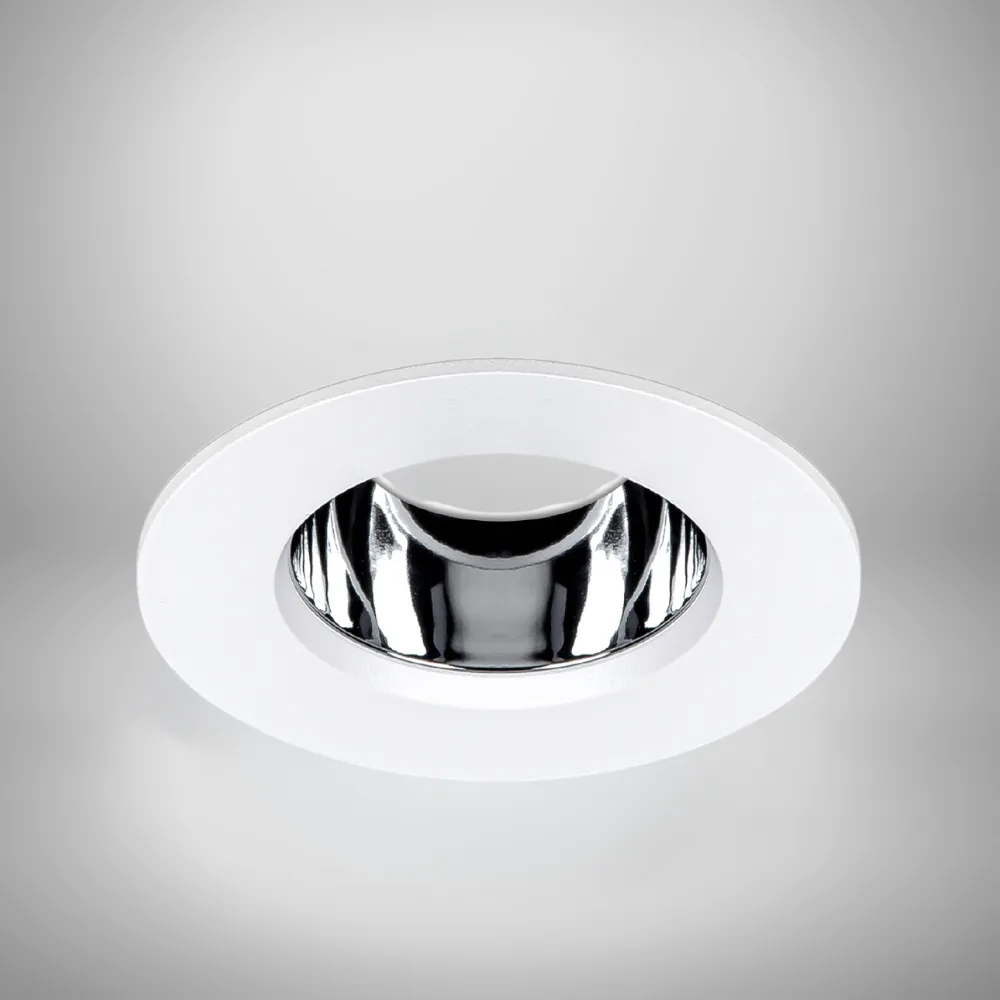
Aero IP54 low-glare commercial LED downlight product image

Compact commercial downlight family with a low-glare specular reflector, one base record and exact dimming, wireless and emergency options. No lecture-theatre optic or ceiling cut-out is assumed.

Base model
1
Power
9 W
Output
675 lm
Aero base model
CodePowerOutputCCT
AERO.0019 W675 lm3000K

Exact product options

Dimming and emergency options

Compare these dimming and emergency options with the theatre scene schedule and AV requirements.

Flow controls

/LO
Lower output setting.
/HO
Higher output setting.
/ECO
Specification dimming and control gear: DALI / SwitchDIM / DSI.
/LG
Low-glare optic or prismatic lens.

Flow emergency

/EMI
Maintained emergency conversion.
FLOW.ACC.01
End cap pair for clean recessed termination.
FLOW.ACC.02
Through-wire and joining kit for continuous runs.

Aero controls

/MDIM
Phase-cut mains dimming.
/ECO
Specification dimming and control gear: DALI / SwitchDIM / DSI.
/BTC
Casambi Bluetooth wireless control.

Aero emergency

/EM
3-hour emergency conversion.
/EMD
Self-test or DALI emergency conversion.

Project information

Room factors for selection

These factors determine whether a recessed linear or downlight route can work.

Proposed luminaire positions/mounting positions
Consider the ceiling build-up, seating rows, risers, aisles, steps and maintenance access.
Operating scenes
Define presenter, screen and writing positions with target presentation, note-taking and circulation conditions.
Controls and emergency
State dimming scenes, control gear, emergency strategy and any coordination constraints. AV design and commissioning remain outside this page.

Frequently asked questions

Lecture-theatre lighting FAQs

Answers are based on current product data and project specification requirements.

Is Flow a confirmed lecture-theatre luminaire?

No. Flow is a catalogue candidate described for low-glare recessed lighting in offices, schools and retail. Room geometry, optics, glare and scene performance must be validated for the theatre.

Why include Aero?

Aero provides a different commercial downlight geometry with a low-glare specular reflector and IP54 data. It is a candidate only, not a confirmed theatre fit.

Can the page design the presentation and note-taking scenes?

No. It identifies the project factors to consider. Targets, optics, control scenes and room calculations require a site-specific lighting design.

Are dimming options listed?

Yes. The exact Flow and Aero catalogue options are shown, but a theatre control and scene schedule is not inferred from those suffixes.

Does this include AV integration or commissioning?

Coordinate AV interfaces and commissioning requirements separately from the luminaire selection.

What needs validating next?

Validate seating and screen positions, optical performance, scene requirements, controls, emergency operation, target levels and maintenance constraints.

Product enquiries

Discuss the product families

Contact Lumenloop for current Flow and Aero product information. Lecture-theatre suitability, photometry, controls and emergency design remain project-specific validation items.

  • Seating tiers, aisles and egress routes
  • Screen and presenter positions
  • Optic, glare and contrast requirements
  • Dimming scenes and control protocol
  • Emergency-lighting requirement