EPC B retrofit waste risk report 2026

EPC B retrofit push risks five million removed light fittings a year.

DESNZ data shows why larger rented buildings are now in the MEES spotlight. Lumenloop's warning is narrower: energy-led retrofit must not become a race to rip out serviceable commercial lighting.

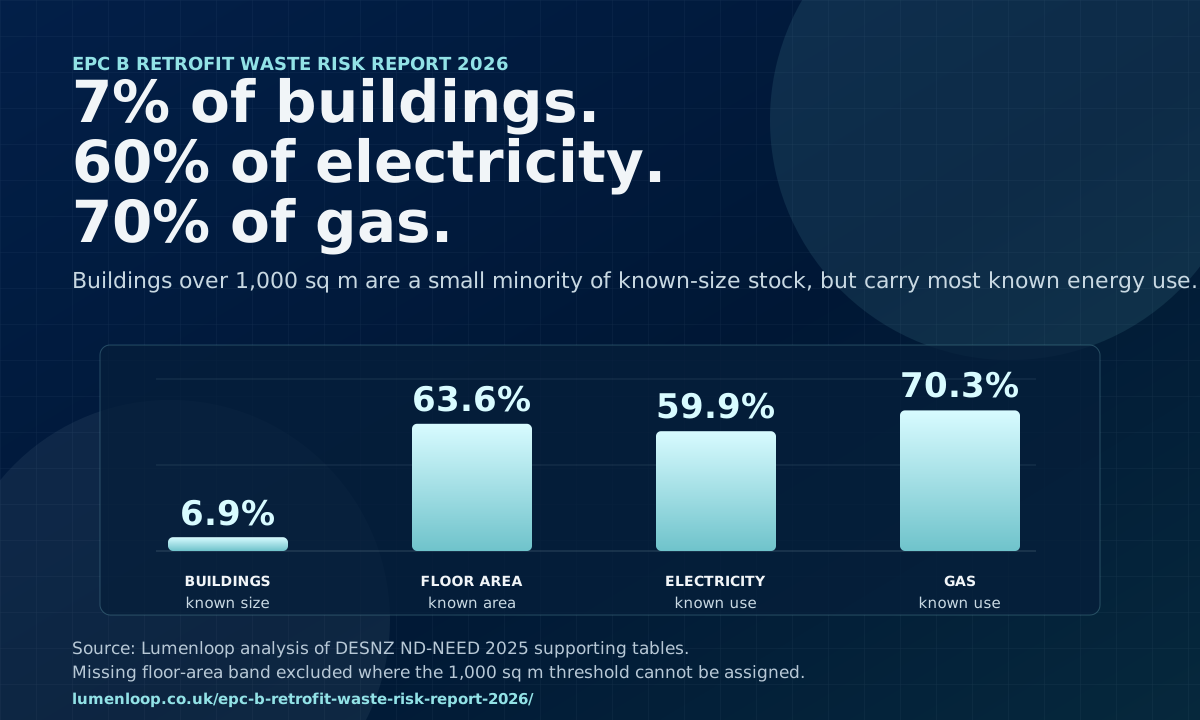
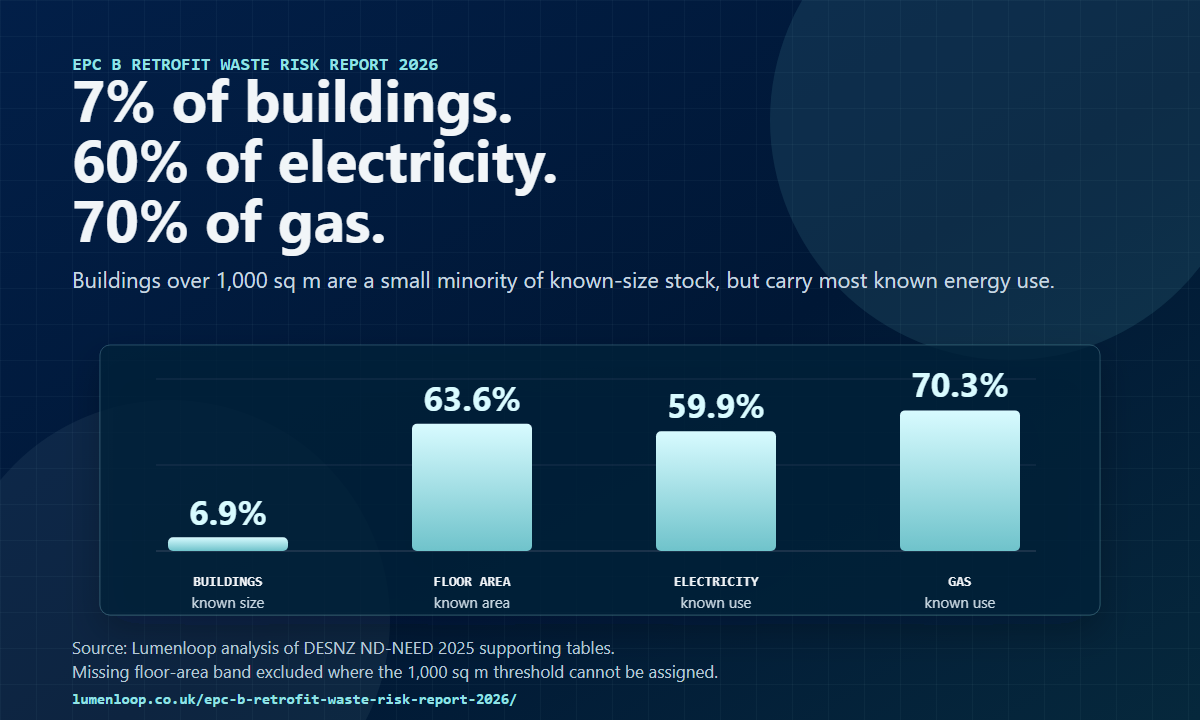
6.9% of known-size buildings 59.9% of known electricity use 70.3% of known gas use 5.2m removed fittings, annualised
EPC B from 2031 proposed
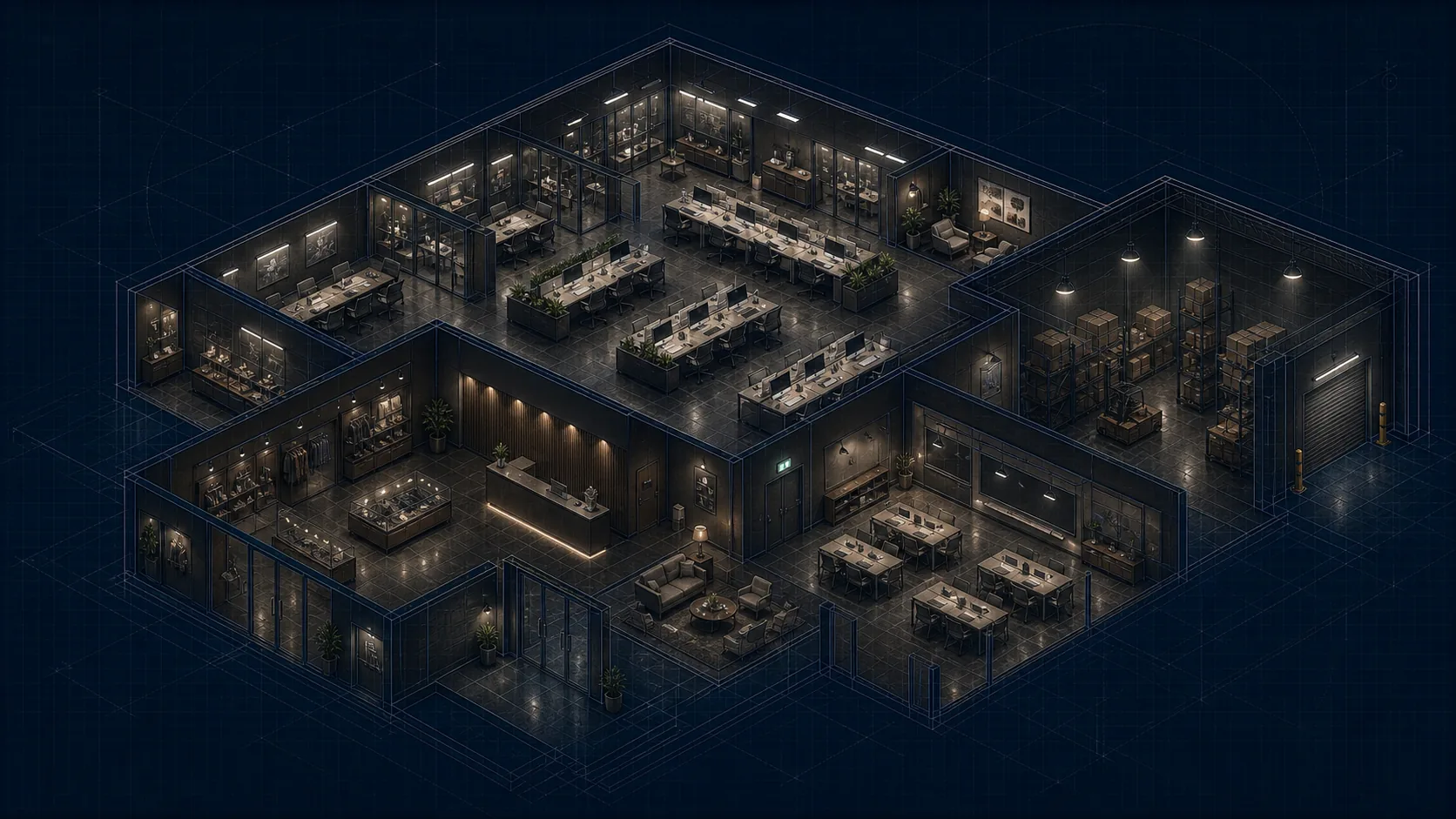
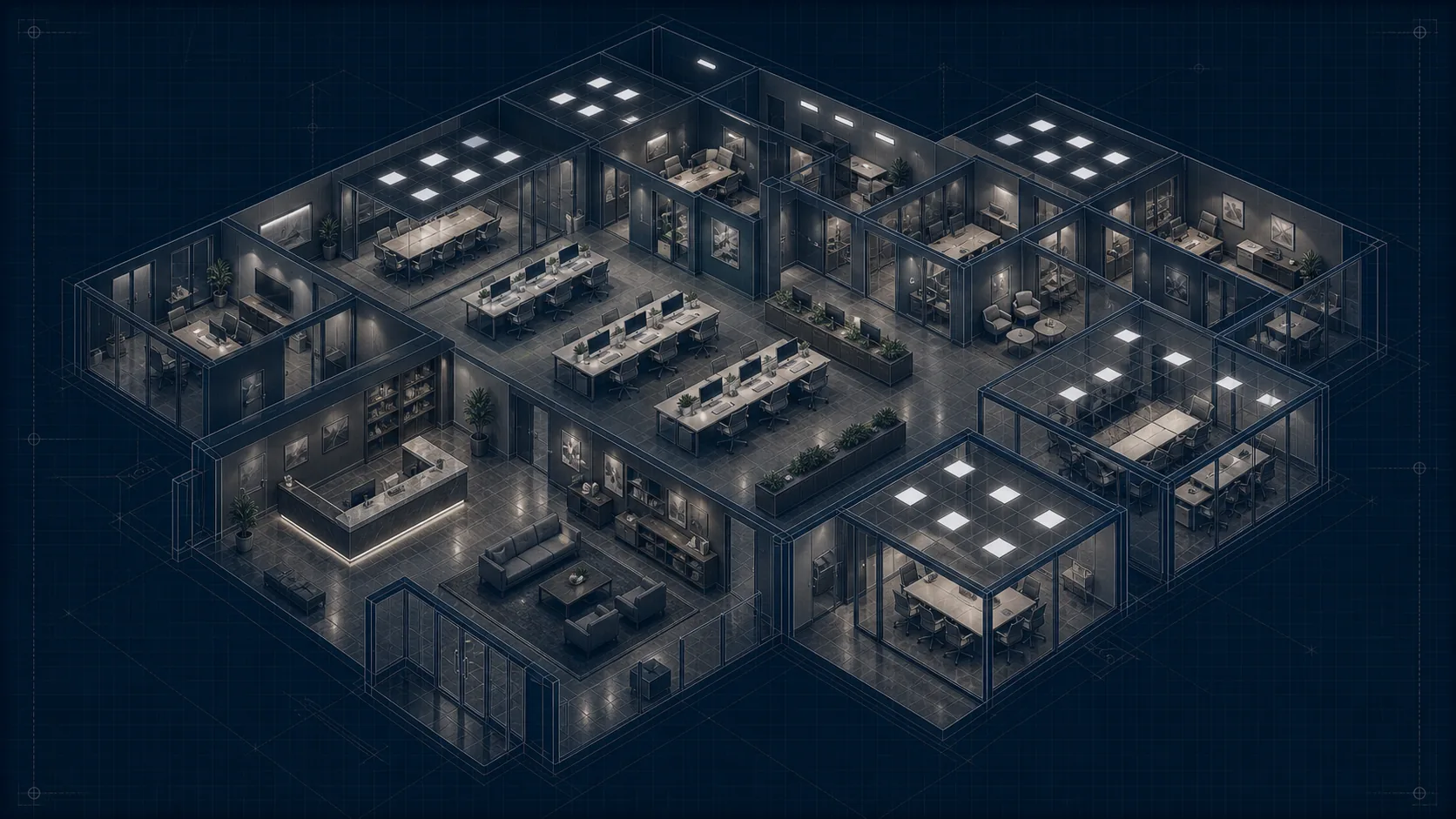
Isometric commercial building lighting blueprint showing office workspaces, meeting rooms and ceiling lighting zones
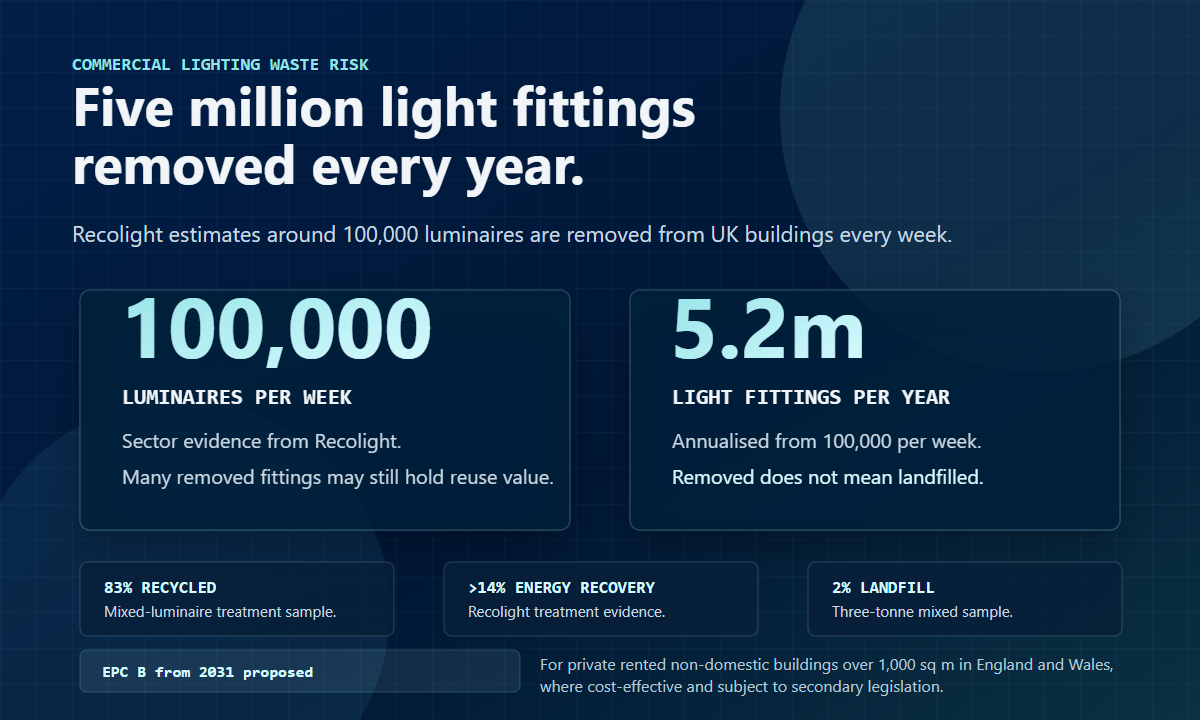
Removed luminaires 5.2m

Annualised from Recolight's estimate of around 100,000 luminaires removed from UK buildings each week.

Energy concentration 59.9%

Known electricity use attributed to buildings above 1,000 sq m in ND-NEED 2025.

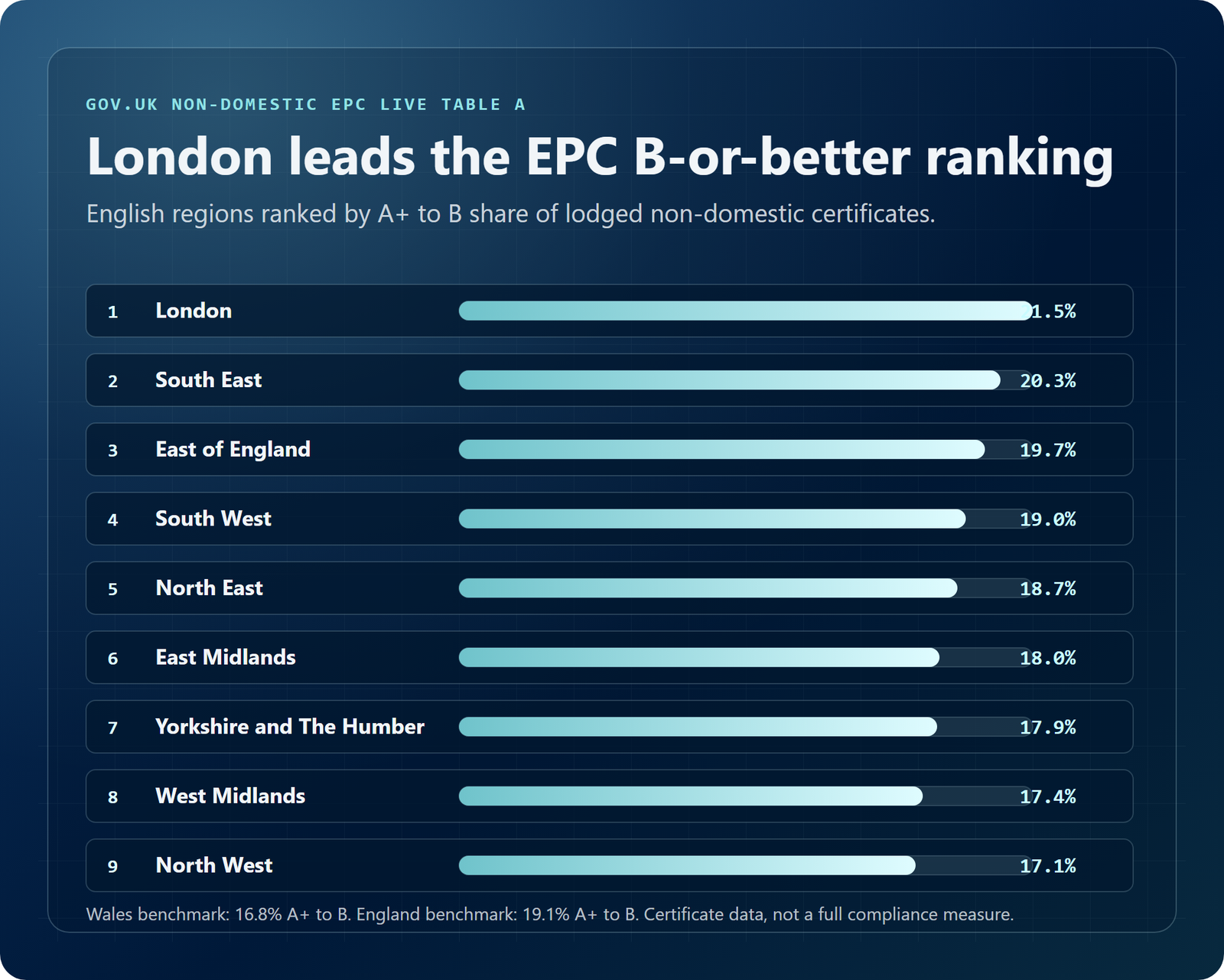
B-or-better leader 21.5%

London has the highest regional A+ to B share in the GOV.UK non-domestic EPC certificate table.

Executive summary

The policy signal is targeted. The waste risk is not.

Policy EPC B is proposed, not live law.

The current legal minimum for privately rented non-domestic property remains EPC E. EPC B from 2031 still needs secondary legislation.

Energy Large buildings dominate known use.

Buildings above 1,000 sq m account for 59.9% of known electricity use and 70.3% of known gas use in ND-NEED 2025.

Waste Removed fittings already number in the millions.

Recolight estimates around 100,000 luminaires are removed from UK buildings every week, many in reusable condition.

Retrofit Repairability belongs in the brief.

The risk is not retrofit itself. It is whole-fitting replacement where drivers, optics, controls or bodies could be retained or serviced.

Lumenloop's conclusion is careful: EPC-led retrofit could create avoidable lighting waste if repairability, reuse and circularity are left out of the specification.

Core data

Large buildings are a small share of the stock and a large share of energy use.

The chart uses the >1,000-5,000 sq m and >5,000 sq m bands from DESNZ ND-NEED 2025. The missing floor-area band is excluded because the 1,000 sq m threshold cannot be assigned to it.

7% of buildings. 60% of electricity. 70% of gas.

Buildings with known floor area 6.9% 99,000 buildings above 1,000 sq m, divided by 1.435m buildings with known floor area in ND-NEED 2025.
Known floor area 63.6% The >1,000-5,000 sq m and >5,000 sq m bands account for 63.6% of known floor area once missing floor area is excluded.
Known electricity consumption 59.9% Lumenloop calculation from DESNZ ND-NEED 2025 supporting data tables, excluding the missing floor-area band.
Known gas consumption 70.3% Lumenloop calculation from the same ND-NEED floor-area bands. ND-NEED covers gas through the public distribution system.

Source: Lumenloop analysis of DESNZ ND-NEED 2025 supporting tables. The figures describe non-domestic buildings in England and Wales under ND-NEED definitions, not the private rented sector only.

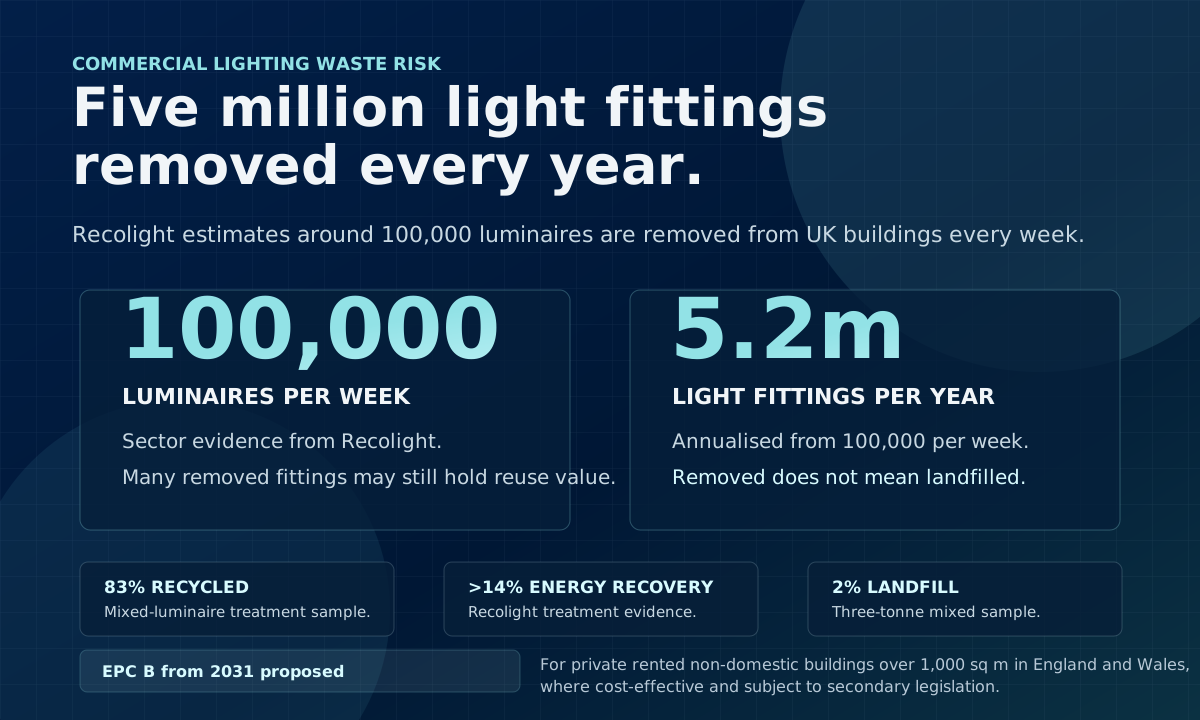
Five million light fittings removed every year.

5.2m

Annualised from Recolight's estimate that around 100,000 luminaires are removed from UK buildings each week.

83% recycled in Recolight's mixed-luminaire sample. Recolight reports this from a three-tonne mixed-luminaire sample, not as a national landfill figure.
>14% sent for waste-to-energy treatment. The sample split helps explain why removed fittings should not be described as all landfill.
2% reported as landfill in the same sample. The waste-risk argument is about avoidable whole-fitting removal, weak reuse planning and poor repairability.

Treatment split is from Recolight mixed-luminaire sample evidence. Removed does not mean landfilled.

Regional EPC ranking

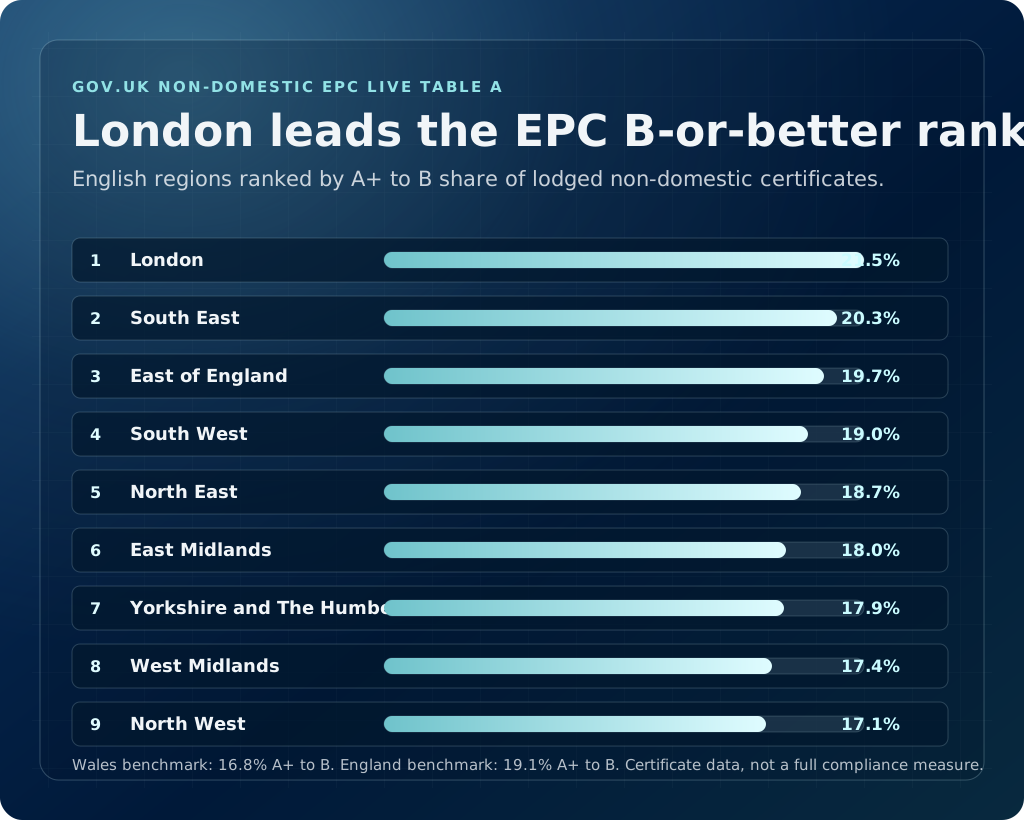
Which regions have the highest share of non-domestic EPCs already rated B or better?

The ranking uses the GOV.UK live table for non-domestic EPC certificates lodged to 31 March 2026. It is a certificate ranking, not a full legal-compliance measure.

A+ to B certificate share

London leads, but even the leader is only at 21.5%.

Because the proposed MEES direction points to EPC B for larger rented buildings from 2031, the useful public data cut is B-or-better share. The English regional table shows every region has more than three quarters of lodged non-domestic certificates below B.

Wales is shown separately because the GOV.UK workbook provides English regions in the regional tab and Wales in a country-level tab.

England benchmark 19.1% A+ to B
Wales benchmark 16.8% A+ to B
1London21.5% 253,183 lodged non-domestic certificates. 78.5% are below B. Source: GOV.UK live table A, non-domestic properties.
2South East20.3% 241,334 lodged non-domestic certificates. 79.7% are below B. Source: GOV.UK live table A, non-domestic properties.
3East of England19.7% 154,593 lodged non-domestic certificates. 80.3% are below B. Source: GOV.UK live table A, non-domestic properties.
4South West19.0% 154,733 lodged non-domestic certificates. 81.0% are below B. Source: GOV.UK live table A, non-domestic properties.
5North East18.7% 67,079 lodged non-domestic certificates. 81.2% are below B. Source: GOV.UK live table A, non-domestic properties.
6East Midlands18.0% 122,861 lodged non-domestic certificates. 82.0% are below B. Source: GOV.UK live table A, non-domestic properties.
7Yorkshire and The Humber17.9% 142,403 lodged non-domestic certificates. 82.0% are below B. Source: GOV.UK live table A, non-domestic properties.
8West Midlands17.4% 155,483 lodged non-domestic certificates. 82.6% are below B. Source: GOV.UK live table A, non-domestic properties.
9North West17.1% 187,758 lodged non-domestic certificates. 82.9% are below B. Source: GOV.UK live table A, non-domestic properties.

Bar length is scaled to the leading region. Data source: GOV.UK live table A, Non-Domestic Properties in England and Wales by Energy Performance Rating, revised to 31 March 2026.

Policy context

What changed in the 2026 non-domestic MEES direction.

The Government has not made EPC B the current legal standard for all commercial buildings. The June 2026 interim response sets out a proposed, targeted direction for larger private rented buildings.

Isometric multi-sector commercial building blueprint showing offices, retail, hospitality and industrial spaces
Targeted MEES direction
Current position EPC E remains the live legal minimum.

The current minimum for privately rented non-domestic buildings in England and Wales remains EPC E unless a valid exemption applies.

Proposed direction EPC B from 2031 for larger rented buildings.

The interim response proposes EPC B from 2031 for private rented non-domestic buildings over 1,000 sq m, where cost-effective.

Timetable reset The 2027 EPC C milestone is not being taken forward.

The Government has narrowed the immediate policy focus, but secondary legislation is still required before the new direction takes effect.

Why lighting belongs in the retrofit conversation

Lighting is not the only EPC lever, but it is too large to ignore.

The Building Energy Efficiency Survey remains the most detailed official end-use source for non-domestic building energy use in England and Wales. It modelled internal lighting at 21,260 GWh per year in 2014-15, with lighting representing 23% of electricity consumption in the BEES service-sector comparison.

That does not mean lighting alone decides EPC performance. It does mean commercial lighting is a visible, countable and often specification-led part of retrofit planning, especially when paired with controls, occupancy sensing, emergency options and maintenance access.

Retrofit due diligence

Questions to ask before a commercial lighting upgrade.

These questions are product-neutral. They help landlords, estate managers, consultants and contractors separate genuine waste from fittings that may still hold reuse or upgrade value.

Can any part of the existing system be retained?

Check whether bodies, gear trays, optics, controls or emergency components can be retained, reconditioned or upgraded before specifying full replacement.

Can the luminaire be repaired without destroying the body?

Drivers, light engines, optics, controls and emergency parts should be serviceable where the application and product design allow it.

Is circularity evidence available?

Ask for TM66, TM65.2, EPD or equivalent product evidence where it is relevant to the project and available from the manufacturer.

Are spare parts and control updates practical?

Check parts availability, replacement method, software or controls lock-in, and whether the system can be maintained without avoidable whole-fitting replacement.

What happens to the outgoing fittings?

Separate luminaires that are genuinely waste from fittings that may have reuse, remanufacture or component value before sending everything to recycling.

Does a sealed replacement increase later waste?

A non-serviceable fitting may reduce energy use on day one, but if it cannot be repaired or upgraded, replacement risk has been pushed into the future.

Media pack

Charts, source notes and calculation tables.

Download the report visuals, headline calculation table and regional EPC ranking data used on this page.

Chart showing buildings over 1,000 sq m account for 6.9% of known-size buildings, 59.9% of known electricity use and 70.3% of known gas use.

Energy concentration chart

Lead visual for the 7% / 60% / 70% data hook.

Data card showing Recolight evidence that around 100,000 luminaires are removed weekly, annualised to 5.2 million per year.

Lighting waste risk card

Visual card for the 100,000-per-week Recolight evidence and annualised estimate.

Chart ranking English regions by the share of non-domestic EPC certificates rated A plus to B.

Regional EPC ranking

English regions ranked by non-domestic EPC certificates rated A+ to B, with Wales shown separately in the data file.

Calculation table

CSV containing the headline figures, units and source notes used in this report.

CSV

The CSV does not replace the source documents. Use it as a reporting aid alongside the methodology and source list.

Methodology

How the figures were calculated.

Large-building threshold
The report combines the >1,000-5,000 sq m and >5,000 sq m bands in DESNZ ND-NEED 2025 supporting tables.
Known-size denominator
The missing floor-area band is excluded when calculating the 1,000 sq m threshold shares because those buildings cannot be assigned above or below the proposed policy threshold.
Energy figures
Electricity and gas shares are calculated from the same floor-area bands in ND-NEED. ND-NEED covers energy supplied through the public distribution system and uses weighted estimates.
Lighting end-use
BEES provides modelled 2014-15 end-use evidence for England and Wales. It is older than ND-NEED, but remains the strongest official end-use reference for lighting in non-domestic buildings.
Waste evidence
Recolight's weekly luminaire removal estimate and treatment sample are sector evidence. They are not presented here as official national statistics.
Regional EPC ranking
The regional leaderboard uses GOV.UK live table A for non-domestic EPC certificates lodged to 31 March 2026. It ranks English regions by A+ to B certificate share; Wales is provided separately in the workbook and CSV.
Sources

Primary and authoritative source list.

  1. DESNZ interim response on non-domestic MEES, updated 18 June 2026.
  2. DESNZ ND-NEED 2025, published 21 August 2025, including supporting data tables.
  3. Building Energy Efficiency Survey, official non-domestic building energy end-use evidence for England and Wales.
  4. Recolight reuse evidence, including the 100,000 luminaires-per-week estimate.
  5. Recolight luminaire treatment evidence, including the mixed-luminaire sample split.
  6. CIBSE TM66, circular economy guidance for the lighting industry.
  7. CIBSE TM65.2, embodied carbon in building services lighting.
  8. IEA commentary on the next wave of LED lighting, published March 2026.
  9. GOV.UK guidance on EEE covered by the WEEE regulations.
  10. GOV.UK live tables on Energy Performance of Buildings Certificates, non-domestic table A, revised to 31 March 2026.
Media contact

Press enquiries and source files.

For comment, chart files, methodology questions or interview requests, contact Lumenloop directly. The downloadable files above include source notes for the figures used in the report.

Lumenloop Ltd UK commercial lighting manufacturer info@lumenloop.co.uk 02045 721 554