lux level estimator

Lux Level Calculator (UK) – Find the Right Lighting Level for Your Space

Select the type of space and enter the floor area to see the recommended lux level, the estimated total lumens required, and suitable Lumenloop products for that application.

This tool is designed to make early-stage lighting selection easier for offices, retail spaces, circulation areas, warehouses and other commercial environments.

Find Your Recommended Lux Level

Choose the application and enter the room size in square metres. The tool will estimate the typical target lux level and the total lumens usually needed for that type of space.

Choose the type of space you are lighting.
We have pre-filled this with 50 m² so the tool works straight away. Change it to suit your space.
Select an application

Your recommended lux level will appear here once you choose the type of space.

Enter the room size to estimate the total lumen output typically required.

Required lumens are estimated by multiplying the target lux level by the room area. This gives a simple starting point before detailed lighting design.

Suggested Lumenloop Products

These recommendations are based on the application selected and the typical lux level usually required for that type of space.

Select an application to view suggested luminaires

The tool will recommend suitable products once you choose the type of space.

Approximate fitting quantities are shown as a simple guide. Final product choice may still depend on lumen package, spacing, ceiling height, glare requirements, mounting type and controls.

Typical Recommended Lux Levels

Use these values as a simple benchmark when comparing different types of commercial space.

Application Recommended Lux Level
General Office Areas500 lux
Computer Workstations300–500 lux
Filing & Print Rooms300 lux
Drawing Offices500 lux
Retail Spaces500–1000 lux
Industrial / Engineering300–2000 lux
Banks & Building Societies300–500 lux
Staff Areas & Utilities100–200 lux
Kitchens300–750 lux
General Areas200–500 lux
Circulation Areas50–200 lux
Communication / Service Areas300–500 lux
Building Services Areas100–300 lux
Distribution & Storage100–300 lux
Places of Public Accessibility300 lux
Lux levels are provided as a simple guide. Actual project requirements may vary depending on layout, mounting height, spacing, reflectance values and the applicable standard.

From Lux Levels to Real-World Specification

Meeting recommended lux levels is only part of the equation. The quality of light distribution, glare control, and long-term performance all play a critical role in whether a scheme actually performs as intended.

That’s why specifiers typically work with luminaires that offer:

  • Verified photometric data
  • Low glare performance (UGR-compliant options)
  • Consistent output over time (L90/B10 standards)
  • Reliable drivers and optical components


The products below reflect those principles — designed for projects where lighting needs to perform properly, not just meet minimum values on paper.

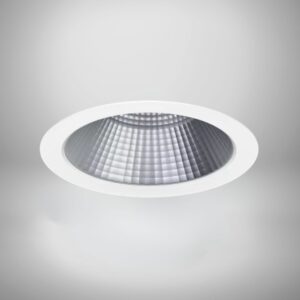
Void 17 - short height LED downlight

Void 17

The Void 17 is a professional ultra-shallow LED downlight, expertly engineered in the UK for discreet architectural integration.

It features a brilliant white RAL 9016 die-cast bezel and a low-glare

Read More »
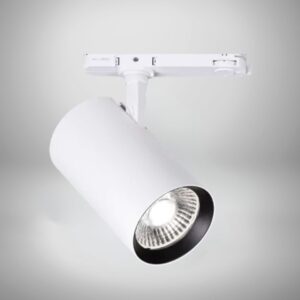
Vantage 26 LED track spotlight uk

Vantage 26

Vantage 26 is a professional LED track spotlight designed for high-performance, flexible lighting in commercial, retail, and architectural spaces.

Delivering up to 5,225 llm, it offers

Read More »
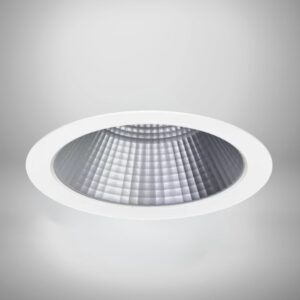
Napoleon 16- low-profile LED downlight

Napoleon 16

The Napoleon 16 is a low-profile LED downlight designed for spaces with limited ceiling voids, delivering powerful illumination without compromising on quality. With a discreet 232 mm bezel

Read More »
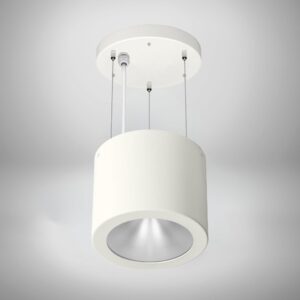
Suspend-Pro 15 suspended spotlight

Suspend-Pro 15

The Suspend-Pro 15 Series professional LED downlight delivers exceptional pendant lighting performance, making it the perfect choice for commercial lighting projects requiring suspended installation. This innovative 203mm suspended

Read More »
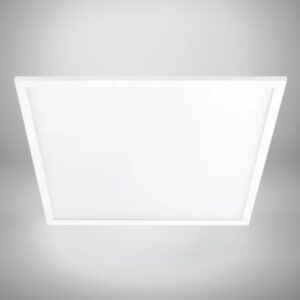
Edge-Lite 20 LED 600x600 edge lit panel

Edge-Lite 20

Edge-Lite 20 is an ultra-slim 595 × 595 mm edge-lit LED panel delivering UGR<19 low-glare performance for comfortable office and education lighting.

Using Philips LEDs, it provides uniform illumination up

Read More »
Light Perfect for Primary schools, secondary schools, colleges, universities, training centres, library projects, and educational facility refurbishments.

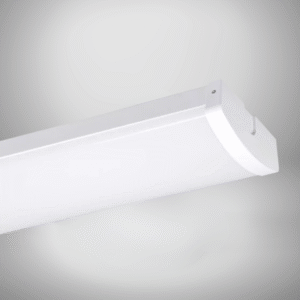
Uni-Fit 21

The Uni-Fit 21 Series LED linear luminaire is specifically designed for educational applications, making it ideal for school lighting projects and classroom installations.

This versatile 1200mm and 1500mm LED fitting

Read More »
Solaris 13 circular surface mounted black and gold light

Solaris 13

The NEW Solaris 13 is a premium decorative LED lighting solution ideal for prestigious hotel environments and upscale commercial spaces.

This elegant surface mounted wall light

Read More »
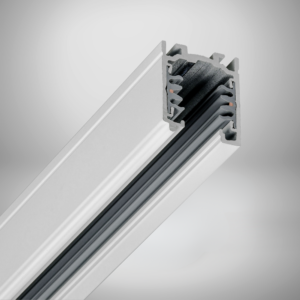
stucchi track lighting

Stucchi Track Lighting

The Stucchi ONETRACK™ is a premium 3-circuit surface-mounted lighting track system designed for versatile commercial and architectural lighting applications.

Built on the Eurostandard Plus® platform, it offers DALI compatibility and

Read More »

Example Luminaires by Lux Level Requirement

Recommended Lux LevelTypical ApplicationSuggested Product Why It Fits
100–200 luxCorridors, circulation areasEco 78Efficient, wide distribution for low-level ambient lighting with minimal energy use
200–300 luxStorage areas, plant roomsClarity 96Balanced output with good uniformity for functional back-of-house spaces
300–500 luxOffices, classrooms, meeting roomsVero 11Low glare (UGR<19) and controlled optics for compliant workplace lighting
500–750 luxRetail, detailed office tasksHalo 100Higher lumen output with refined beam control for enhanced visibility and presentation
750–1000 luxWorkshops, inspection areasFusion 103High-performance output suited to precision tasks and industrial environments
1000+ luxHigh-risk / specialist task areasProtec 149Maximum output with robust performance for demanding applications

*Actual lux levels will vary depending on ceiling height, spacing, and reflectance values. These examples illustrate typical product pairings used in real-world lighting designs

Recommended Lux Levels for Office Spaces

Achieving the correct lux level in an office isn’t just about hitting a target number — it’s about how that light is delivered across the space.

Two offices can both measure 500 lux, yet feel completely different depending on glare control, distribution, and the type of luminaires used. That’s why lux should always be considered alongside lighting strategy — not in isolation.

In most modern workplaces, this means combining well-distributed ambient lighting with task-specific illumination using high-performance architectural LED luminaires designed for commercial environments.

Understanding Lux in Real-World Office Design

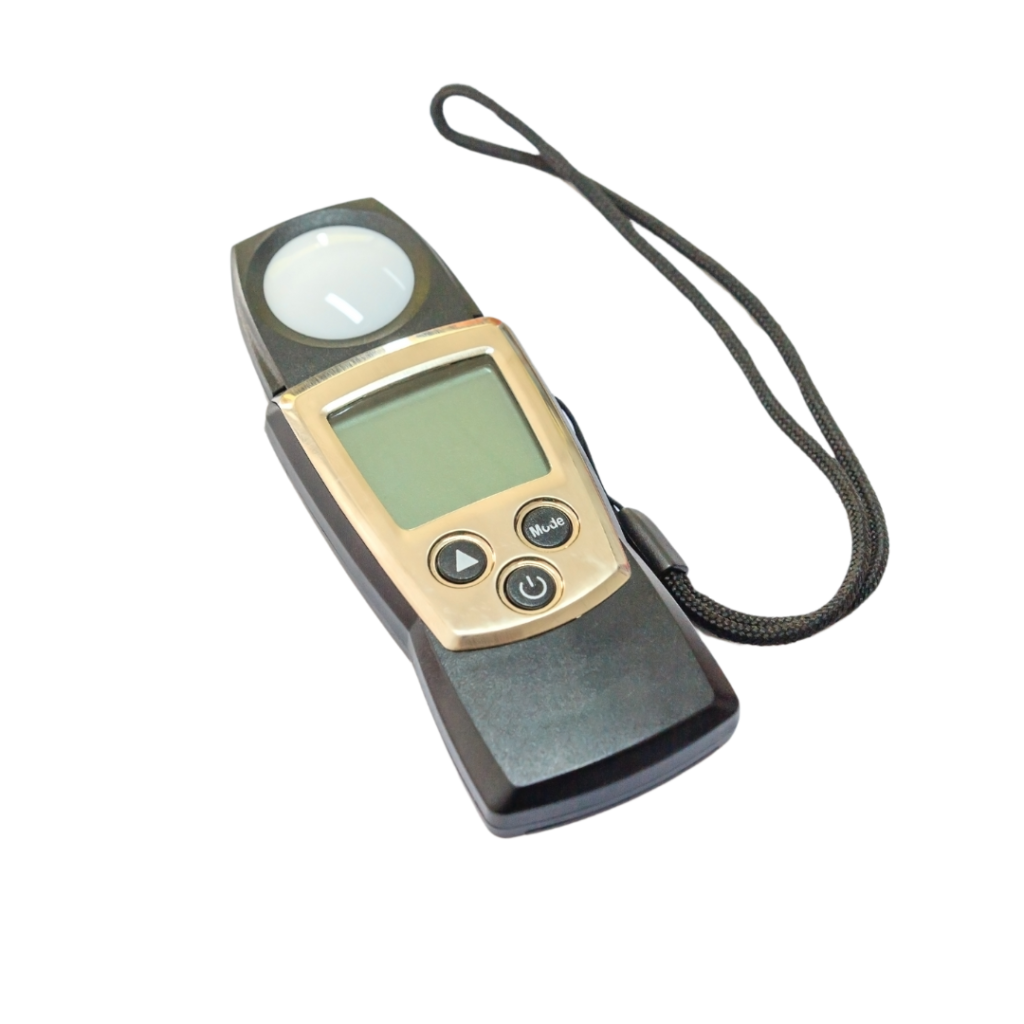
Lux measures the amount of light reaching a surface — typically the working plane (desk height).

Standards such as EN 12464-1 recommend 300–500 lux for general office work, but this is only part of the picture. What matters more is:

  • Uniformity of light across the workspace
  • Control of glare (UGR ratings)
  • Positioning of luminaires relative to tasks

This is why simply increasing brightness rarely improves a space — it often makes it worse.

Ambient, Task and Accent Lighting (What Actually Delivers Lux)

To achieve consistent and comfortable lux levels, office lighting should be layered into three key types:

Ambient Lighting

This forms the base level of illumination across the entire space. In offices, this is typically delivered using linear LED lighting systems or suspended office luminaires to provide even distribution and minimise shadowing.

Well-designed ambient lighting ensures the overall space meets the required lux level without relying on excessive brightness from individual fittings.

Task Lighting

Task lighting focuses light exactly where it’s needed — usually on desks or workstations.

In commercial settings, this often isn’t a desk lamp. Instead, it’s achieved through carefully positioned suspended linear luminaires above desks or high-performance LED downlights that provide controlled, direct illumination without glare.

This is critical for screen-based work, where poor lighting angles can create reflections and visual discomfort.

Accent Lighting

While less critical for compliance, accent lighting improves visual hierarchy and comfort within the space.

This may include wall-mounted lighting to reduce contrast between surfaces, or feature lighting in breakout areas to create a more balanced environment.

Without this layer, even correctly lit offices can feel flat and fatiguing.

Recommended Lux Levels by Office Area

  • General office areas: 300–500 lux
  • Workstations: 300–500 lux (with strict glare control)
  • Design / technical work: 500–750 lux
  • Meeting rooms: 300–500 lux with flexibility

However, these values only work when paired with the right lighting layout and product specification.

From Lux Calculation to Product Selection

Once you’ve identified the required lux level, the next step is ensuring your lighting scheme can actually achieve it in practice.

This is where specification matters.

For example, open-plan offices aiming for uniform 400–500 lux will typically rely on suspended linear lighting systems to distribute light evenly across desks.

More compact layouts may use a combination of commercial LED downlights and wall-mounted luminaires to fill gaps and maintain consistency.

In all cases, the goal is the same — achieving the required lux level without hotspots, shadows, or glare.

Integrating Emergency Lighting Requirements

Office lighting design doesn’t stop at normal operation. Emergency lighting must also be considered alongside lux levels.

Escape routes, open areas, and high-risk zones all have minimum illumination requirements, which are typically delivered using dedicated LED emergency lighting systems.

These should be integrated into the overall layout rather than treated as an afterthought.

Common Mistakes That Undermine Lux Levels

  • Over-lighting instead of improving distribution
  • Ignoring glare (UGR) in screen-heavy environments
  • Poor luminaire positioning relative to desks
  • Inconsistent fittings across the same workspace

Most lighting issues come from layout and specification — not insufficient lumen output.

Why This Matters for Workplace Performance

Lighting directly affects how people feel and perform.

Well-designed lighting reduces fatigue, improves focus, and creates a more comfortable working environment.

Poor lighting — even when technically “bright enough” — leads to eye strain, headaches, and reduced productivity over time.

Many organisations are now also prioritising sustainable, recyclable luminaires to reduce lifecycle impact while maintaining high performance.

Use the Lux Level Estimator

This tool gives you a fast way to calculate the recommended lux level for your office space based on size and usage.

It’s designed to bridge the gap between guidelines and specification — helping you move from “what level do I need?” to selecting the right lighting solution with confidence.

Lux Level FAQ

Typical office lighting levels are based on BS EN 12464-1, which recommends around 300–500 lux for general office work.

Tasks requiring greater visual focus, such as detailed drawing or technical work, may require higher levels.

The exact requirement depends on the layout, task type and visual comfort targets such as glare control (UGR).

Warehouse lighting requirements vary depending on the activity within the space.

General storage areas typically require around 100–200 lux, while picking, packing or inspection zones may require 300 lux or more. Higher lux levels may also be needed in areas where accuracy and safety are critical.

Lumens measure the total amount of light emitted by a light source, while lux measures how much of that light reaches a surface.

In simple terms, lumens describe output, whereas lux describes illumination at a specific point. This is why lux is used when planning lighting levels within a space.

EN 12464-1 provides guidance on lighting levels for indoor workplaces, with recommended lux levels depending on the task and environment. For example, offices typically require 300–500 lux, while circulation areas may require lower levels. The standard also considers factors such as glare, uniformity and visual comfort.