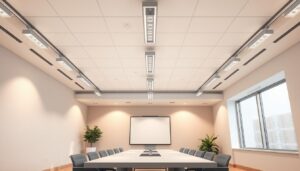
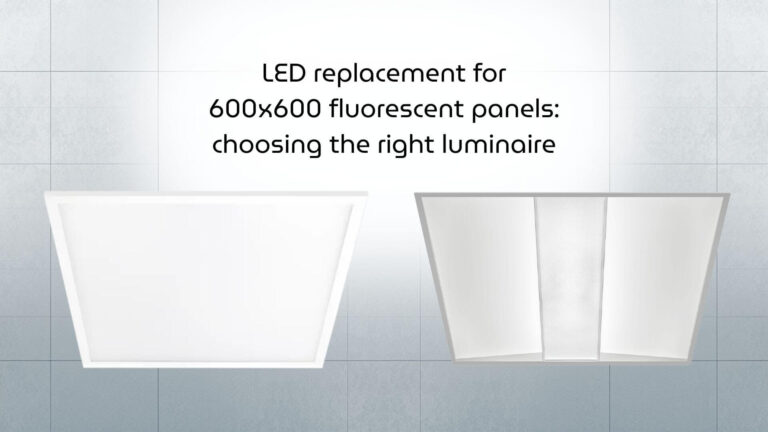
Many UK offices still rely on ageing fluorescent ceiling panels installed years ago. These fittings typically use T5 or T8 lamps and consume far more energy than modern alternatives. As lamps fail and ballasts become harder to source, many facilities managers begin searching for an LED panel to replace fluorescent light fittings.
In most commercial buildings the standard ceiling grid size is 600×600 mm, which means the most common upgrade is an LED replacement for 600×600 fluorescent panel lights.
While the physical swap is usually straightforward, selecting the right LED panel requires understanding how different luminaires perform in terms of glare control, efficiency, optical quality, and longevity.
This guide explains how to choose the right panel for your office and compares several suitable luminaires including:
• Edge-Lite 20
• Luminate 184
• Lucid 178
• Natura 125
If you want a broader overview of office panel lighting, this guide on LED ceiling panel lights for office lighting provides additional context.
Quick answer: what is the best LED panel to replace fluorescent lights?
For most office ceilings using 600×600 grid tiles, the best LED replacement panel will:
• fit directly into the existing suspended ceiling
• deliver around 3000–4000 lumens
• operate at roughly 30–40 watts
• maintain low glare (UGR19 for offices)
• use reliable drivers and thermal management
Panels such as the Edge-Lite 20, Luminate 184, Lucid 178 and Natura 125 are designed specifically to replace traditional fluorescent ceiling panels while improving efficiency and visual comfort.
Why offices are replacing fluorescent ceiling panels
Traditional fluorescent panel luminaires were widely installed between the 1990s and early 2010s. They typically used four T5 or T8 lamps and consumed between 70 W and 90 W.
Common issues now include:
• flicker caused by ageing control gear
• uneven light output as tubes degrade
• frequent lamp replacement
• increasing maintenance costs
LED panels eliminate many of these problems and can reduce energy consumption by over 50 percent.
Research from the Carbon Trust highlights lighting upgrades as one of the quickest ways to improve building energy efficiency.
Edge-lit vs backlit LED panels
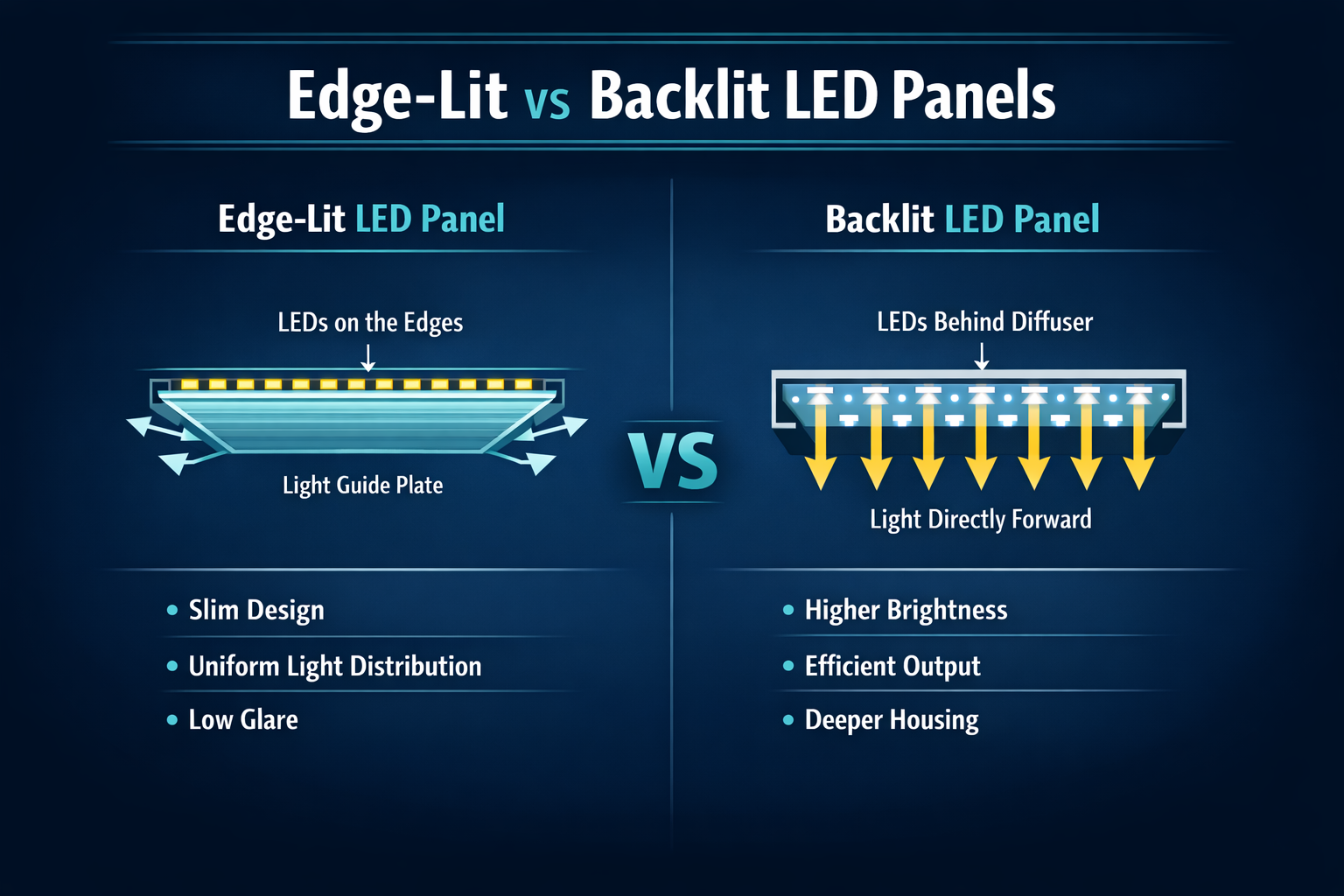
One of the most important differences between LED panels lies in how the light is produced and distributed.
Edge-lit LED panels
Edge-lit panels place LEDs along the perimeter of the luminaire. Light travels through a light guide plate that distributes it evenly across the diffuser.
Characteristics include:
• extremely uniform illumination
• very slim luminaire profile
• excellent glare control
• visually soft appearance
Edge-lit designs are particularly suited to offices where visual comfort and screen work are priorities.
Backlit LED panels
Backlit panels position LEDs directly behind the diffuser rather than around the edges.
Typical advantages include:
• higher luminous efficacy
• stronger lumen output
• simpler optical system
Backlit panels are often used in larger spaces where energy efficiency and high output are the main goals.
Glare performance in offices is typically measured using the Unified Glare Rating, explained in this guide to UGR and visual comfort in lighting.
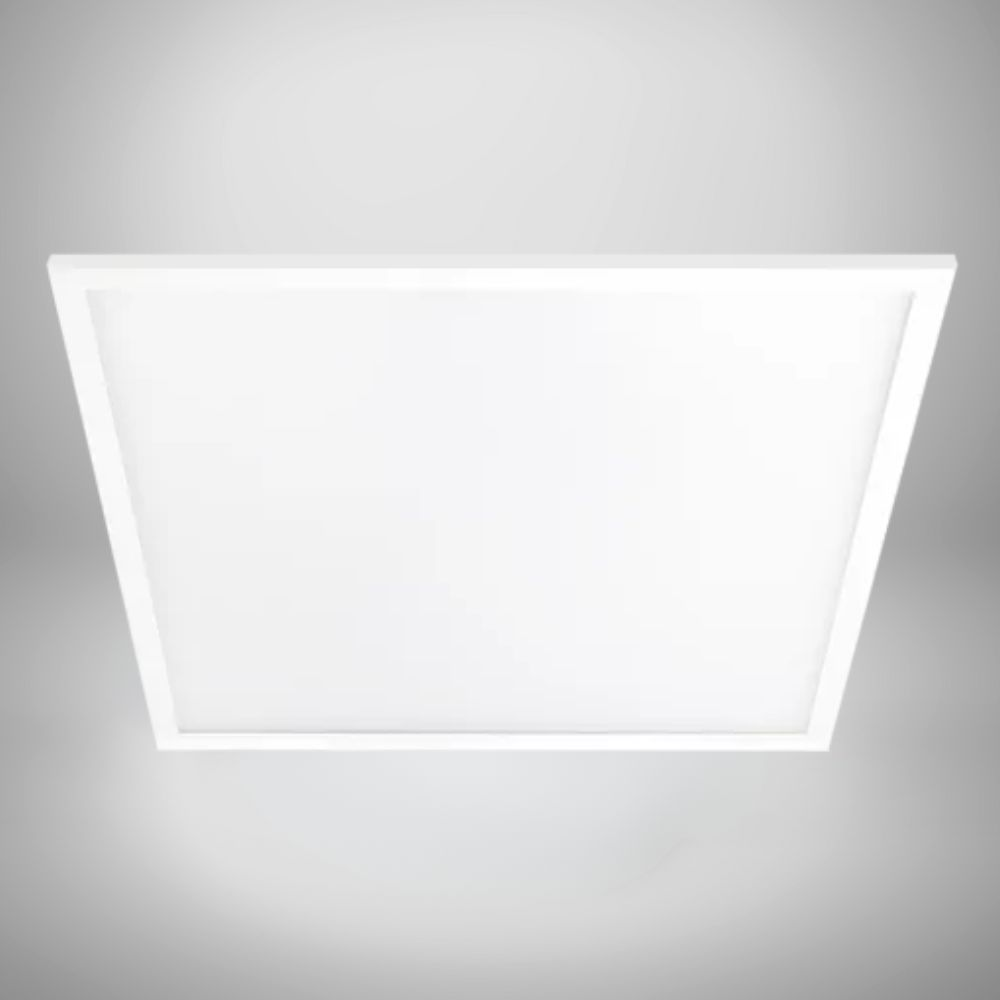
Edge-Lite 20 – slim edge-lit LED panel for office environments
The Edge-Lite 20 is designed specifically for environments where visual comfort is critical.
Key design characteristics include:
• edge-lit optical system
• uniform light distribution across the diffuser
• slim architectural profile
• suitable for 600×600 suspended ceiling grids
Because the LEDs sit around the perimeter, the panel produces smooth and even illumination with minimal brightness contrast.
Typical applications include:
• open plan offices
• meeting rooms
• education spaces
• workplaces with heavy screen use
In these environments glare control becomes important, particularly when trying to meet lighting recommendations within the BS EN 12464-1 workplace lighting standard.
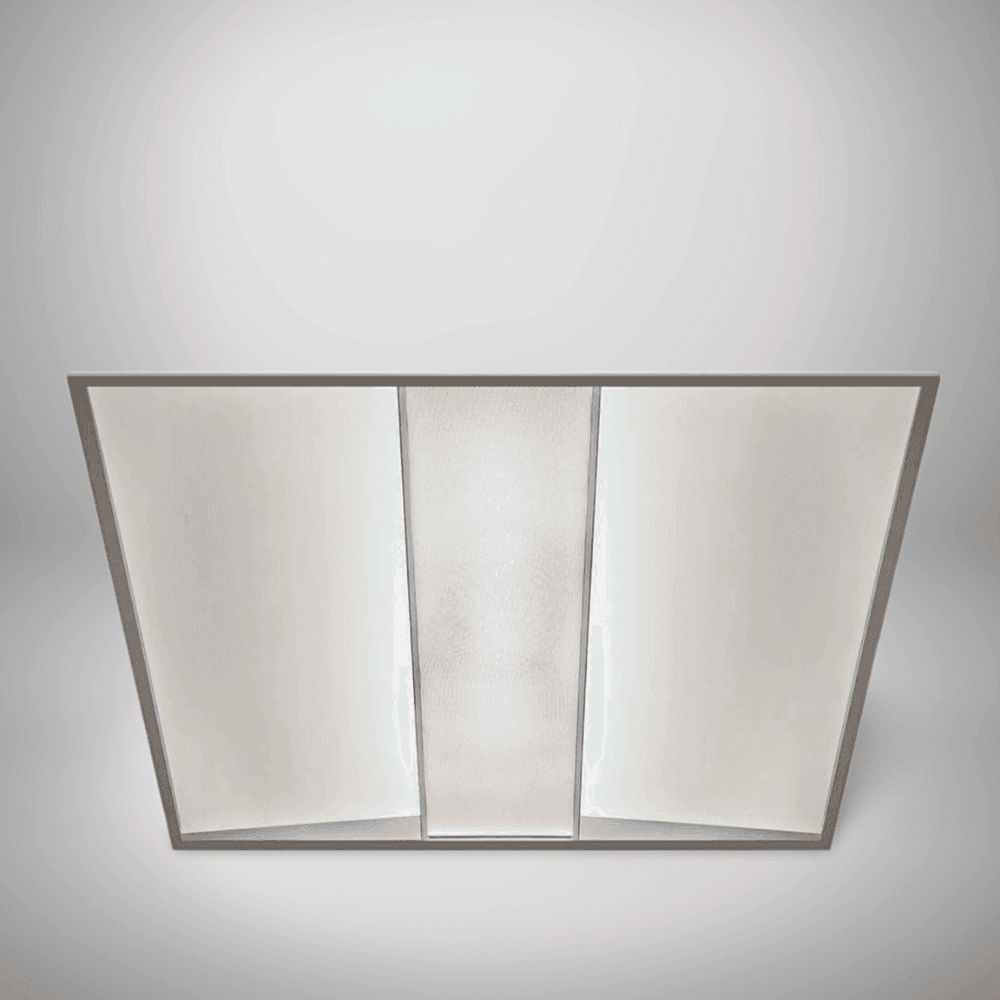
Luminate 184 – high efficiency backlit panel
The Luminate 184 takes a different optical approach by using a backlit configuration.
Instead of guiding light from the edges, LEDs sit behind the diffuser.
Typical benefits include:
• strong lumen output
• high luminous efficacy
• excellent energy performance
• consistent illumination across large office areas
Backlit panels are often chosen when replacing older fluorescent troffers that historically delivered around 3000–4000 lumens.
For facilities managers searching for an LED replacement for 600×600 fluorescent panel installations, a backlit luminaire often provides the best balance of performance and efficiency.
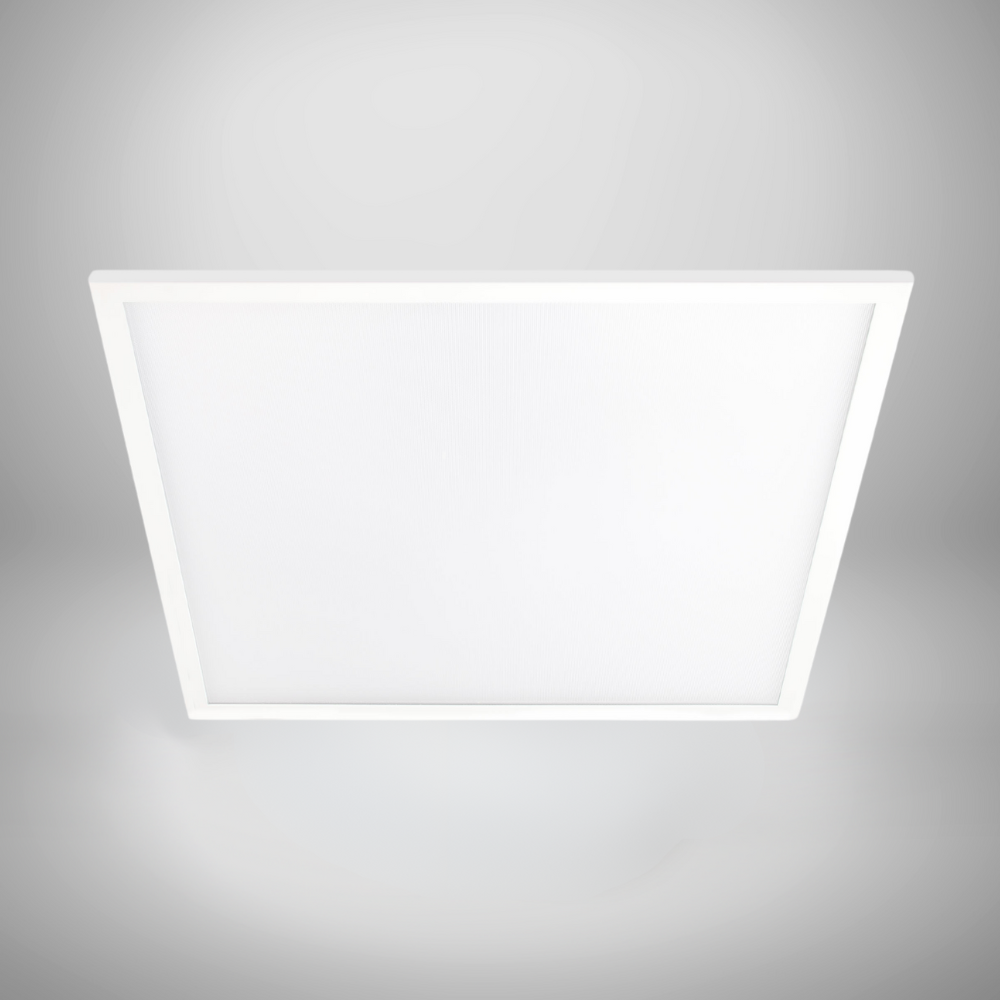
Lucid 178 – refined optical performance
The Lucid 178 is designed for environments where lighting quality matters as much as efficiency.
Rather than focusing purely on output, the luminaire emphasises diffuser quality and optical refinement.
Typical use cases include:
• boardrooms
• premium office spaces
• design studios
• architectural workplaces
Panels in this category are often specified where lighting forms part of the interior design rather than simply acting as functional illumination.
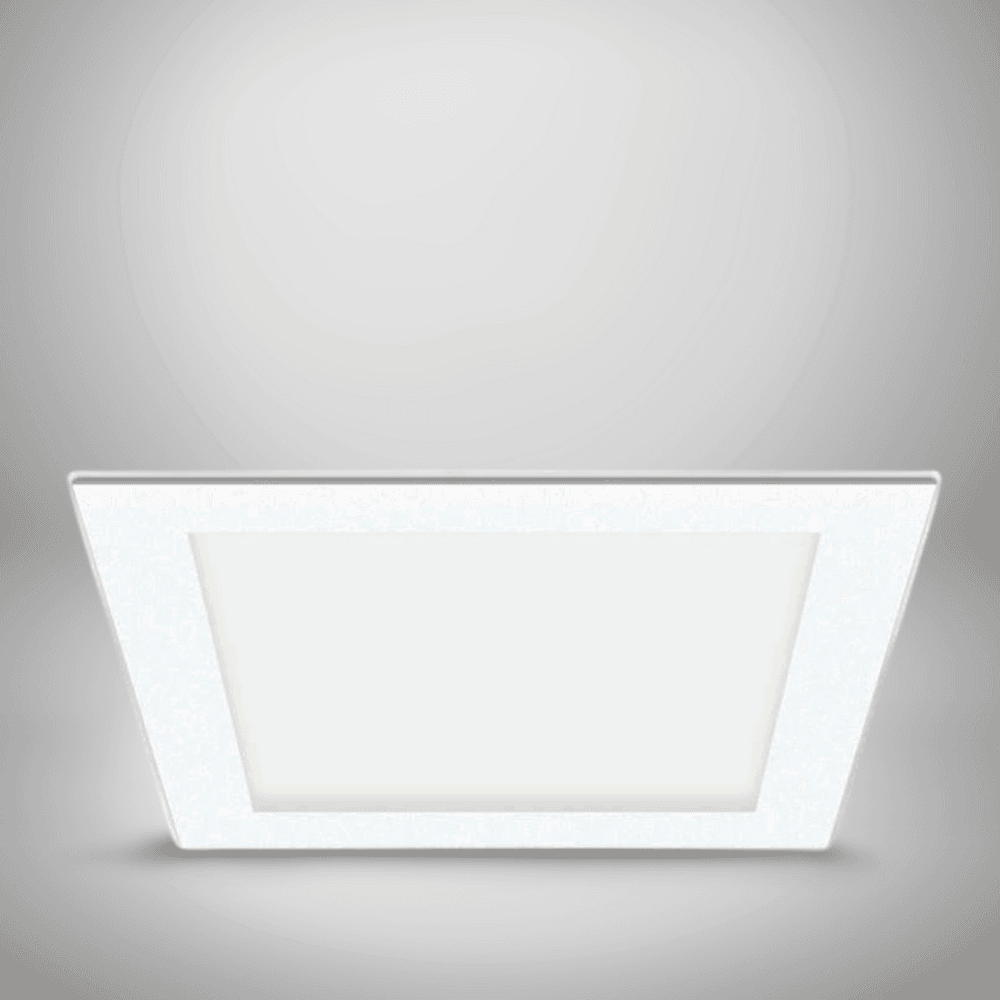
Natura 125 – light box with long-term reliability
Heat management is one of the most important factors affecting LED lifespan.
The Natura 125 focuses on thermal stability to help maintain consistent performance over time.
Key design considerations include:
• integrated heatsink structure
• improved heat dissipation
• stable lumen maintenance
• reduced stress on LED components
Better thermal management helps ensure the luminaire maintains its light output across many years of operation.
LED degradation and lumen maintenance are discussed in more detail in this article covering LED lifespan and performance over time.
Comparing LED panels for fluorescent replacements
| Panel | Optical Type | Key Strength | Typical Application |
|---|---|---|---|
| Edge-Lite 20 | Edge-lit | Uniform low-glare lighting | Screen-based offices |
| Luminate 184 | Backlit | High efficiency output | Large office floors |
| Lucid 178 | Premium optical | Architectural lighting quality | Meeting rooms |
| Natura 125 | Thermal design | Long lifespan stability | High-use workplaces |
Each of these luminaires can serve as a direct LED panel to replace fluorescent light fittings within suspended ceiling grids.
Typical energy savings when upgrading to LED panels
Replacing fluorescent panels with LED alternatives significantly reduces power consumption.
| Lighting type | Typical wattage |
|---|---|
| Fluorescent panel | 70–90 W |
| LED panel | 30–40 W |
In addition to lower electricity use, LED panels also eliminate regular lamp replacements and reduce maintenance visits.
Frequently asked questions
Can I replace a fluorescent panel with an LED panel?
Yes. Most LED panels are designed to fit directly into existing 600×600 ceiling grids, allowing them to replace fluorescent troffer fittings without modifying the ceiling structure.
How many lumens should an LED panel produce?
For office environments, LED panels typically deliver between 3000 and 4000 lumens to achieve recommended lighting levels.
What is the best LED panel size for offices?
The most common size is 600×600 mm because it matches standard suspended ceiling systems used in commercial buildings.
Do LED panels reduce glare compared with fluorescent lighting?
Yes. Modern LED panels with UGR19 optics are specifically designed to reduce glare and improve visual comfort in office environments.