How to choose the right light fitting for a commercial project
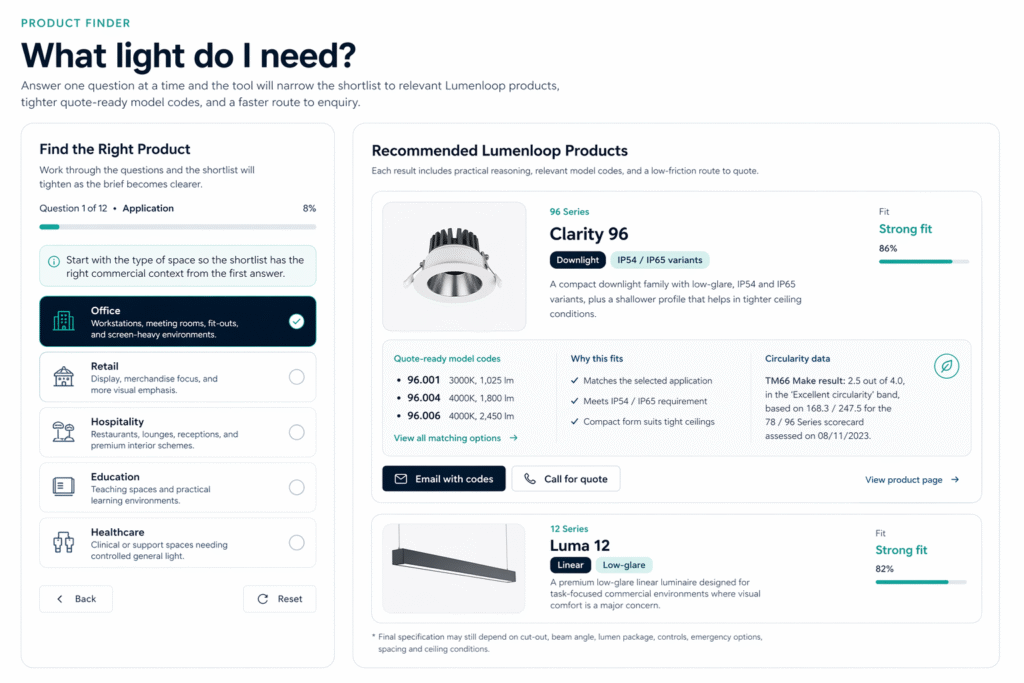
The right answer usually depends on more than just whether the fitting looks suitable. In real projects, lighting needs to align with the application, ceiling condition, glare requirement, controls strategy, emergency provision and target light output. That is why one scheme may suit commercial downlights, while another is better served by linear lighting, suspended luminaires or dedicated emergency lights.
Start with the space, not the product name
A common mistake is choosing the fitting type too early. Offices often prioritise low glare, uniformity and control integration. Retail and hospitality schemes may need more beam control, stronger visual hierarchy or higher colour rendering. Protected areas may need IP-rated luminaires, while circulation routes and public buildings may also need separate emergency and exit sign provision.
The strongest recommendation usually starts with how the space will be used, what the ceiling allows, and what the project needs technically. From there, it becomes much easier to narrow the right family, whether that is an architectural downlight, a suspended office luminaire, a practical panel or a more design-led fitting from the architectural luminaires range.
The key questions that affect the answer
What light fitting is usually right for each type of space?
Office lighting
Offices usually need controlled general lighting, visual comfort and straightforward controls integration. This often points toward low-glare linear luminaires, practical panels or selected downlights where the ceiling design calls for a recessed approach.
Retail lighting
Retail schemes often need a mix of ambient and accent lighting, which means directional fittings, stronger beam control and better product presentation. Track spots, adjustable downlights and selected architectural luminaires tend to make more sense here than flat general lighting alone.
Hospitality lighting
Restaurants, lounges and reception areas usually need a more layered approach. Decorative suspension, warmer colour temperatures, discreet accent lighting and cleaner ceiling details often make suspended luminaires and premium recessed fittings more appropriate.
Education lighting
Teaching spaces often prioritise broad, even coverage, low glare and dependable maintenance. Linear systems and practical commercial fittings usually outperform decorative choices, especially where uniformity and long-term value matter.
Healthcare lighting
Healthcare and support environments usually favour clean, specification-led lighting with reliable broad coverage, simple maintenance and the right emergency provision. Product choice is often driven by function first, not visual statement.
Bathrooms and protected areas
Where moisture or ingress protection matters, the conversation shifts toward IP-rated products. In these spaces, protected downlights and other compliant fittings will usually be more appropriate than standard interior products.
Circulation spaces
Corridors, stairs and ancillary areas usually need a practical balance of coverage, durability and visibility. Depending on the layout, this may also call for dedicated emergency lighting or wall-mounted fittings rather than standard ambient products alone.
Circularity-led projects
Where embodied impact, reuse and long-term serviceability matter, the specification may lean toward ranges with stronger lifecycle thinking. In those cases, it can make sense to prioritise 98% recyclable luminaires or families with clearer circularity credentials.
What affects the choice beyond the fitting type?
Glare control
In offices, education and screen-based environments, glare can be as important as output. A lower-glare fitting often improves comfort, usability and the overall quality of the scheme.
Lumen output
The right fitting still needs the right lumen package. A compact downlight may suit one room perfectly and be underpowered in another, which is why output always needs to be considered alongside spacing and mounting height.
Beam angle
Broad ambient lighting and focused accent lighting solve very different problems. Beam choice has a major effect on how products, walls, worktops and circulation areas are actually lit.
Ceiling constraints
Shallow ceiling voids, exposed soffits, plasterboard ceilings and suspended grids can all push the project toward different fitting types. Installation logic often rules products in or out quickly.
Controls
DALI, wireless dimming and other control routes are not just add-ons. They affect how the system performs, how flexible the space becomes and how the project should be configured from the start.
Emergency provision
Some schemes only need integral emergency options within standard luminaires. Others need separate exit signs and dedicated emergency products. It is important to distinguish between the two early on.
Ingress protection
Where a fitting is exposed to dust or moisture, IP rating becomes part of the core selection logic rather than a secondary product detail. Protected-area applications need their own shortlist.
Circularity and lifecycle value
For some projects, serviceability, upgradeability and circularity data are now part of the decision. In those cases, the stronger answer may not simply be the cheapest fitting, but the one that offers better long-term value.
Example product routes depending on the brief
Luma 12
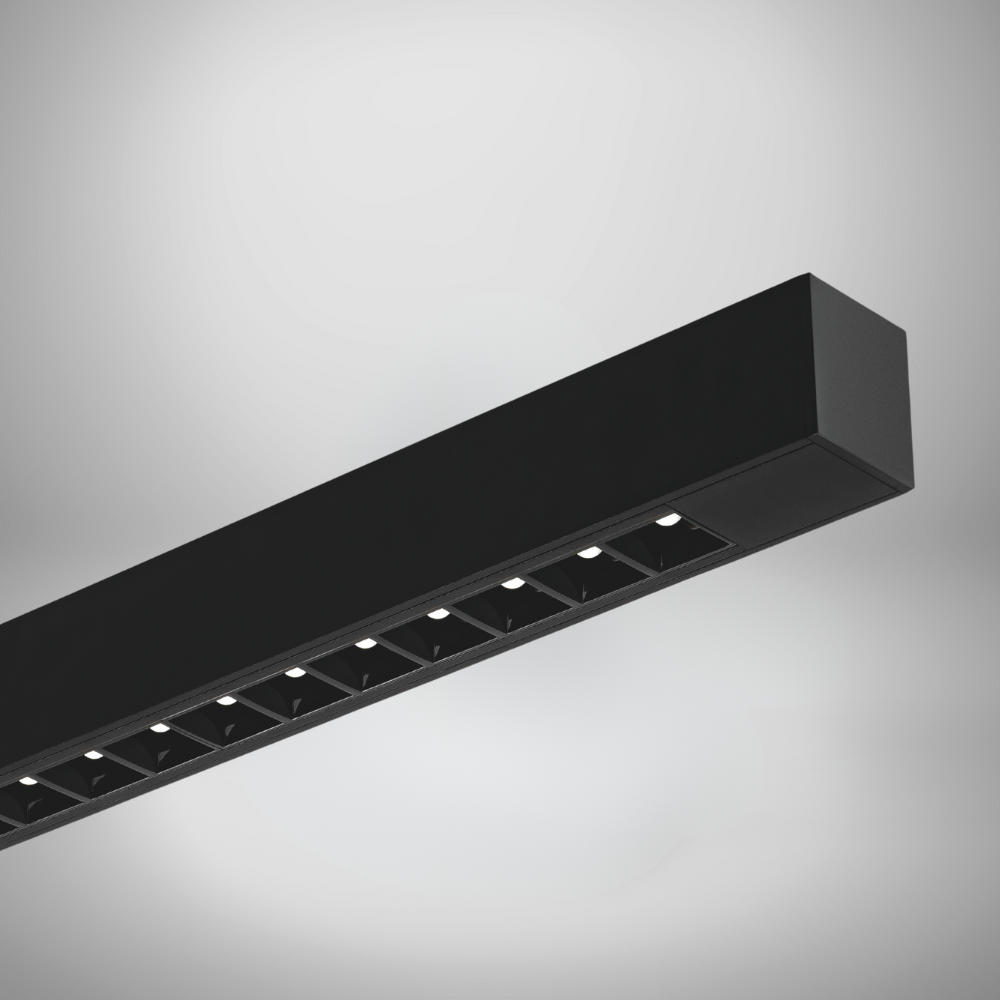
Where the project needs lower-glare workplace lighting and a cleaner suspended format, this is the kind of product route that often makes sense. It suits office, education and other task-led environments where visual comfort matters more than decorative impact. For broader workplace comparisons, the wider linear lighting range is the next logical step.
Void 17
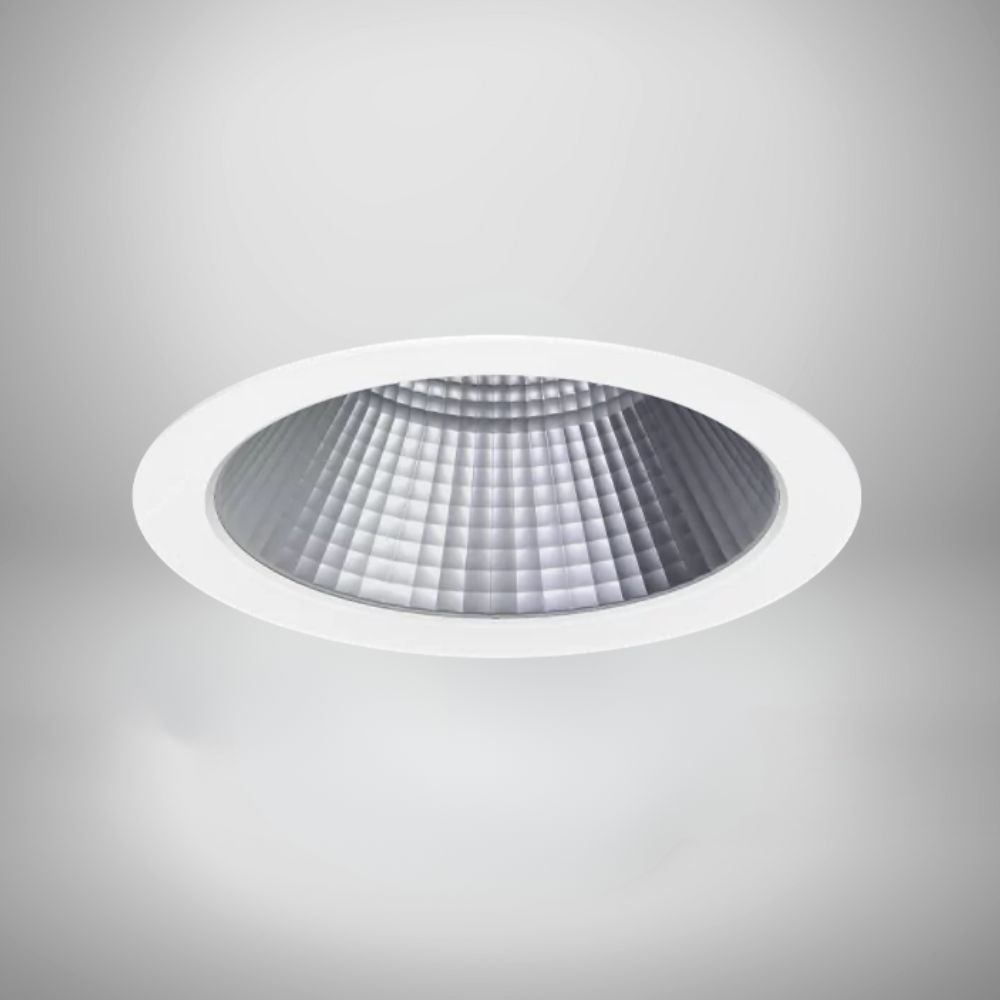
When ceiling depth is limited, the shortlist often needs to move away from deeper fittings and toward products designed for tighter voids. This is especially useful on refurbishment projects where ceiling constraints can rule out otherwise suitable options. It is a strong example within the broader commercial downlights category.
Vantage 26
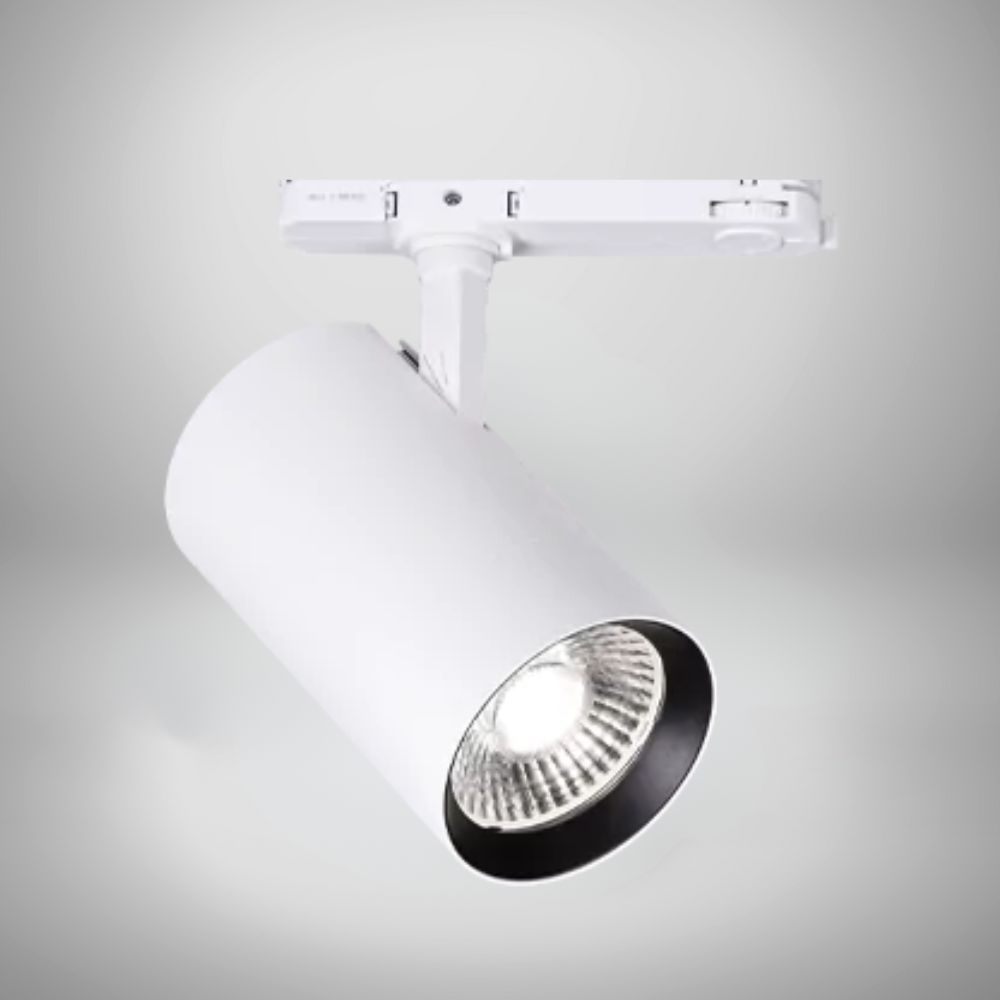
If the brief is more about beam control, product focus and directional lighting, a track spotlight route may be more appropriate than a standard ambient fitting. This type of product is often a better answer for retail display, hospitality focal points and other spaces where the lighting needs to shape attention rather than simply fill the room evenly.
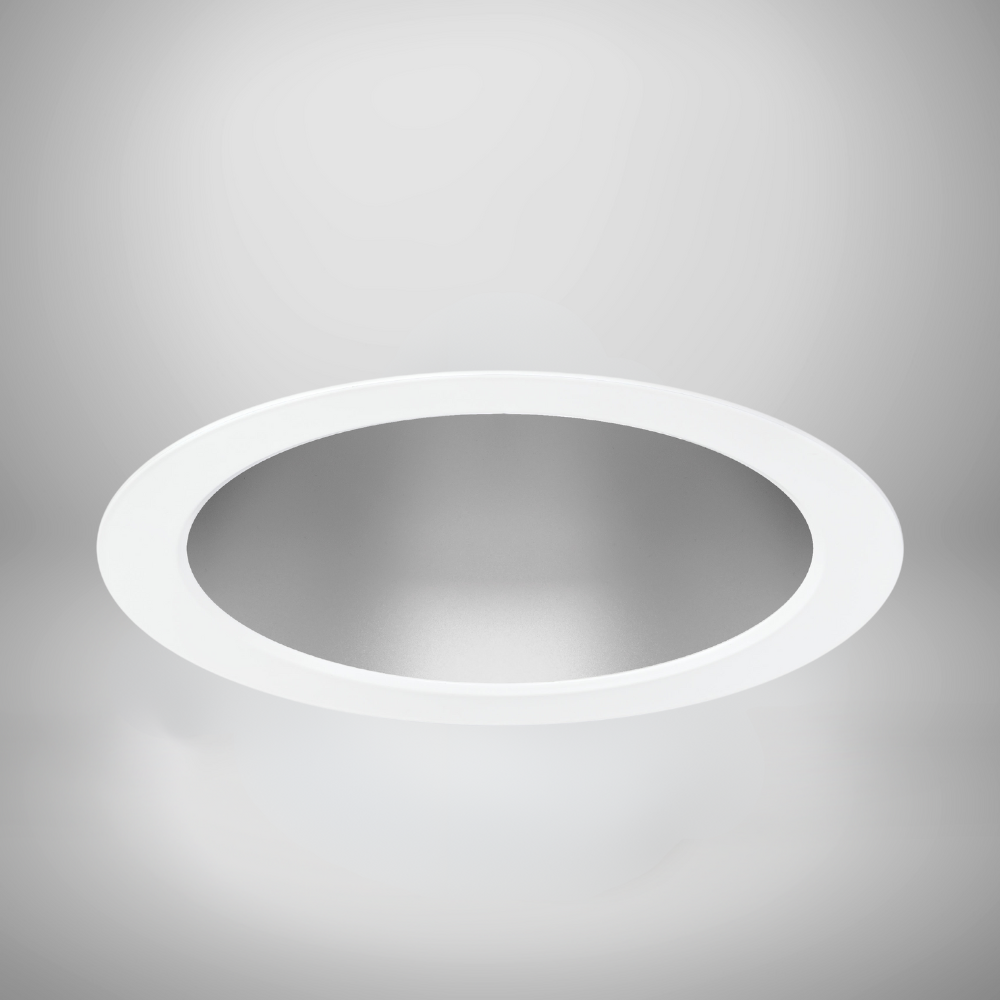
Halo 100
For many commercial interiors, the answer is not an ultra-specialist fitting but a capable recessed luminaire with the right balance of output, options and application flexibility. This kind of route is useful where the project needs a practical commercial downlight with controls and emergency availability built into the conversation.
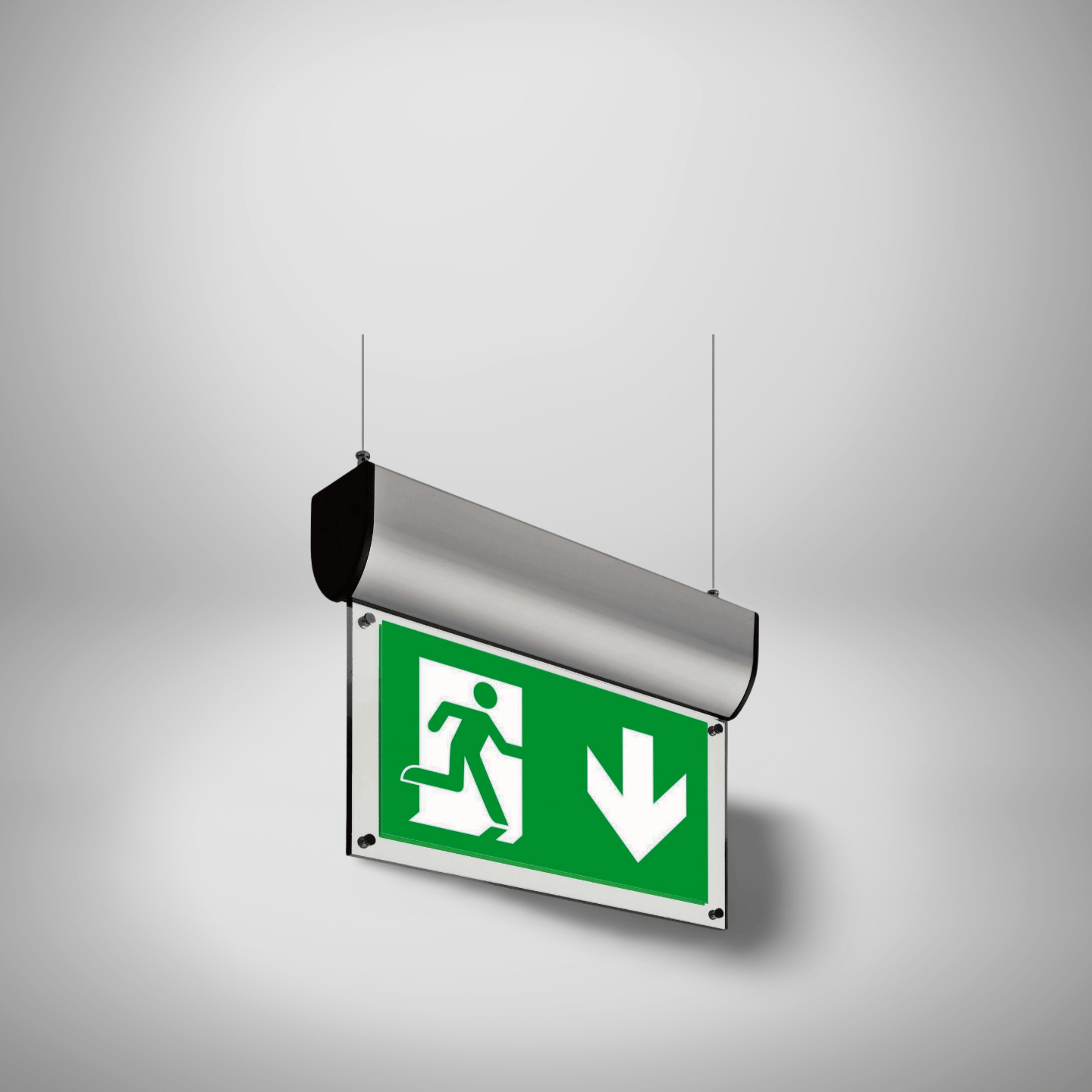
Clear 004 Exit Sign
When the requirement is clearly emergency egress signage rather than general ambient lighting, it makes more sense to move into dedicated emergency products instead of trying to force a standard luminaire into the role. This is where the wider emergency lighting range becomes relevant.
Need a more precise recommendation?
Use the tool above as the starting point, then send over the application, ceiling condition, target output and any control or emergency requirements. That makes it much easier to narrow the right fitting family and configuration without wasting time on unsuitable products.
FAQ: choosing the right commercial light fitting
What type of lighting is best for offices?
That usually depends on the layout and ceiling, but offices commonly need low-glare general lighting, good uniformity and sensible controls integration. In many schemes, that points toward linear systems, panels or carefully chosen recessed downlights rather than decorative fittings alone.
How do I choose between downlights, panels and linear lighting?
Downlights tend to suit recessed ceiling schemes and cleaner architectural detailing. Panels are often chosen for broad practical coverage. Linear lighting is often stronger where the project needs glare control, cleaner distribution or a more contemporary office-led result.
When should I choose suspended luminaires?
Suspended luminaires are often the better choice where ceiling conditions do not suit recessed products, where the design needs a stronger visual element, or where bringing the light source closer to the task improves the outcome.
Do I need IP-rated lighting?
Not everywhere. IP rating only becomes part of the core decision when the space genuinely needs protection from moisture or dust, such as bathrooms, washrooms or certain back-of-house environments.
Can commercial luminaires be supplied with DALI or Casambi controls?
Yes, many commercial fittings can be configured with DALI, wireless or other dimming options. The important part is making sure the control route sits alongside the right fitting, not treating controls as the only specification decision.
Do I need separate emergency lighting?
Sometimes. Some projects only need integral emergency versions of standard luminaires, while others need dedicated emergency fittings, exit signs or more specific wayfinding products depending on the application and compliance strategy.
What if sustainability and circularity matter in the specification?
Then it makes sense to look beyond headline performance and consider lifecycle value, serviceability and circularity data as part of the product decision. That can change which fitting is the better long-term answer for the project.