Have you ever wondered if there’s a single, trusted resource that captures everything you need to know about illuminating modern workspaces? For professionals across the UK, that definitive standard exists.
We’re talking about Lighting Guide 7: Offices, published by the Society of Light and Lighting. This essential document is the go-to reference for creating effective and comfortable work environments.
The guide has evolved significantly through three editions since 2005. Its latest 2023 update now includes specific advice for home offices, reflecting the major shift towards hybrid working.
For lighting designers, consultants, and facility managers, LG7 offers comprehensive guidance. It covers everything from fundamental illumination principles to detailed, room-by-room design recommendations. The advice balances visual performance, occupant wellbeing, and energy efficiency.
We see this overview as vital reading for anyone involved in a commercial lighting project. It provides the practical foundation needed for specifying systems that meet today’s sustainability goals and flexible work patterns.
Evolution of Office Lighting and the Need for New Approaches
The relationship between workers and their physical workspace has been fundamentally altered by portable technology and flexible working patterns. This shift demands a complete rethink of how we approach office illumination.
Changing Office Environments and Hybrid Working
The Covid-19 pandemic accelerated trends that were already underway. Hybrid working patterns have created genuine uncertainty about how office space will be used.
People now spend less time at fixed desks. Their working week involves various locations, including home offices. This change requires illumination systems that adapt to unpredictable occupancy.
The Impact of Technology on Lighting Design
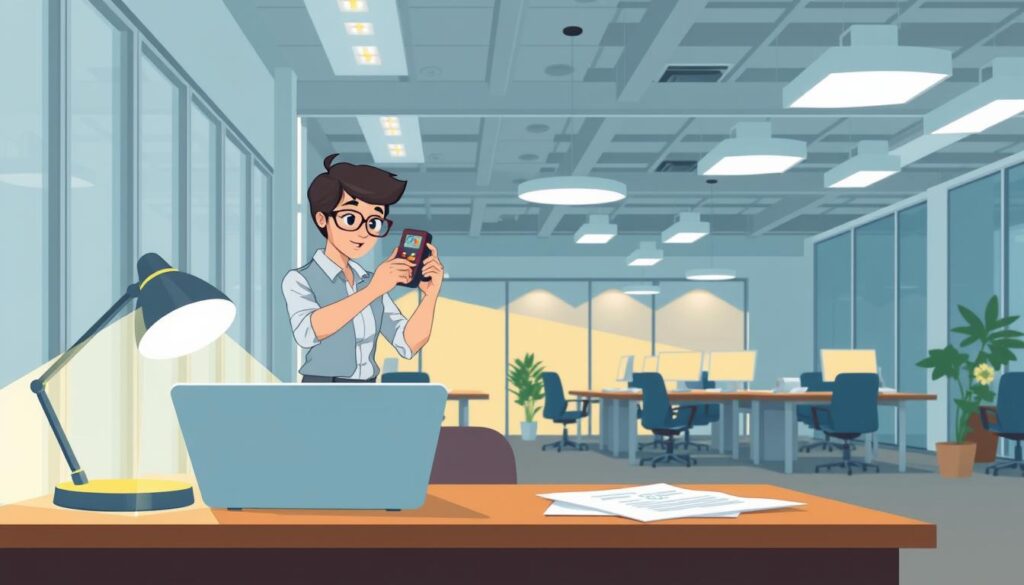
Tablets and smartphones have revolutionised how people work. These devices free people from traditional workstations. They present new challenges for creating comfortable visual environments.
Modern display technologies have specific visual requirements. Traditional uniform illumination across a “working plane” no longer suffices. We need more sophisticated strategies that accommodate diverse activities.
From Fixed Desks to Flexible Workspaces
The traditional fixed desk remains important. However, touchscreen computers allow occupants to move throughout the office space. People now carry their workspace wherever they feel comfortable working.
This environmental change demands new approaches. Illumination must support movement between collaborative areas, quiet zones, and social spaces. The 2023 LG7 revision addresses these fundamental shifts in office design.
Exploring Lighting Guide 7 for Office Lighting
Contemporary office illumination standards have evolved to prioritise both visual performance and sustainable energy management. The latest guidance moves beyond one-size-fits-all solutions towards flexible, occupant-centric approaches.
The Core Principles and Standards
LG7’s framework centres on a base level of illumination that designers adjust using “context modifiers.” These factors include occupant age, task complexity, and activity duration.
The approach aligns with BS EN 12464-1:2021 while adding practical UK-specific guidance. This ensures installations meet regulatory requirements while genuinely supporting people using the space.
Assessing Illumination Levels for Safety and Comfort
A significant shift has occurred from the traditional “working plane” concept towards task-focused assessment. Modern workers engage with tasks at various heights and orientations.
Uniform horizontal illuminance across a notional plane no longer reflects actual work patterns. The guide now emphasises the task area itself, recognising how people truly work with screens and mobile devices.
Balancing Energy Use with Visual Performance
The guide maintains a careful balance between adequate light for visual performance and minimising energy consumption. Practical strategies include intelligent control systems and targeted luminaire selection.
The 2023 edition introduces new emphasis on embodied energy and operational carbon. This encourages consideration of manufacturing impacts alongside running costs, promoting equipment reuse and circular economy principles.
Practical Applications and Contemporary Considerations
The true test of any illumination standard lies in its practical application across diverse working environments. We find LG7’s guidance particularly valuable for translating theory into effective, real-world solutions.
Integrating Daylight and Electric Lighting
Natural light plays a crucial role in occupant wellbeing. The standard emphasises early collaboration with architects to maximise daylight penetration.
Strategic window placement and glazing specifications allow natural illumination to reach deep into office spaces. This approach reduces energy use while supporting individual occupant health.
Design Strategies for Direct and Indirect Lighting
Different spaces demand different illumination approaches. Lower-ceiling areas benefit from efficient direct lighting for task performance.
Spaces with adequate height can use indirect techniques for comfortable, glare-free environments. Many modern offices employ direct indirect systems that combine both benefits.
Adapting to New Office and Home Work Environments
The guide addresses contemporary challenges like cellular offices created from open-plan layouts. Smart luminaire layout decisions facilitate future reconfigurations.
Home office design requires different thinking. Domestic spaces often need supplementary task lighting and portable solutions rather than comprehensive overhead systems.
| Space Type | Recommended Approach | Key Considerations | Control Strategy |
|---|---|---|---|
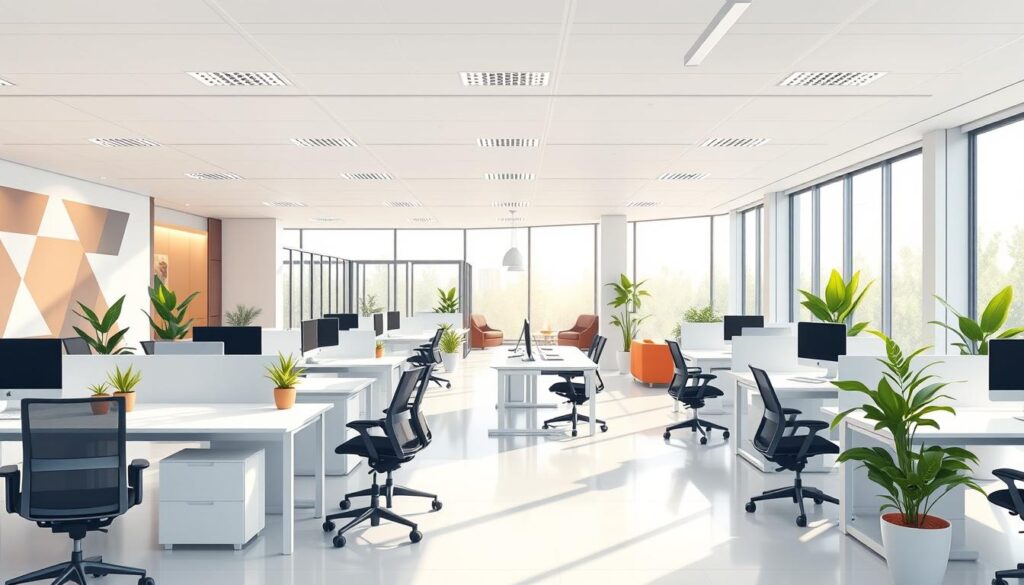
| Open-plan Office | Direct/indirect luminaires | Flexible layout, glare control | Occupancy sensing + daylight linking |
| Cellular Offices | Recessed downlighting | Individual occupant control | Manual dimming per room |
| Home Office | Task + ambient combination | Existing infrastructure limitations | Portable controls |
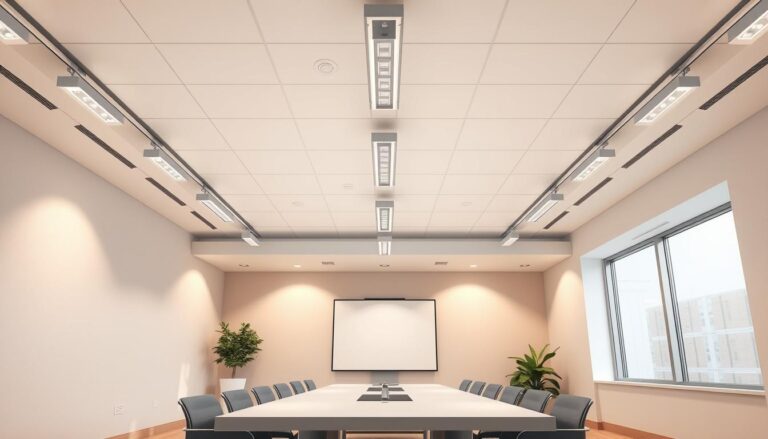
| Meeting Rooms | Uniform indirect lighting | Presentation requirements | Scene setting presets |
Sustainability remains central to contemporary design. The standard encourages reusing existing equipment where possible, reducing embodied energy while maintaining performance.
LG7 In a Nutshell
Navigating the complexities of modern office design requires more than just technical specifications—it demands a thoughtful framework for decision-making. Lighting Guide 7 provides exactly this structured approach, helping professionals create environments that balance visual comfort with energy efficiency.
The guide’s evolution through successive editions demonstrates the industry’s responsiveness to changing work patterns. As Simon Robinson, author of LG7, notes: “The future for the traditional office is looking increasingly uncertain… making it a great time to be a lighting designer.” This forward-thinking perspective ensures the guidance remains relevant.
Successful implementation depends on early collaboration between designers, architects, and end users. We encourage professionals to treat LG7 as a living resource that supports better decisions throughout the design process.
The Society of Light and Lighting, part of CIBSE, maintains this authoritative standard. Members receive unlimited online access via the CIBSE Knowledge Portal, ensuring they stay current with best practices for office illumination.
FAQ
What is the main purpose of Lighting Guide 7?
LG7 provides essential guidance for designing effective illumination in office space. It outlines standards for lighting levels, visual comfort, and energy use, helping designers create environments that support productivity and wellbeing for occupants.
How has the approach to office lighting design changed?
The evolution of office layouts, including the rise of flexible workspaces and hybrid working, has shifted the focus. Modern design must accommodate various tasks, technology like tablets, and individual occupant needs, moving beyond uniform illumination to more adaptive solutions.
Why is the early involvement of a lighting designer so important?
Early involvement allows for seamless integration of electric lighting with daylight and building systems. This proactive approach ensures optimal performance, better energy use, and a more cohesive design, avoiding costly changes later in the project.
What are the key considerations for balancing energy use with visual performance?
It involves selecting efficient luminaires, implementing smart control systems, and conducting a thorough lighting assessment. The goal is to achieve the recommended illumination levels while minimising energy consumption, often through strategies like direct indirect lighting.
How does LG7 address the needs of modern home work environments?
The guide acknowledges the blurring line between traditional offices and home workspaces. It encourages adaptable design principles that ensure good visual conditions, regardless of location, focusing on comfort and task performance for individual occupants.
What is the difference between direct and indirect lighting in an office?
Direct lighting aims light downward onto work surfaces, which can be efficient but may cause glare. Indirect lighting reflects light off ceilings, creating a softer, more diffuse illumination with reduced shadows. A combined direct indirect approach often offers the best balance of comfort and functionality.
Are there specific standards for emergency and escape lighting in offices?
A> Yes, LG7 references relevant British Standards for emergency and escape lighting. These are critical for safety, ensuring sufficient illumination for a safe evacuation during a power failure, and must be included in any office lighting design.