Let’s be honest — specifying lighting can be a slog.
You’re buried in datasheets, juggling performance requirements, and cross-referencing products that almost fit but not quite. Every project turns into a manual search exercise.
It’s slow, repetitive, and easy to get wrong.
Loopy exists to remove that friction.
Loopy isn’t trying to replace lighting designers or consultants.
It handles the time-consuming part of the job — interpreting requirements and matching them to real, buildable products.
Think of it as a fast, reliable assistant that:
It’s built around how lighting projects actually work, not how software thinks they should work.
Most projects start the same way.
You’ve got a spec with defined outputs, beam angles, mounting constraints, and finishes. Then comes the painful part — finding products that match.
Loopy removes that step entirely.
Upload your spec, and it will:
Each result includes relevant technical detail and direct access to supporting information, so you can move forward without re-checking everything manually.
This isn’t a simple filter tool.
With over 90 product families and 20,000+ variations, Loopy is designed to handle the kind of complexity that usually slows projects down:
Instead of navigating that manually, Loopy handles it in the background and gives you viable options straight away.
Document Mode is where Loopy becomes genuinely useful.
Upload a specification — even a messy PDF — and it will:
This is particularly useful on commercial schemes where compliance matters. If you’re working to standards like BS EN 12464-1 workplace lighting requirements or trying to balance performance with energy targets, Loopy helps you get there faster without compromising on spec.
Not everything needs a full spec upload.
Sometimes you just need a quick answer:
Loopy gives you clear, usable answers in real time, so you’re not waiting on emails or chasing information.
Lighting projects rarely stay fixed.
Specs change, products get value engineered, and timelines tighten.
Loopy helps you adapt quickly by:
It’s not about replacing expertise — it’s about removing the bottlenecks around it.
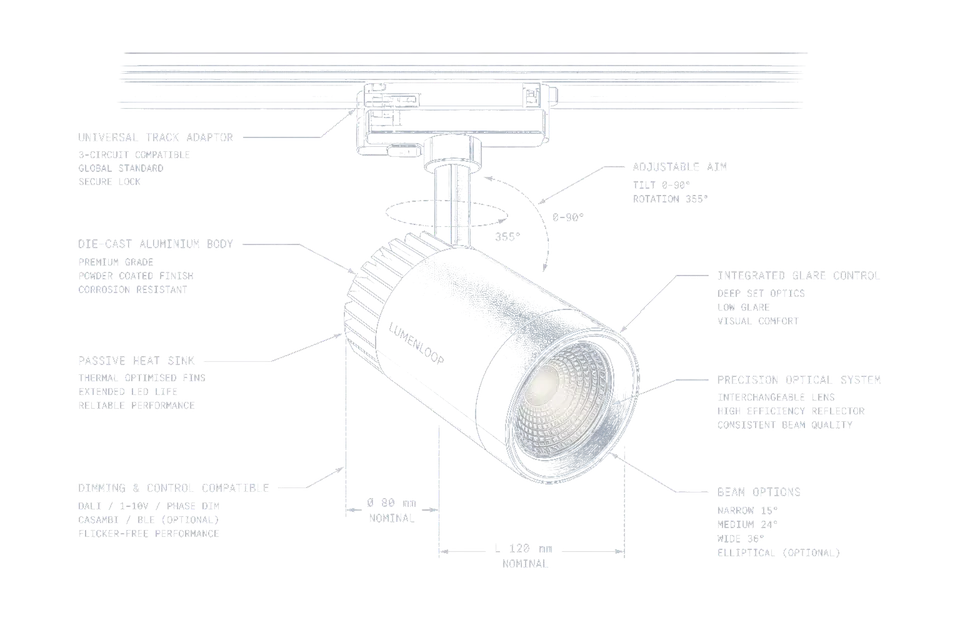
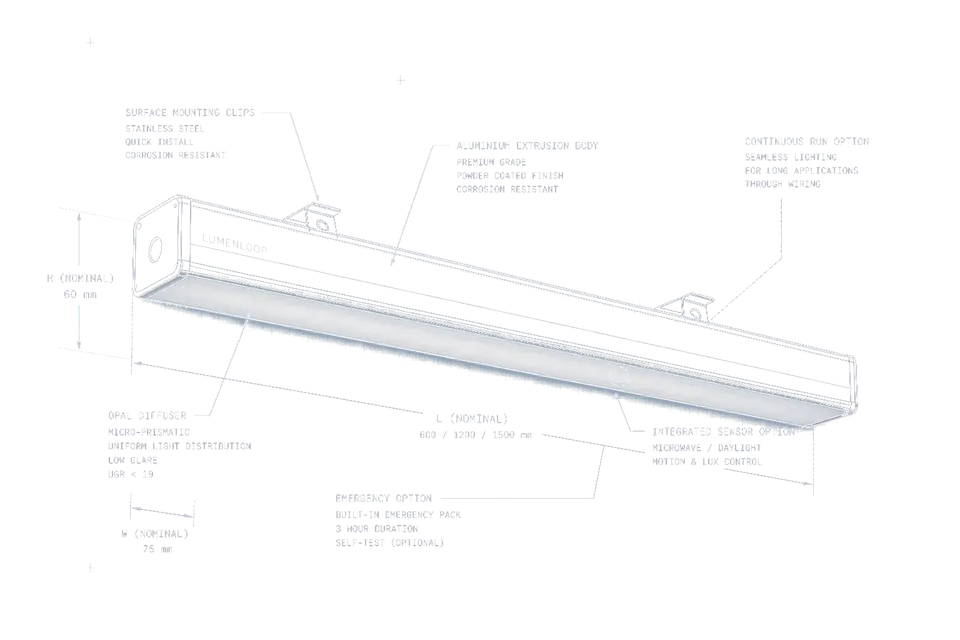
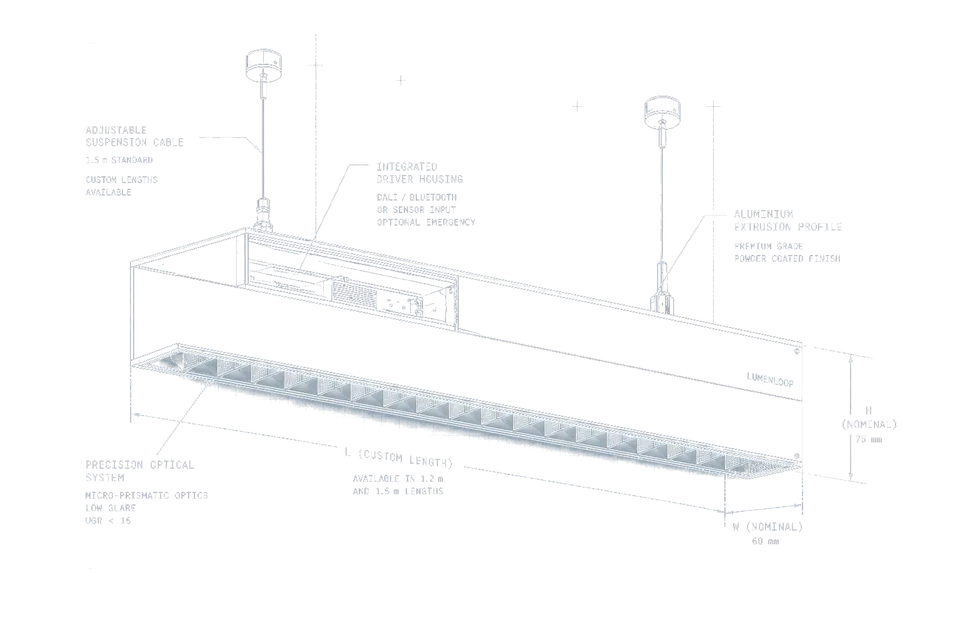
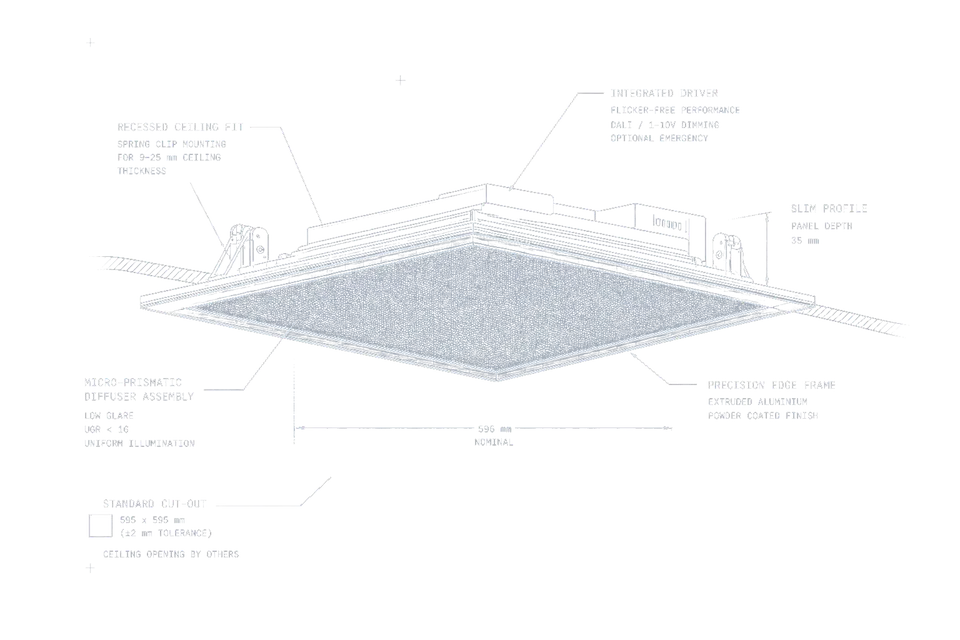
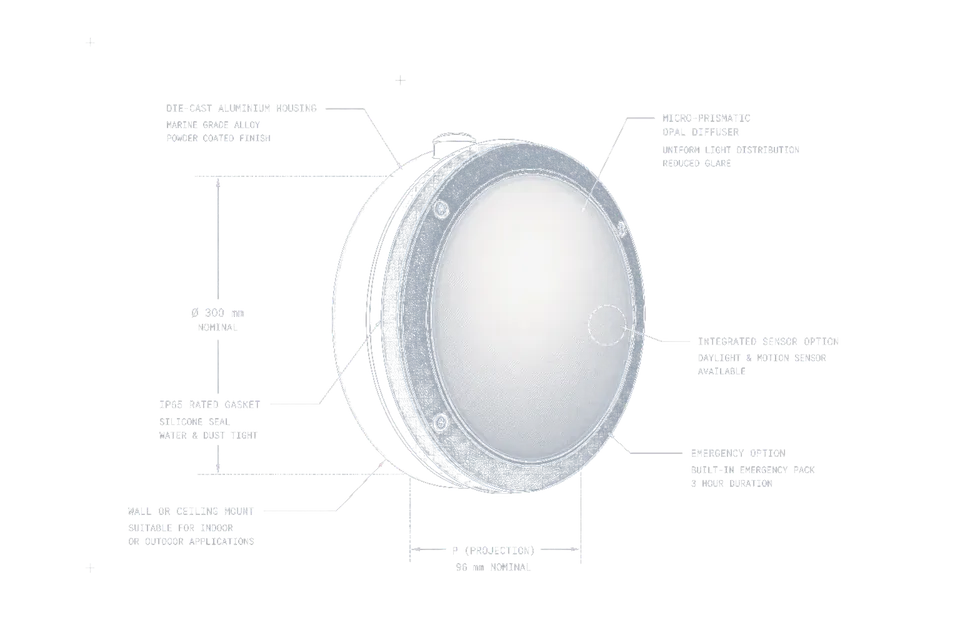
Lumenloop luminaires are built to order, which means more flexibility — but also more variation.
That’s exactly where Loopy adds value.
Instead of trying to manually configure outputs, optics, finishes, and controls across thousands of combinations, Loopy narrows it down instantly and gives you options that actually work.
If you want to explore the full range behind it, you can browse our complete range of LED lighting products and see how those variations are structured.
This isn’t another system to learn.
It’s a shortcut for the parts of your workflow that don’t need to take as long as they currently do.
It’s a practical tool built for how lighting projects actually run.
If you’ve got a spec to work through or just need a quick answer, you can start straight away.
Look for the chat in the bottom corner and try it for yourself.
It’s the quickest way to go from requirement to solution without wasting time in between.
It analyses your requirements — either from a document or a question — and matches them against real product data to return suitable options.
Yes, although it’s particularly useful for commercial and specification-led projects where requirements are more detailed.
The tool is based on live product data and structured specification logic, so results are directly aligned with actual product capabilities.
No. It removes the repetitive parts of specification and product matching, so you can focus on design, layout, and decision-making.
Yes — it can support selection based on requirements aligned with standards such as BS EN 12464-1, helping you move faster while staying within spec.
Office Address:
Lumenloop Ltd,
4th Floor, Silverstream House,
45 Fitzroy Street, Fitzrovia,
London, W1T 6EB
Trading Address:
Unit 7 Wheatcroft Business Park,
Landmere Lane, Edwalton,
Nottingham NG12 4DG
WEEE number: WEE/MM7667AA
Company Reg: 15919840
VAT Number: 476833842
Web design by Foxdog Marketing